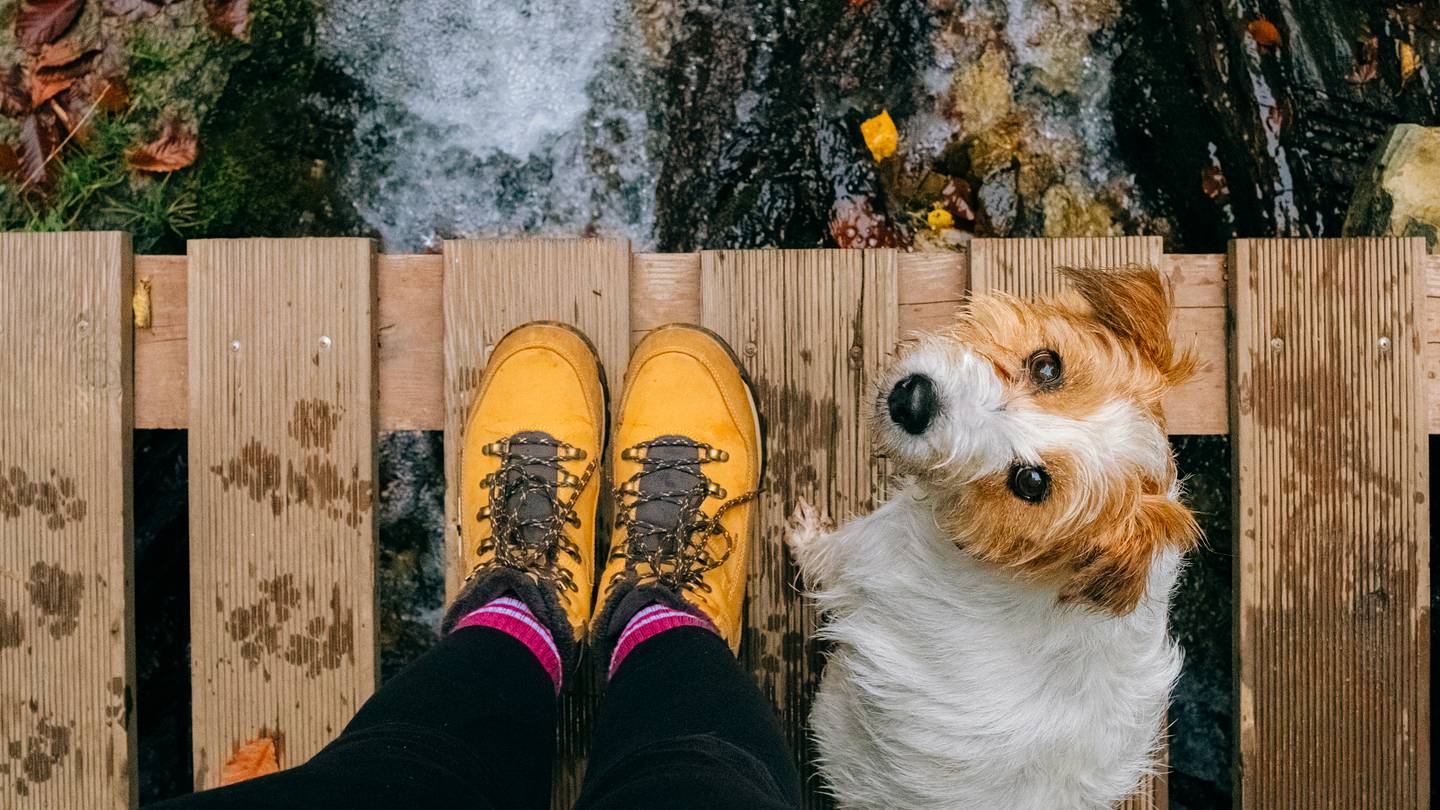
Hiking with your furry best friend is a wonderful way to take in the beauty of nature while getting some exercise and fresh air. Whether you prefer a mountain trek or a gentle forest escapade, here are some expert tips to help you make sure that every hike with your dog is the ultimateâand safeâexperience.
Hiking takes you and your dog from your usual daily walking itineraries to places with new sights, sounds, and smells. These are all part of the magicâbut the unfamiliarity can also create a hyper stimulating environment, so your dog should know how to follow commands.Â
âHaving reliable recall is very important while you are out with your dog in any place,â Emma Murdock from Walk With Me Dog Training in Ottawa, Ontario, Canada, tells Mental Floss. âBut on a hike you never know what to expect. You may need to be able to stop them or put them in a down-stay. Even if your dog is on leash, you never know whatâs up ahead or around a corner.â
Some important commands are âheel,â âwait,â and âstay.â You also want to make sure your pup has been trained not to chase and is securely kept on a leash , as there are lots of wild creatures that may tempt your dog to run off in the woods.
âYou should ease them in,â Murdock says. She recommends starting with shorter hikes, and then increasing the outings in both duration and intensity. âA person wouldnât start by hiking a 10-kilometer trail, or they might, but they would be sore. I would condition your dog the same way.â
Many dogs are enthusiastic hikers, but before selecting a trail, you should consider your petâs size, breed, and physical conditionâthese factors will affect their endurance, pace, and ability to handle various trail challenges.Â
Young dogs can go on hikes too, and it may even be beneficial to them. âI think itâs really important for puppies, as part of their socialization training, to go out and do nature hikes,â Murdock says. She suggests keeping these outings on the shorter, easier side (lasting somewhere between 30 minutes to an hour) and recommends waiting until your puppy is at least 3 months old before hitting the trail.
Add Mental Floss as a preferred news source !
Once you have determined a hike that fits your dogâs ability level (and yours!), itâs time to do some homework. Verify the trailâs hours and if they allow dogs on or off leash âand also check to see if your intended trail or park permits four-legged companions at all. âSome people hike with their dogs where they are not allowed, and sometimes even off-leash, which is disrespectful and not good for wildlife,â Murdock says. Even if youâre headed to an area where pets are welcome, breaking park rules like letting your pup run off-leash or failing to clean up their poop can later ruin things for other dog owners.Â
Plan your route in advance and be aware of any terrain or obstacles that may present a problem. A mountainous hike with a lot of scrambling involved, for example, may be tough for a dog to navigate. âI look for places I want to go, what I want to see, but I take into account any safety concerns that may come up,â Murdock says. âJust keep in mind that when itâs unfamiliar terrain, you just have to be more cautious.â
Donât forget to check the weather. A pleasant hike might turn into a nightmare of an outing in a flash if youâre unprepared for the elements. And most importantly, stay flexible! Hikes with your dog are fun but can be unpredictable, so your plans may have to change on short notice.Â
Like humans, dogs need food and water to sustain them on a hike; their specific requirements will vary depending on the hike intensity, terrain, or the temperature. A simple âruleâ to follow is that if you stop for a snack or a drink, your dog should get one, too. But be careful not to overdo it with food consumption.
âI wouldnât want my dog to have a really full stomach before going on a hike, but you also need to make sure that they are getting enough calories,â she says. âWith your dog having heavy food or close to a full stomach before a hike, there is a risk of bloat.âÂ
( Gastric dilatation-volvulus , or GDV, is bloating that can occur after eating and then exercising immediately afterwards. The movement causes the stomach to shift within the abdomen, which can lead to twisting.)Â
Rather than feed them until theyâre dangerously full, Murdock recommends bringing some of your dogâs food to use as rewards at intervals during the hike.Â
The normal recommendation for how much water dogs should drink is 1 ounce (1/8 of a cup) of water per pound of weight per day. This should be increased with more vigorous activities, so having enough water on your hike is essential. You can even bring a portable water bowl or a water bottle with a pop-out bowl for your dog.
Watch for signs of dehydration, especially in hot weather. If your pet is panting, lying down on the trail, slowing down, or seeking shade, itâs time for a break and more water.
In addition to food and water, there are some other supplies you should consider bringing with you when hiking with your dog:
You also need to have enough poop bags and a way to transport the poop bags to a garbage bin; you can attach a poop caddy to your backpack or bring some carabiners to hang the bags on. Never leave your dogâs feces lying on or near the trail.
Doggie packs allow for your dog to carry some of the load. âFor a larger dog specifically, itâs a way to add a little training,â Murdock says. âThey can carry their own water, their own poop bag. [The pack] could also double as a harness.â
While hikes with dogs are generally pleasant experiences, you should be prepared for any hazards you may face. One easy way to offset many dangerous situations is to simply keep your dog on leash at all timesâthis way you can pull them away if you need to.Â
Look into what wildlife lives in the area. If youâre hiking in a spot with snakes , bears , wasps, or other potentially dangerous creatures, you should make sure you know how to handle crossing paths with a wild animal.
Murdock recommends using food rewards to distract your dog, and most importantly, staying calm. âIf you get hyped up, your dog will get hyped up. Theyâll feed off you,â she says. âIn some cases, your dog may not have even noticed [the animal].âÂ
You should also keep your pet away from unclean, murky, or muddy pools of water and avoid dead carcassesâthese can carry bacteria and parasites that could be dangerous for your dog.Â
Be very tick-aware , too, as these bloodsuckers can transmit Lyme disease, Ehrlichiosis, or anaplasmosis to both humans and canines. Talk to your vet about trying oral medications, topical treatments, or tick collars and stay clear of places where the arachnids like to hide, like tall grasses, piles of leaves, and brush.Â
Being mindful of the risks that come with spending time in the great outdoors will help keep both you and your dog safe on the trail.
Loading recommendations... Please wait while we load personalized content recommendations