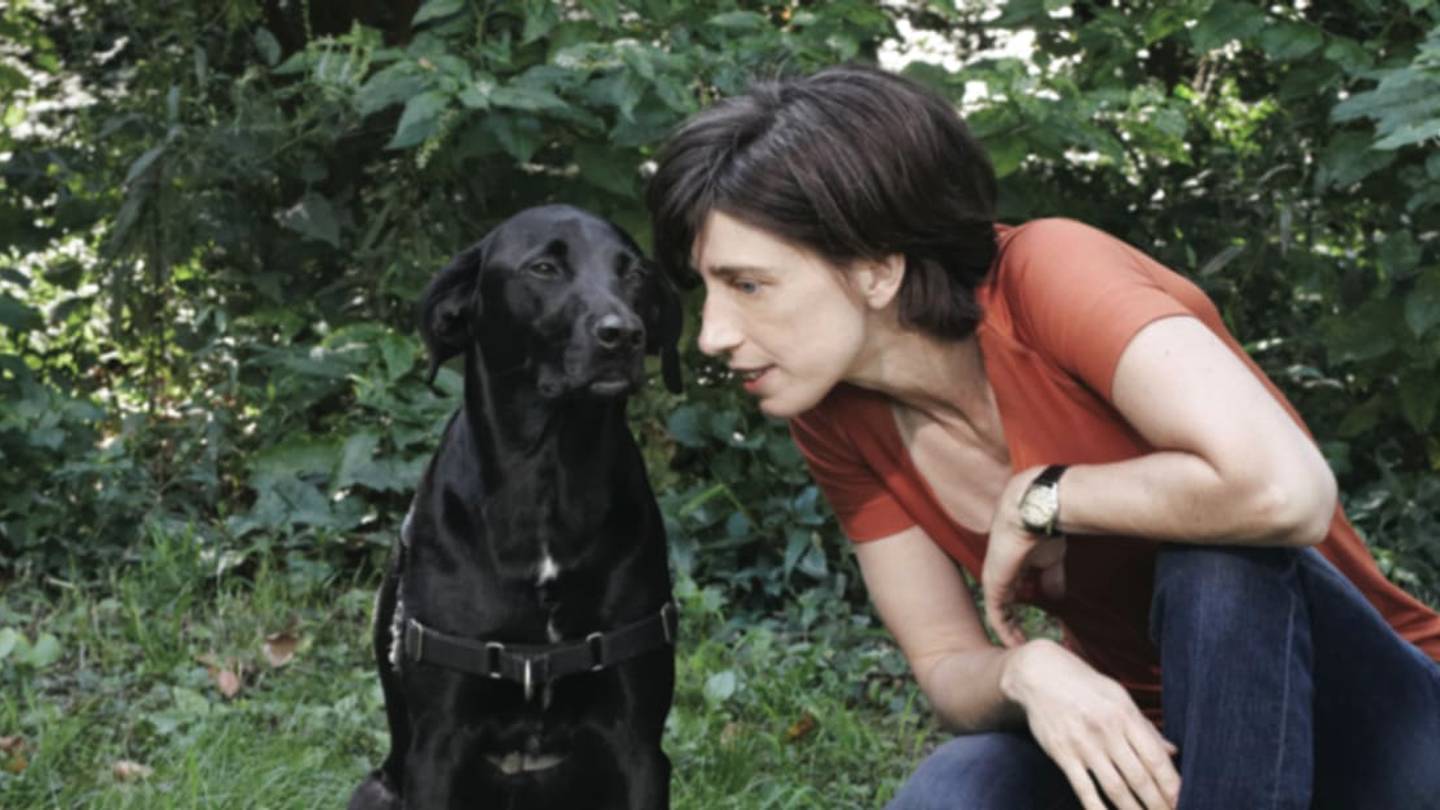
Alexandra Horowitz always wanted a dog. But when she and her college boyfriend visited a shelter, she had no idea that the shaggy black puppy they brought home would end up inspiring her career. Even six years later, as a grad student in cognitive science at the University of California at San Diego, she still didnât guess that the dog greeting her at the door might have more to say than the bonobos and white rhinoceroses she was observing for her degree.
But as Horowitz steeped herself in her studies, the way she looked at her dog, Pumpernickel, changed. Where she once simply saw a pooch at play, she began spotting glimmers of sophisticated behavior. Before long, she was bringing a video camera to the dog park and watching the footage in slow motion.
âIt took a real change of perspective to consider studying dogs,â Horowitz says. They seemed so familiarâhappy creatures that chased balls and inhaled kibbleâwhat else was there to say? As Horowitz has since discovered, a lot. A decade and a half later, Horowitz heads up one of the premier canine-studies labs in the country, helping scientists and pet owners alike uncover new truths about manâs best friend.
Why do dogs wag their tails? Sniff one anotherâs butts? Save children from drowning? The answers arenât what you think.
Until she starts casually dropping terms like âefficacyâ and âcognitive understandingâ into conversation, Horowitz might not strike you as a scientist. For starters, she never wears a lab coat. âIâm usually covered in a fine mist of dog hair,â she says, makeup-free and dressed in jeans.
And at the Horowitz Dog Cognition Lab at New Yorkâs Barnard College, jeans do seem the natural choice. Her lab doesnât have a set location. Instead, she tows a camera to dog parksâor pet owners' homes or anywhere dogs areâwhere she catches dogs playing, fetching, fighting, and mating on video. Horowitzâs mobile office has the benefit of being cost-effective, but its real asset is scientific: Observing dogs in the field is her labâs signature strength. Rather than drag the animals into unfamiliar settings, Horowitz watches dogs being dogs on their own turf.
âMy goal is to get inside the mind of the dog,â Horowitz explains. âThey canât tell us how to treat them; we just decide. I think that decision should be informed by what their experiences are actually like.â
Still, not everyone finds merit in Horowitzâs work. When she first switched her focus to dogs, her decision was met with head-scratching and even outright derision. For her colleagues, âthere were no data in dogs.â So she set out to find her own way. While she didnât know it at the time, Horowitz was one of a handful of scientists around the world blazing trails into the dark continent of the canine mind. As years passed, studies on canine cognition began cropping up in scientific journals. Next came labs devoted to dog behavior. "Just a few years ago, [studying canines] felt like a novelty," Horowitz says. "Now it feels mainstream." In 2009, Horowitz opened her lab at Barnard. Today, she has a full-time researcher and 10 undergrads assisting. And what theyâre learning, as they piece their data together in conference rooms and coffee shops, is that for centuries now humans have gotten dogs all wrong.
It begins with the "guilty" look. You know the one. At some point, every dog owner has come home to new couch cushions or shoes or drapes that have been reduced to confetti. Lurking over the demolition work is a pup bearing his most pathetic face: head slung low, ears pinned back, eyes big and wet, emanating guilt. The common assumption is that the dog is genuinely remorseful. But is it true?
To find out, Horowitz ran an experiment where she asked dog owners to place a treat in front of their dogs, instruct them not to eat it, then leave the room. If, in the ownerâs absence, dogs ate the treat, their owners scolded them when they returned a few seconds later. But in some of the trials, Horowitz had owners scold their dogs even when they hadnât eaten the treat. In others, certain treat-eating dogs got off scot-free.
By videotaping the interactions and scoring how guilty the dogs looked, Horowitz discovered something interesting: Even the innocent dogs looked guilty when scolded. Meanwhile, treat-eating dogs who werenât scolded didnât look remorseful at all. A dogâs âguilty face,â in other words, didnât spring from guilt; it appears to be a reaction to the ownerâs finger-wagging, a ploy to get off easy. âDogs may feel guilt,â Horowitz clarifies. âScience hasnât figured out how to test that yet, but this behavior isnât evidence of it.â
Of course, Horowitz the scientist and Horowitz the pet owner arenât always on the same page. As she told the pet enthusiast site Dogtime.com, âI sometimes tell people to try to forget everything they know about the dog, and pretend it is an alien animal arrived in their home: What is this alien doing?â
Talking about her own dog, Horowitz recognizes that he looks proud when heâs run off with a ball or sheepish when he gets carried away roughhousing. âThose looks are real,â she says. âBut I remain agnostic about whether they map to emotional experiences that are just like mine.â
Horowitz also worries about the greater dangers of anthropomorphism, such as relying on your petâs secret identity as SuperDog. While newspapers are quick to print stories of doggy heroesâdevoted animals rescuing people from burning buildings or raging riversâin reality, their motives may be less pure. In one study by other canine researchers, dogs witnessed a staged crisisâtheir owners pinned under a bookcase made of lightweight particleboard, though the dogs didnât know that. But the dogs didnât leap to the rescue. Instead of dusting off their Lassie routines, the majority of pooches ignored their ownersâ cries for help.
The conclusion? Dogs can be trained to rescue people or may even do so on their own, but that doesnât mean that they know what theyâre doing. Instead, their behavior may be something simpler, like a desire to be near their owner or to bark when distressedâstill a useful skill in attracting help but not the heroism we attribute to them.
While feel-good stories about dogs rescuing people will no doubt continue to surface, Horowitz believes the âevidenceâ ignores a basic statistical fact: âWhat of all the cases when a dog didnât save the drowning child or the lost hiker? Newspaper headlines never crow âLost woman dies after dog fails to find and drag her to safety,â â says Horowitz.
Does it matter whether a dogâs feelings are real or imagined? If an experiment proves that dogs donât love us in the same way we love them, do we even want to know?
It may require some mental adjustments, but Leslie Irvine, associate professor of sociology at the University of Colorado at Boulder, believes so. âBy unpacking how dogs experience the world, it can help people interact with them in ways they can understand,â says Irvine. And that can make for âa more compassionate relationship.â In the past, for instance, trainers used to think it was best to yank dogs around by choke collars and rub their noses in their feces if they relieved themselves indoors. But studies on reinforcement have curbed these practices by proving that they donât work.
Horowitz herself makes a strong effort to debrief the owners of the dogs she works with, and many come away with a new understanding of the animals living under their roof. Just ask Jo Anne Basinger, whoâd enlisted her two dogs for experiments ranging from which scents dog dislike (lavender, in particular) to whether dogs can sense fairness in people.
âOne thing that Iâve realized is that the things dogs do that annoy me are important to themâlike excessive sniffing,â Basinger says. In fact, Horowitzâs research suggests that sniffing is not just important; itâs the crux of how dogs perceive the world. Humans see first, dogs smell first. Even their sense of time in some way comes down to their noses, as older smells fade and hints of smells to come arrive on the wind. And of course, the canine habit of sniffing new friends from behind makes more sense once owners learn that canine anal glands emit a cocktail of chemicals as unique as a human voice, which may indicate a dogâs age, their interest in mating, and what they ate for dinner. Sniffing, in other words, is the doggy version of small talk.
Despite the inroads sheâs made into the canine mind, Horowitz savors the mystique. âIf I woke up and my dog said to me, âAlexandra, Iâm going to tell you the whole business right now,â I would hesitate,â she says. âI appreciate a dogâs quietness. There is something about the dogâs mystery that I treasure.â
This story originally appeared in mental_floss magazine. Subscribe to our print edition here , and our iPad edition here .
Loading recommendations... Please wait while we load personalized content recommendations