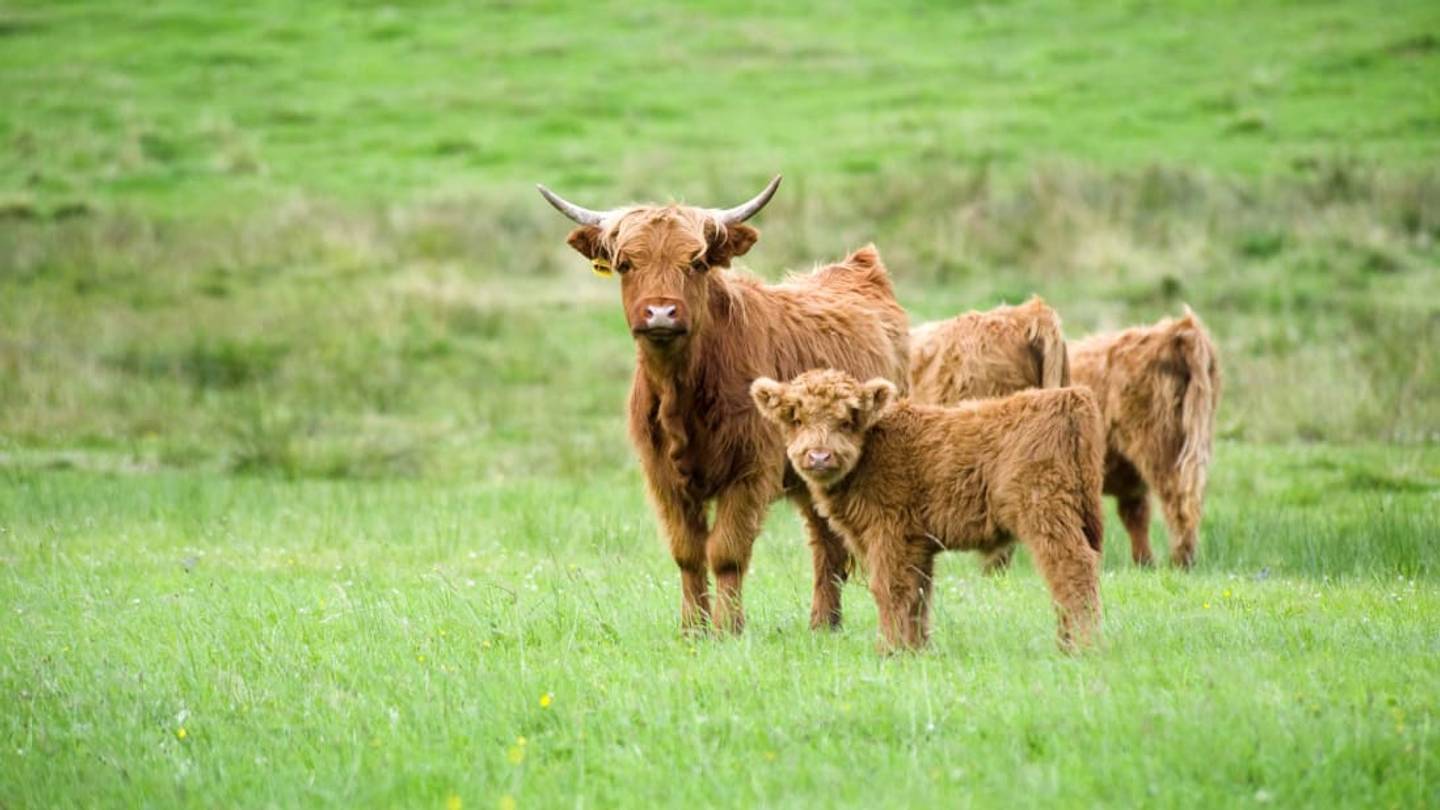
Cows dot fields and pastures across many countries. Their productsâwhich can be preserved for extended use, such as butter, cheese, and smoked or cured meatsâare valued and consumed worldwide. And, scientists are still finding new uses for the roughly 80 pounds of manure that a dairy cow produces daily. Chew the cud over these 10 facts about bovines.
As ABC News reported, a 2012 study published in Wilderness and Environmental Medicine found that cattle cause an average of 22 deaths per year. Sharks , on the other hand, kill about six people per year. It sounds like SyFy should have made Cownado instead.
It might be funny to imagine a sleeping cow falling over with just a gentle shove, but cow tipping isn't that easy. Actually, it's nearly impossible . Cows sleep lying down and are generally wary of approaching humans, so they're never really blissed-out enough to allow a stranger to get close enough to touch them. But the bigger obstacle is their sheer size. Cows are massiveâon average 1500 poundsâand balance their weight on all four legs.
Cow stomachs are made up of four pouchesâthe reticulum, the rumen, the omasum, and the abomasumâeach serving a specific purpose. Cows barely chew their food before it enters the rumen, the first and largest part of the stomach. Once the rumen is full, the cow lies down and the reticulumâwhich is made of muscle and is connected to the rumen so food and water can easily pass back and forthâpushes the unchewed food back up the esophagus and into the mouth. After re-chewing, or rumination, the food eventually passes through the omasum. The omasum filters out the water and gives the bacteria in the rumen more time to break down the food and take in more nutrients. Finally, the food enters the abomasum, which functions similar to a human stomach.
Transferring embryos from a genetically superior cow to a merely adequate cow is becoming more common. The procedureâknown as embryo transfer (ET)âinvolves injecting a superior cow with hormones so she produces multiple eggs. Her eggs then need to be fertilized, either naturally or through artificial insemination. When the eggs are fertilized, a vet performs an âembryo flushâ to remove them. That generally results in six to seven usable embryos, but can produce as many as 80 or 90. Without hormone treatment, a cow can only produce one embryo.
According to the Merriam-Webster dictionary, the origin of cattle is chatel , the Anglo-French word for personal property. Chatel comes from the Medieval Latin term capitale .
There are specific terms for bovines depending on their age, sex, and purpose. For example, a âbullâ is a mature, male bovine used for breeding, while a âsteerâ is a male that's been castrated and is used for its beef. A âheiferâ is a female bovine that has yet to have calves, and a âbred heiferâ is a pregnant heifer. There are a number of additional terms that farmers use to describe members of their herd.
A bullfighter could just as easily wave a pink or purple flag to get a bull to charge. The bull isn't angered by the color âall bovines are red/green colorblind. Instead, it's the movement of the cloth that gets it all riled up. The real reason matadors wear red: to hide the bull's blood.
If farmers have a good relationship with their cowsâmeaning they give them names and show enough affectionâthey can produce more milk than their lonely counterparts. A 2009 study from Newcastle University found that cows who are more comfortable around humans are less stressed when milked. When cows are stressed, they produce cortisol, a hormone that inhibits milk production. Another plus side of a happy cow-human relationship: farmers are less likely to get injured on the job (see fact #1).
For the 2014 film, director Rob Marshall wanted to use a real, live cow instead of depending on CGI. James Corden, who played the Baker and spent plenty of time with his bovine costar, admitted that things didn't always go smoothly: âYou just don't know what it's like when you're doing a scene, and Meryl Streep is giving a phenomenal performance in only the way she can and it's scuppered by just 'Moooooooo,'â he recalled , adding, âThat cow was the biggest diva on this set.â
According to UC Davis, cows are the main agricultural source of greenhouse gasses. A single bovine burps 220 pounds of methane every year. However, cows themselves are still far from being the primary cause of anthropogenic climate change.
A version of this story originally ran in 2015; it has been updated for 2021.
Loading recommendations... Please wait while we load personalized content recommendations