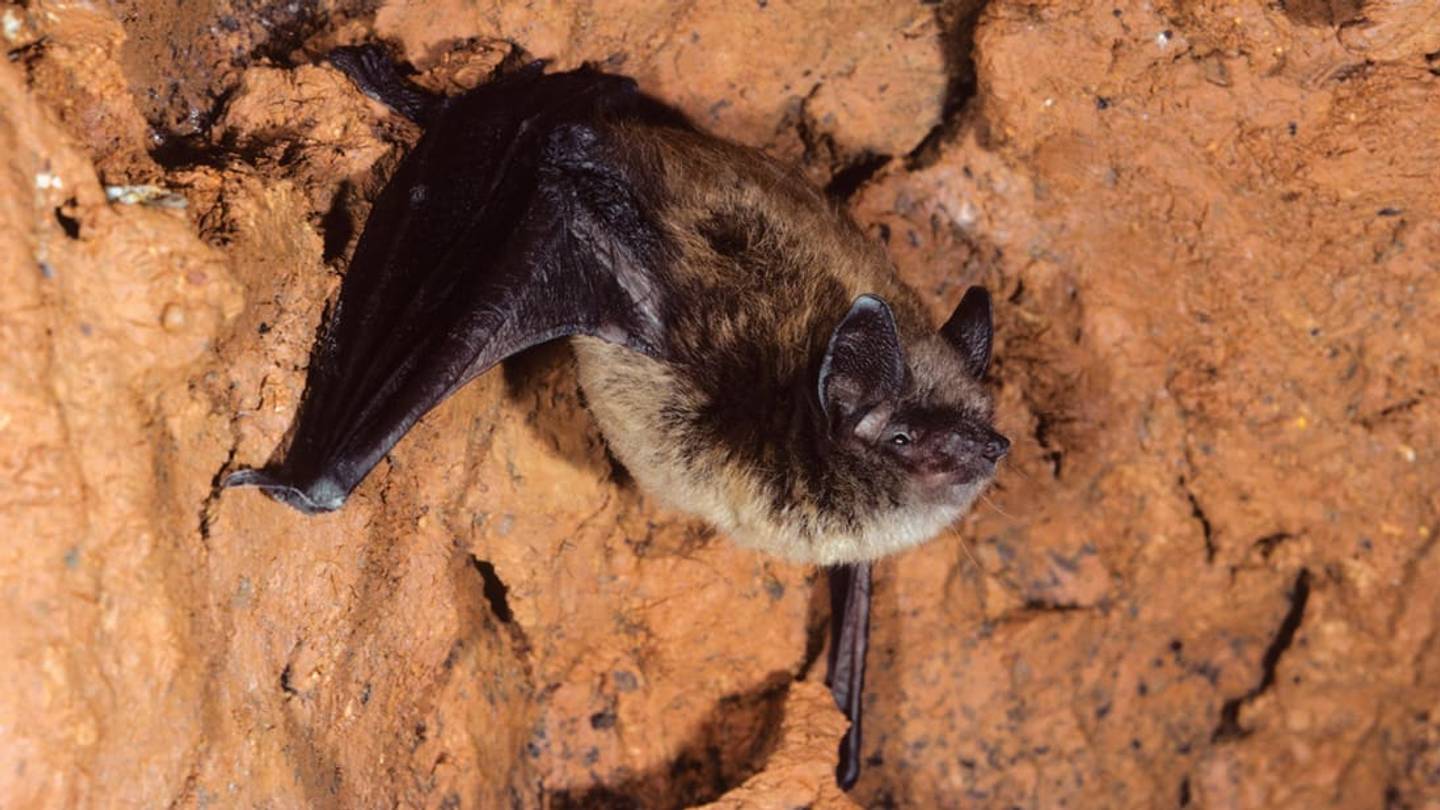
Good news for flying mammals: chubby little brown bats might be genetically resistant to white-nose syndrome, a fungal disease thatâs killed more than 5.5 million bats since it was first documented in 2006 [ PDF ]. A new study in the journal Scientific Reports describes three genetic adaptations in the bats that could protect them from the pathogen.
Little brown bats ( Myotis lucifugus ), common in Canada and the eastern United States, are especially susceptible to white-nose syndrome. According to lead author Giorgia G. Auteri, a doctoral candidate at the University of Michigan, white-nose syndrome kills bats by disrupting their hibernation cycles.
âWhen theyâre in hibernation in the winter, theyâre not meant to be waking up. Theyâre supposed to be asleep,â Auteri tells Mental Floss. âBut this fungus grows on them, and it causes the bats to keep waking up during hibernation. And because theyâre waking up when they shouldnât be, theyâre running out of fat reserves too early.â
But while white-nose syndrome has devastated bat populations in North America, not all infected bats die from the diseaseâsome recover. Auteri wanted to find out what made the survivors so special.
Auteri and her team compared the genetic makeup of nine surviving and 29 non-surviving little brown bats from northern Michigan. They discovered that survivors share three important genetic distinctions. âOne is involved with fat metabolism,â she says. âAnd another is involved with regulating when the bats wake up from hibernation. And the third gene is involved in their echolocation ability, in their sonar for hunting insects.â
The results make sense, Auteri says. Because white-nose syndrome interrupts batsâ hibernation schedules, bats with genes that relate to more optimal fat storage (i.e., theyâre fatter) and better hibernation regulation (i.e., they sleep longer) are more likely to survive the disease.
Auteriâs research could help scientists and conservationists find ways to preserve little brown bat populations. Besides being adorable, little brown bats also play an important ecological role as predators of insects like mosquitoes, moths, and other pests that are destructive to crops and forests.
Loading recommendations... Please wait while we load personalized content recommendations