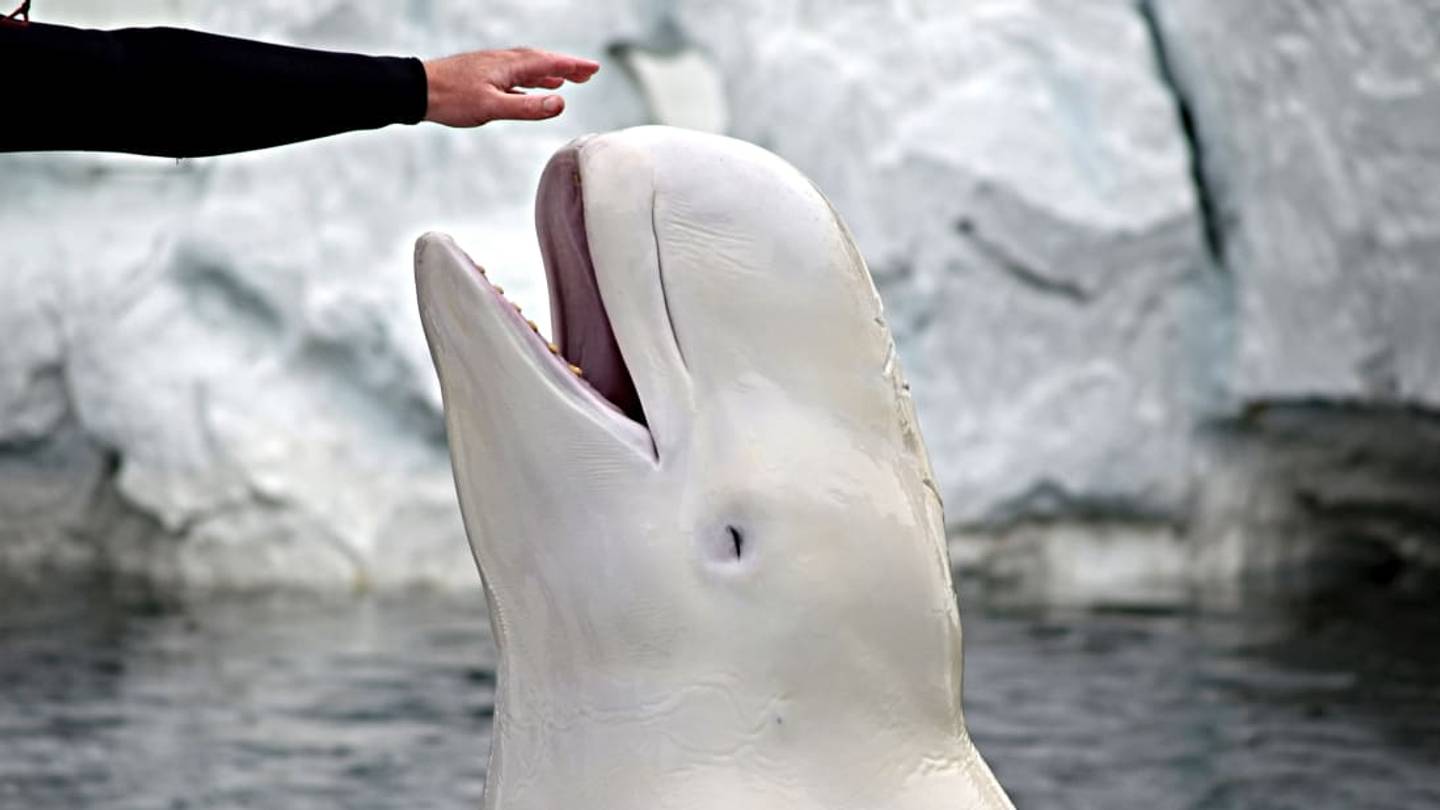
While menopause is a fact of life for middle-aged women, it's exceedingly rare in the animal kingdom. Including humans, there are now five mammal species that experience it.
As Forbes reveals, a new study in the journal Scientific Reports finds that female narwhals and beluga whales also go through menopause as they age. Until now, only three other speciesâhumans, killer whales, and short-finned pilot whalesâwere known to experience this reproductive phase and continue to live a long time afterward.Â
Drawing from past research, scientists at England's Exeter and York Universities and the Center for Whale Research in the U.S. set out to discover whether menopause occurred in other marine mammal species. After examining the ovaries of 16 species of whales and dolphins, they identified narwhals and beluga whales as the only other animals that experience menopause.
Menopause refers to the period in which menstruation permanently ceases and females are no longer able to reproduce. Unlike humans and the four aforementioned whale species, most females in the animal kingdom are able to continue reproducing well into old age. This group includes elephants , which have some of the longest lifespans of any animal on Earth.
This is an oddity that has puzzled scientists for years. "For menopause to make sense in evolutionary terms, a species needs both a reason to stop reproducing and a reason to live on afterwards," one of the new studyâs authors, Samuel Ellis of the University of Exeter, tells Forbes .
Previous research on killer whales (which were not included in the scope of this study) suggest that menopause is linked to grandmother whalesâ relationships with their young offspringâa theory called the â grandmother hypothesis .â Ellis notes that âboth male and female [killer whale] offspring stay with their mothers for lifeâso as a female ages, her group contains more and more of her children and grandchildren.â
The whaleâs children and grandchildren are all competing for resources such as food, so that may be why menopause steps in to shut down her reproductive cycle. It's believed that grandmother whales continue to live on well after menopauseâunlike other species that go through something like menopause, but die shortly afterâbecause they provide crucial knowledge to their close-knit groups of descendants. The authors of the latest study say there is also evidence that our human ancestors followed similar social patterns.
Loading recommendations... Please wait while we load personalized content recommendations