Foxes have played a notable role in literature , film, and even opera across the centuries. Theyâre often portrayed as clever tricksters, with some acting more sinister than others. Here are 10 fantastic fictional foxes you may or may not be familiar with.
Aesopâs fable â The Fox and the Cat â follows the story of a fox who tells a cat that it knows many different ways to escape when being pursued. The cat, however, cat says it only knows one. When a pack of hounds arrive, the cat quickly uses its one trick to climb up a tree, but the fox hesitates while trying to decide between different methods; his indecision costs him precious time, and the hounds quickly destroy him. Â
Roald Dahl âs tale of a fox who steals from local farmers to help his family has become one of the authorâs most popular stories. First published in 1970, Fantastic Mr. Fox follows the titular animalâs battle against the three farmers who try to foil his plans. Wes Anderson adapted the tale into an animated film in 2009; George Clooney voices Mr. Fox.
One of the most well-known animal fables of medieval European literature focuses on the legend of Reynard the Fox , a talking canid who enjoyed playing tricks and causing havoc. Reynard does more than just star in entertaining stories: He was also put to work satirizing the most powerful political and religious institutions of the era. Â
A popular screen adaptation of Robin Hood features a fictional fox who actually gets to play a hero in Disneyâs 1973 animated take on the medieval tale. Disney was initially interested in adapting the saga of Reynard the Fox, but eventually decided those stories were too darkâso they opted to make Robin Hood a fox instead.
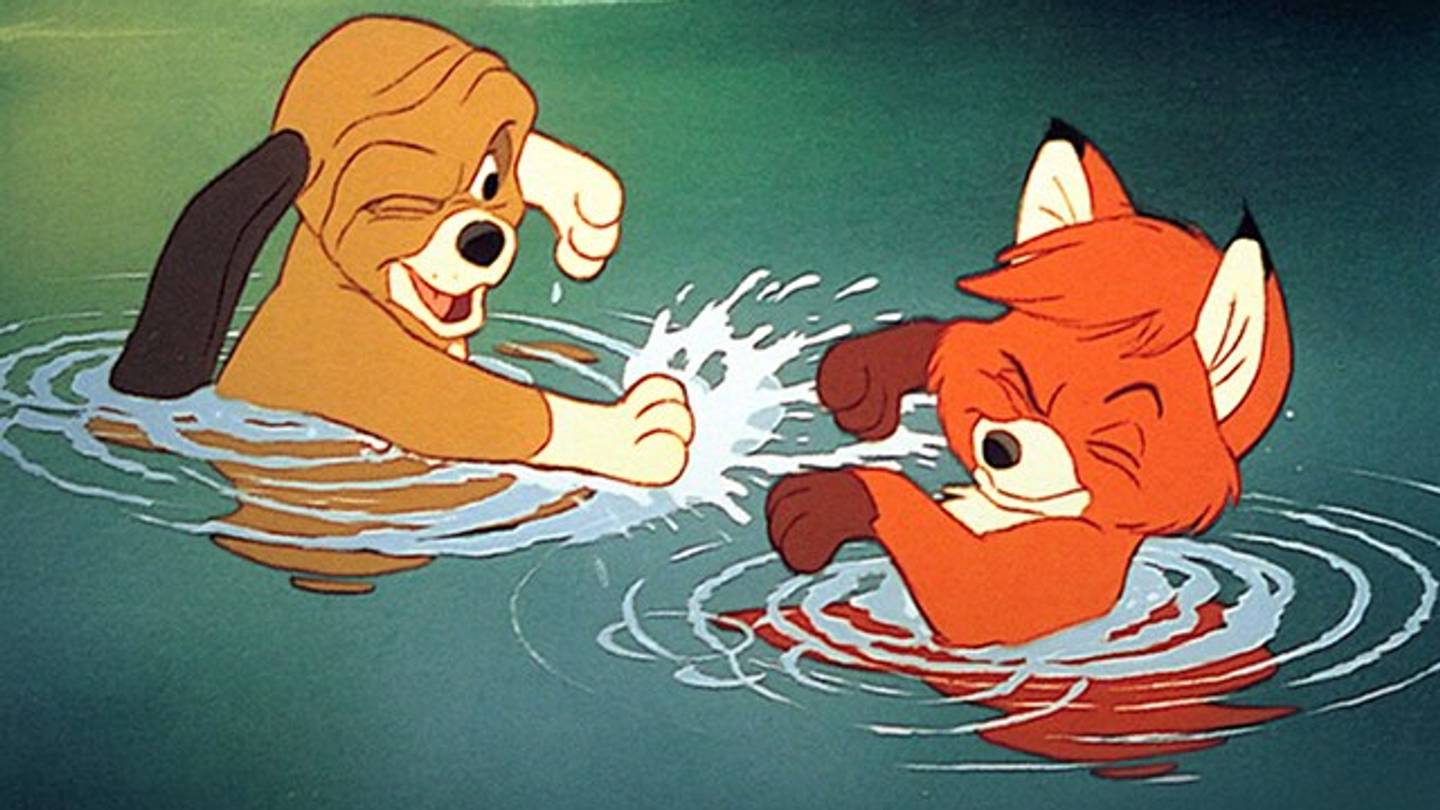
This story follows a fox named Tod and his relationship with a bloodhound known as Copper. As the years go by, the animals struggle with the roles they have been assigned: Copper is a hunting dog, after all, and his owner wants him to go after Tod. The Disney film was based on the 1967 book of the same name by Daniel P. Mannix. The book contains a very melancholy story, while the Disney adaptation is a touch more upbeat (though it still has its fair share of tear-inducing scenes).Â
Dr Seuss âs Fox in Socks tells the tale of the eponymous fox who wears socks and speaks in rhymes and tongue-twisters. The childrenâs book , first published in 1965, highlights Foxâs friendship with a dog named Knox, to whom he attempts to teach more and more complicated word games as the book goes on.
The glove puppet Basil Brush first appeared on childrenâs TV in the UK in the 1960s. His puppet was created by Peter Firmin and his voice was performed by the actor Ivan Owen; Owen shied away from the spotlight to avoid shattering the characterâs illusion. The fox puppet first appeared on a series called The Nixon Line before becoming the star of The Basil Brush Show in 1968.
One of the more sinister foxes appears in the folk story of âHenny-Pennyâ (sometimes known by the alternative title of âChicken Lickenâ or âChicken Littleâ). Itâs a fable about the dangers of believing everything youâre told: In the story, a chicken feels a leaf falling onto his head and thinks the sky is falling down. He tells other animals, who believe him and fear for their safety. The ever-cunning Foxy Loxy tells everyone they will be safe in his home, where he actually plans to eat them. Some versions of the fable feature a bleak ending where Foxy Loxy succeeds in dining on the scared creatures; alternative takes have a happier conclusion, which sees the animals flee [ PDF ].Â
Fictional foxes have also appeared in opera, including the 1891 work Mr. Kotsky by the composer Mykola Lysenko, with a libretto by Dniprova Chayka. The opera draws upon a traditional childrenâs story from Ukraine, known as âPan Kotskyâ (Mr. Cat); the cat eventually meets a fox who asks him to marry her, and they settle down together.
A fox appears in C. S. Lewisâs beloved Chronicles of Narnia series. In The Lion, the Witch and the Wardrobe , the fox is friendly and acts as an ally in the battle against the White Witch. When the witch finds the fox and other animals celebrating Christmas âwhich she had abolished in Narniaâshe turns him and all other creatures present to stone. After the rise of Aslan, the fox is reawakened, along with the others who had become statues.