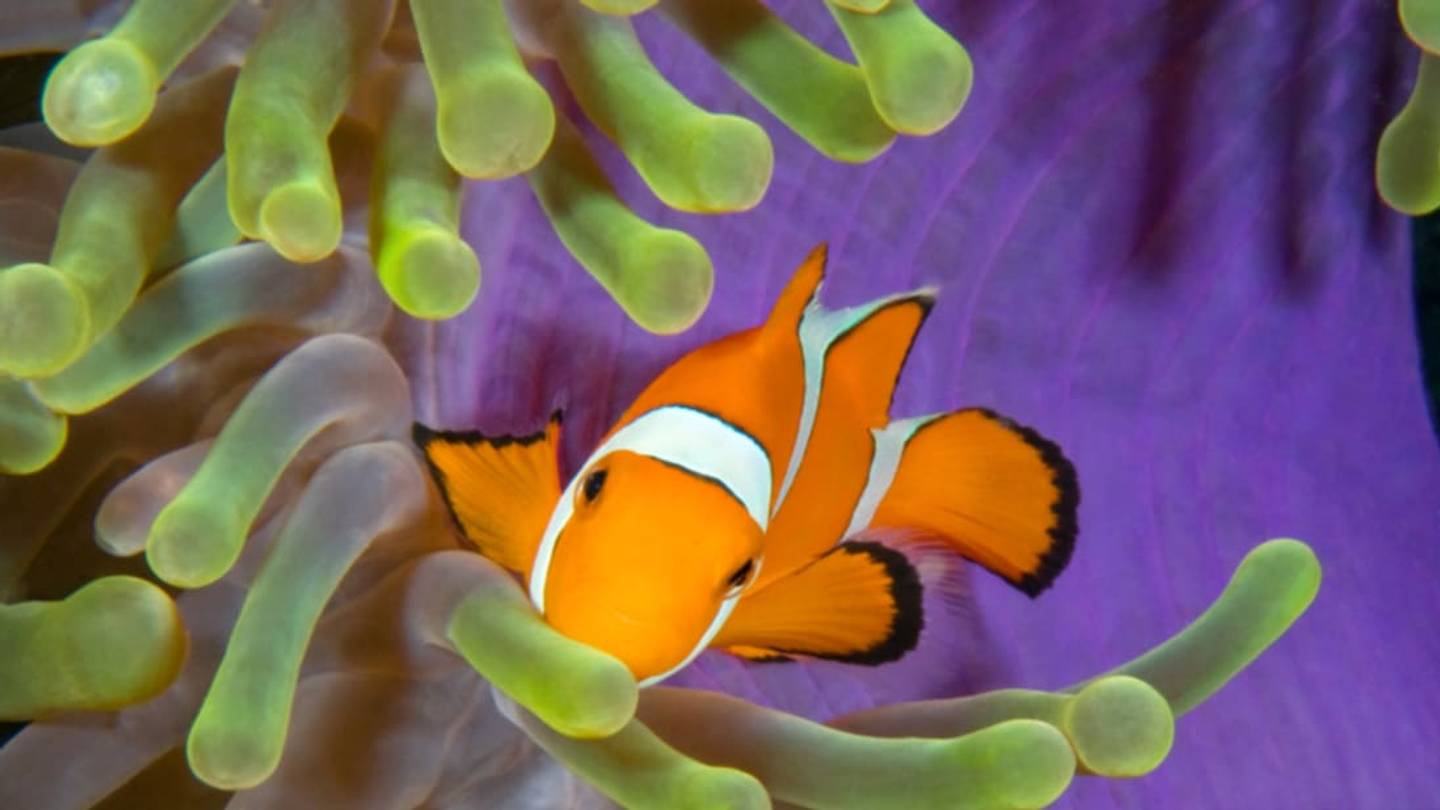
As these marvelous swimmers demonstrate, schools of fish definitely have the best talent shows.
Scientifically known as âsequential hermaphrodites,â all clownfish are initially born male. However, gender-swapping is rampant. As adults, clownfish develop complex hierarchies headed by a dominant female. Should she die off, one male will transform himself into the next alpha-female, continuing this strange life cycle.
Flat fish donât get much respect, but maybe they should. Pigment-altering skin cells enable the peacock flounder to radically change its color scheme within seconds. By comparison, chameleons generally take several minutes to even slightly modify their hues. Point goes to the flounder.
Wikimedia Commons  // CC BY 2.0 Â
Theyâre a hit with aquarium enthusiasts, but any predator can tell you that clown loaches make terrible dinner guests. These colorful Indonesian fish have movable spines beneath their eyes which, when raised, make them exceedingly difficult to swallow.
Wikimedia Commons  // CC BY-SA 3.0 Â
With their huge, razor-sharp teeth, African tiger fish look like they mean business. Scarier still, one specimen was recently recorded leaping clear out of a freshwater lake and engulfing an unfortunate bird just above the surface. You have to respect that kind of athletic ability.
Have you ever kicked back on one of Hawaiiâs gorgeous white beaches? Some of that sand was probably fish waste. Parrot fish eat various organisms that live on coral reefs. While feeding, they inevitably wind up swallowing chunks of rock-hard coral, a side-dish these critters canât digest. Such pieces get broken down and pass through their systems as freshly-made sand.
Itâs like the worldâs deadliest squirt gun. Archerfish have one of natureâs most oddly specific hunting strategies: namely, spraying hapless insects with a controlled jet of water. The victimâusually perched on an overhanging plant limbâfalls directly into the archerfishâs eager jaws.
Electroreceptors on a sawfishâs toothy snout allow it to detect even the faintest heartbeats. This really comes in handy, considering that preferred menu options (crabs, shrimp, smaller fish, etc.) regularly hide out under several inches of sand.
These salmon famously migrate for thousands of miles and return to the same streams in which they hatched. How can they pull off this amazing feat without a GPS? By picking up on tiny variations in the earthâs magnetic field. No two streams, after all, give off exactly the same magnetic signature.
They may look like pushovers, but these scavengers know how to protect themselves. The hagfishâs unique skin glands release a thick, fibrous haze of gunk that clogs jaws and jams gills to teach naïve attackers a lesson they wonât soon forget.
Swimming through icy polar depths (which can dip below -2º Celsius) becomes childâs play when thereâs an all-natural antifreeze coursing through your blood.
Most fish would see trying to scale a waterfall as an impossible task. Luckily, few fish enjoy extreme sports more than rock-climbing gobies of Hawaii. When gobies need to venture upstream through swift mountain waters, waterfalls and sheer rock faces are no hurdle: The fish use their incredibly strong mouths and a unique sucker appendage on their bellies to grab onto rocks and gradually inch their way up to more hospitable territory.
Evolution has equipped these guys to take circular chunks out of passing animals. And, as the U.S. Navy found out, the 22-inch sharks arenât exactly finicky eaters. During the 1970s, cookie-cutters wreaked havoc on unsuspecting subs by chomping through sensitive cables and rubber sonar equipment, forcing these vessels to return to base.
Wikimedia Commons  // Public Domain
Generous jaws and a uniquely designed stomach enable these 10-inch predators to gulp down live meals that are twice their own length and 10 times as massive.
We donât normally associate fish with vocalization, but some amorous males of this species, also known as âCalifornia singing fish,â emit hour-long humming noises to arouse potential mates (and angry grunts whenever a competitor zeroes in).
Whatâs even more amazing than a fish crawling around on land? A fish crawling up a tree. As adaptable mangrove swamp denizens, mudskippers periodically exit the water and walk over patches of mud. Theyâre also known to scale tree branches from time to time. Next up on their to-do lists: building treehouses.
All images courtesy of iStock unless noted otherwise.
Loading recommendations... Please wait while we load personalized content recommendations