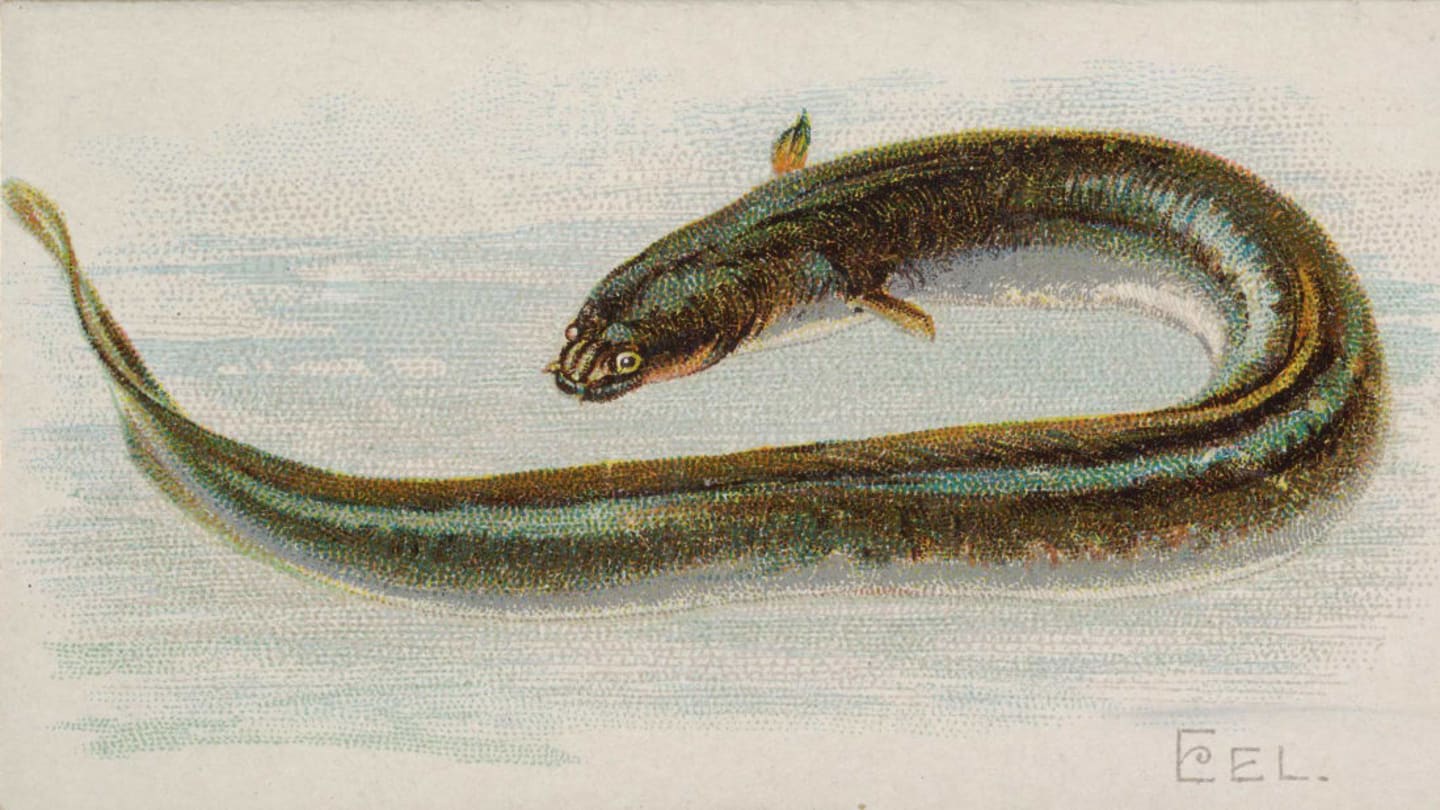
Eels are a diverse group of fish that tend to look pretty slender; you might even call them âeel-longated.â Some are big, some are small, and more than a few come with nightmarish jaws. Naturalists have been probing their mysterious habits for millennia, and here are 11 things weâve learned about the creatures.
If youâve caught a long, skinny fish, that might be an eelâbut it could also be something else. True eels are members of the order Anguilliformes, which includes 800-plus species. The so-called âelectric eelsâ of South America donât count because they belong to the unrelated order Gymnotiformes . Genetically speaking, electric eels have closer ties to catfish and carp. Shocking, right?
A large family of Anguilliformes, moray eels donât produce much suction when they bite things. So to drag prey down their gullets, the fish use a secondary set of â pharyngeal jaws â hidden deep inside their throats. Lined with wicked teeth, the jaws can shoot forward and grab struggling victims that are already trapped between the other set of jaws.
Hereâs the CliffsNotes version: American eels ( Anguilla rostrata ) hatch from eggs laid in the Atlantic Ocean. The Sargasso Seaâa body of mid-ocean water whose borders are defined by various currentsâis thought to be a major spawning ground for the species (although other breeding sites might also exist ). At first, baby eels are leaf-shaped larvae; later, they become 2- to 3-inch-long juveniles called glass eels; find new homes in brackish coastal habitats in yet another stage known as elvers; then, in the final stage before sexual maturity, they become yellow eels. Anywhere from three to 40 years later, they become silver eels measuring up to 5 feet long and return to the Atlantic to breed.
Yet another migratory fish, this species ( Anguilla anguilla ) follows the same basic life cycle as the American eel. It both spawns and dies in the North Atlantic, spending the remainder of its life in coastal Europe. Some evidence suggests that juveniles (i.e. âglassâ eels) can potentially sense magnetic fields and adjust their swimming habits accordingly. If true, this might help explain how they find their way to the Sargasso and back.
Besides their rope-like physiques, eels and snakes donât have much in common. However, there are over 50 snake species that spend all or some of their lives in the ocean, and certain amphibious types known as sea kraits regularly hunt moray eels, eating them whole. One researcher even described a 5-foot-long sea krait swallowing a 4-foot-long moray.
Unagi don is a popular summertime entrée in the Land of the Rising Sun. Its main ingredient is roasted eel meatâusually taken from a Japanese eel ( Anguilla japonica ) or the American speciesâthat is served with pepper and sauce over a bed of rice. Questions have been raised about the sustainability of harvesting American or Japanese eels, however, seeing as both species are classified as endangered by the International Union for the Conservation of Nature.
Just ask Jimmy Griffin, a veteran diver who was suddenly attacked by one of the sharp-toothed eels near County Galway, Ireland, in 2013. Conger eels can weigh over 200 pounds ; the eel in this particular story measured around 6.5 feet long. It approached Griffin 82 feet below the oceanâs surface and took a bite out of his face, inflicting a wound that required 20 stitches and plastic surgery . Unfortunately for diving enthusiasts and fishermen , this wasnât an isolated case .
Protanguilla palau lives in reef caves near the Republic of Palau and has unique gill structures for a modern eel. Since the animal didnât look like it comfortably belonged with any known eel families (like the morays), scientists established a brand-new one just for it: Protanguillidae. Experts think the ancestors of Protanguilla palau diverged from other early eels around 200 million years ago and took a separate evolutionary path.
Noted for their climbing ability , juvenile longfins can scale 65-foot waterfalls, as well as manmade dams . The migratory species frequents New Zealandâs freshwater lakes and rivers.
âSnowflake moray eelâ is a cute-sounding name, but theyâre fearsome predators. Research published in 2021 shows theyâre capable of (partially) hauling themselves onto dry land and grabbing prey like crabs above the waterline, courtesy of those pharyngeal jaws.
So are half of all the vertebrate animals alive right now. Ray-finned fishesâa group which includes the Anguilliformesâare named after the stiff, jointed bones that underlie their fins . This stands in contrast to the fleshy, muscular extremities of âlobe-finned fishesâ like coelacanths .
Loading recommendations... Please wait while we load personalized content recommendations