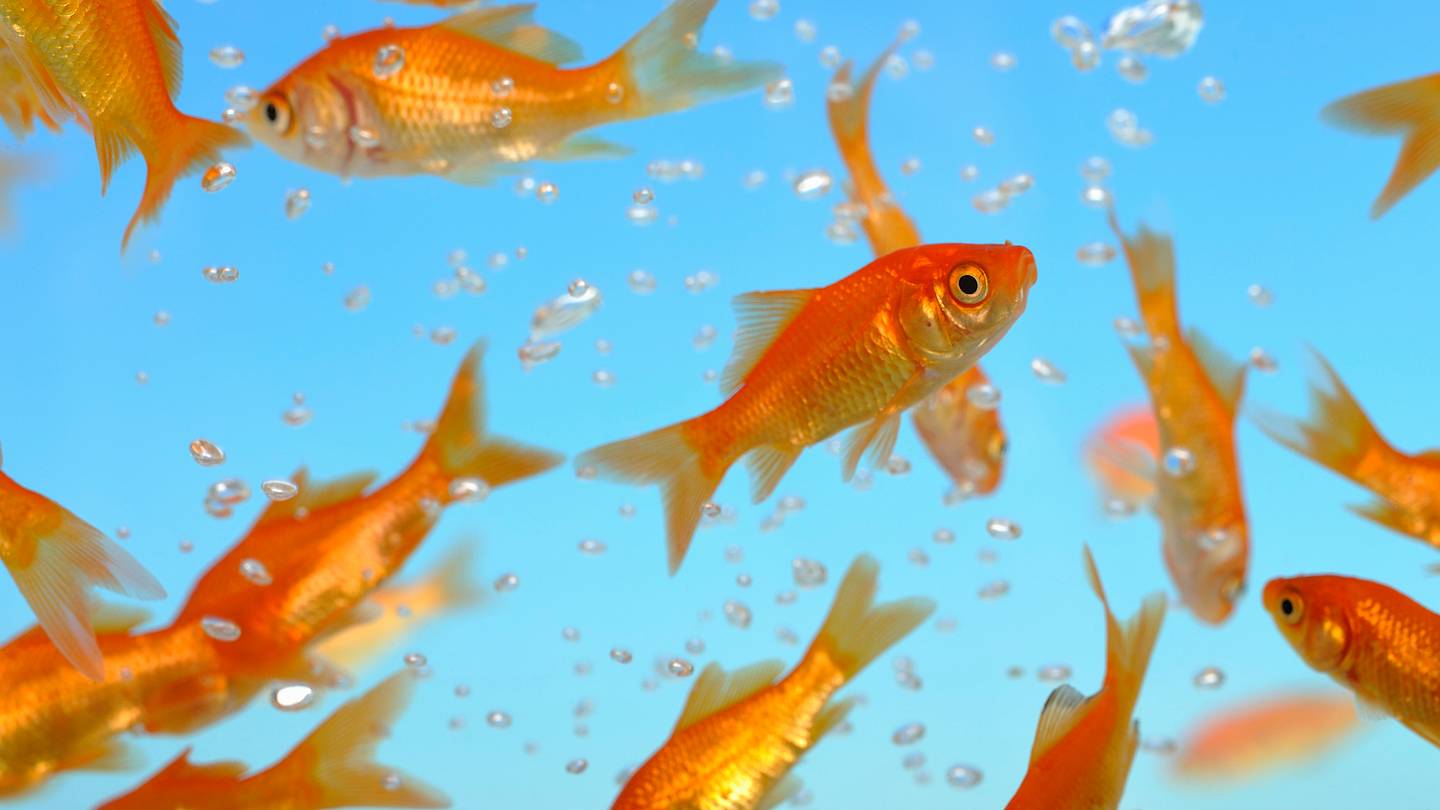
When you were a kid and begged your parents for a puppy, did they end up getting you a goldfish instead? If so, you werenât alone. These fish are quintessential starter pets for young children, and it sort of makes sense why. Theyâre pretty to look at and affordable to buy, and, at first glance, easy to care for: just carry one away with you from the pet store and flip it into a small fishbowl when you get home. Other than tossing a few flakes of food in the bowl every morning, they donât require much attention.Â
At least, thatâs the reputation goldfish have earned over the yearsâbut they arenât the no-maintenance pet people expect them to be. Before we explain how to properly care for these little guys, letâs look into how they became so popular in the first place.Â
Hereâs the classic image of a goldfish: swimming into the corners of a plastic baggie thatâs clutched in a small childâs hand at a local fair. But the story of this fish is centuries older than those beloved U.S. events. To understand how the goldfish became a fair prize, you need to travel back to China during the Tang dynasty .
Goldfishâ members of the carp family , a usually drab type of fishâwere initially bred for eating, not as pets. They were typically covered in less attractive gray or green scales, but as they reproduced over time, genetic mutations began to occur. This is where you start seeing fish streaked with golds and yellows.
According to Anna Marie Roos, a science historian at the University of Lincoln and the author of Goldfish , it didnât take long for these genetic variations to take on religious significance. Beginning in around the 9th century, people saw their attractive color and chose to honor the fish by releasing them into Buddhist ponds in a ritual known as a mercy release. The fish were then domesticated by the Buddhist monks, who fed and tended to them.Â
Recognizing the beauty and uniqueness of these variants, the monks, plus scholars and the elite, began to selectively breed the colorful creatures in their ornamental ponds and water gardens.Â
Goldfish made it out of China and wound up in Japan in the 16th century, then eventually landed in Europe. They were introduced to each new place as pets and could be seen in fountains and exhibits. No one can say for sure when these fish made their New World debut, but we do know they started appearing in American writing in the 1800s .
What really thrust goldfish into icon pet status in the U.S. was the United States Commission on Fisheries. After receiving a goldfish in 1878 from Japan, the Commission acquired more and started breeding them in a pond in Washington, D.C. To promote their somewhat new government agency, they started sending a goldfish in a bowl to any D.C. resident who wrote to Congress asking for one. The agency gave away nearly 20,000 fish a year before the promotion was put to rest sometime in the 1890s.
This simple act of sending goldfish to Americans is arguably what caused the goldfish boom, quickly making them a popular sight at local fairs and pet shops. While you wonât see them handed out like candy these days, goldfish are easy to find at pet shops around the country.Â
Goldfish are not a low-maintenance pet you can just plop in a bowl and forget. For starters, these fish can grow anywhere from 5 inches to 2 feet long , depending on the breed.Â
Because itâs impossible to know exactly how large your goldfish will grow, itâs recommended to get a tank that holds at least 20 gallons of water per goldfish. (For reference, a standard fishbowl is about 1.5 gallons.) To keep your pet from getting depressed , youâll also need to place aquarium rocks, plants, and hiding spots throughout the tank.Â
Some parents also like goldfish as pets because theyâre believed to only live for a year or two, which makes them less of a commitment for a child who may decide theyâre not interested after a few months.
Unfortunately, this is another misconception: Healthy goldfish kept in proper environments can live up to 15 years . Goldfish that are confined to a small bowl, however, tend to die after a year or two because their bodies are unable to keep growing, resulting in physical deformities and early death. These kinds of fish also need plenty of oxygen in their water, which small bows donât properly circulate, leading to a kind of suffocation . In addition to adequate space, the species also requires plenty of clean water and a high-quality filtration system .
The moral of the story? Goldfish can make great petsâbut theyâre not low-maintenance animals that should be given to children as a âreal petâ trial. If your kid does have their heart set on one of these shiny-scaled fish, make sure you know how to properly care for it.
Loading recommendations... Please wait while we load personalized content recommendations