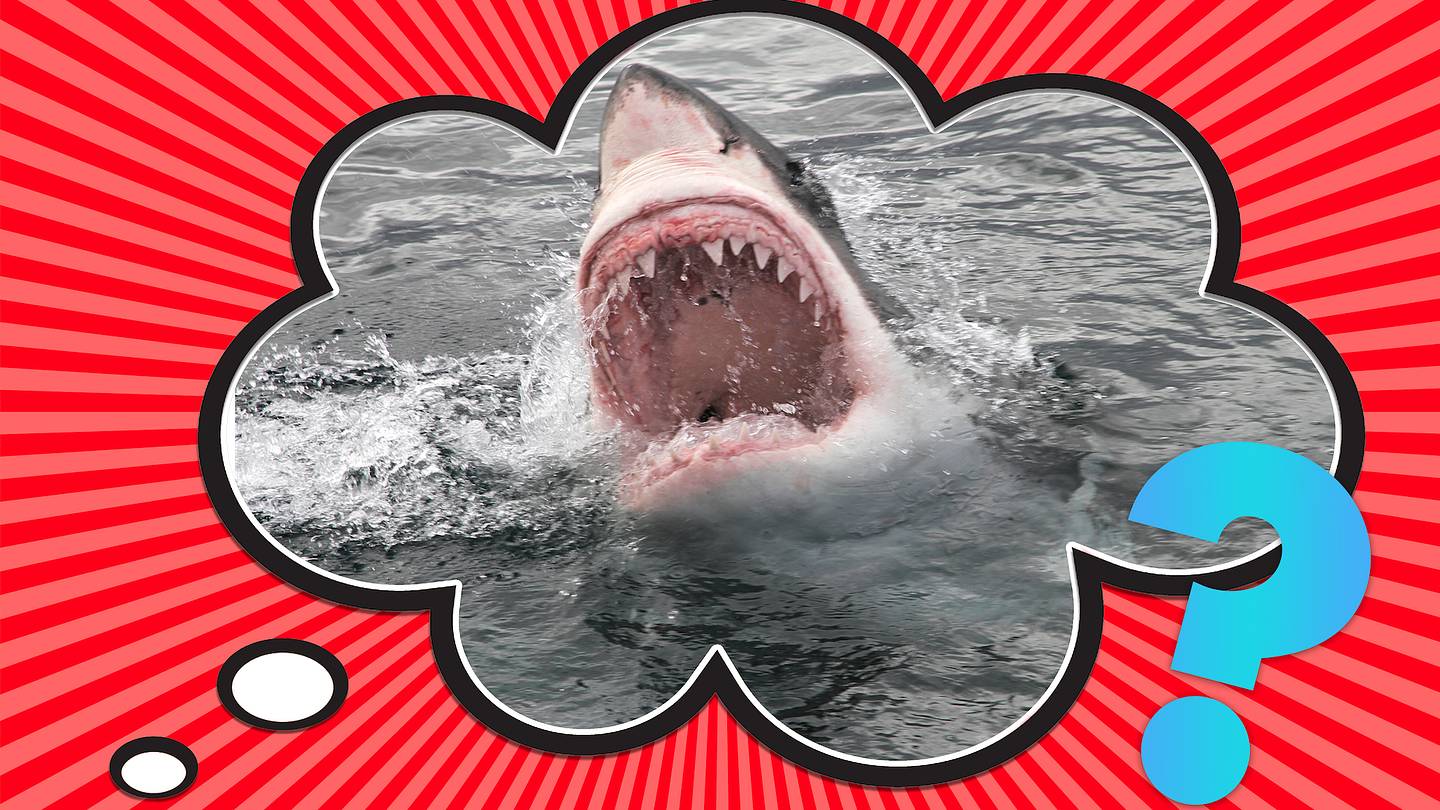
As you tune into Shark Week on Discovery this year, you may find yourself asking questions like â How common are shark attacks ?â and â How do I survive one ?â A slightly less alarmist thought might surface as you contemplate your vulnerability at sea: How many teeth do sharks have, exactly? The question may seem straightforward, but sharks possess some of the most complex and impressive chompers in the animal kingdom.
According to Discovery , the number of teeth in a pair of jaws you might see in the movie Jaws (1975) is around 300. Thatâs the case with the great white âthe most iconic shark and the biggest species that goes after large prey. But that number describes the total tally of teeth in the sharkâs mouth, not the teeth theyâre actively using to hunt and feed.
Though they look formidable, a sharkâs teeth are weak relative to those of many other animals. They break or wear down easily, which seems like it would be a problem for a predator that relies on its mouth to bring down prey. But sharks have evolved a unique fail-safe; instead of growing stronger teeth, theyâve developed a way to replace them at an impressive rate.
Many sharks, including great whites, have several rows of pearly whites that are constantly rotating like a conveyor belt. New teeth are moved to the front of the mouth and old teeth are pushed out to make room. So while a great white might have hundreds of teeth in waiting, it only has 50 or so âactiveâ teeth at any given time. That's not much more than an adult humanâs 32 . The number of total teeth produced by a single great white, however, is quite an achievement. The average great white shark might cycle through 20,000 teeth in its lifetime.
Great whites have the most recognizableâand most fearedâjaws in the shark family, but they donât win the numbers game. The shark with the most teeth in its mouth is the whale shark, with a hair-raising 3000 . Fortunately, the gentle giant isnât using its superlative bite on humans. Though theyâre the biggest sharks in the sea, whale sharks subsist largely on a diet of shrimp and plankton.
Have you got a Big Question you'd like us to answer? If so, let us know by emailing us at [email protected] .
Loading recommendations... Please wait while we load personalized content recommendations