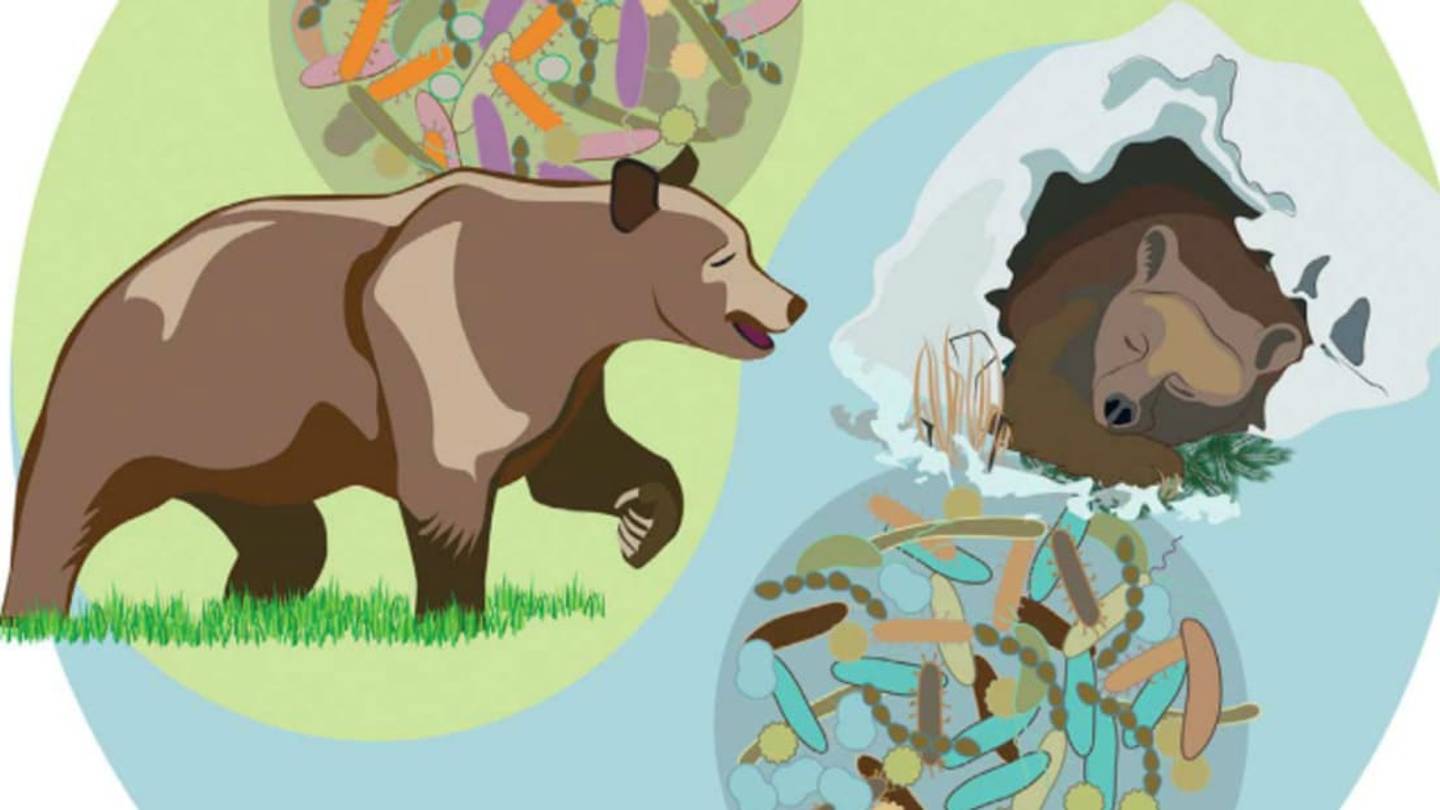
Itâs a tale about nature that even small children know: at winterâs approach, a bear sets out to stuff itself with all the food it can find. After a prolonged feast, the bear, now significantly fatter, lays down for a long winterâs nap. But, as an adult, do you ever wonder how it is that bears can enjoy the benefits of obesity without incurring any of the drawbacks? Scientists do. A paper published today in the journal Cell Reports suggests that one secret to the bearsâ success may lie in their gut bacteria.Â
Lead author Fredrik Bäckhed has been studying the influence of gut bacteria on human health for more than a decade. Heâs especially interested in the relationship between our microbiomesâthe microbial ecosystems living in and on our bodiesâand obesity. In one experiment, Bäckhed and his colleagues were able to show that our microbiome can affect the way we metabolize food.
It was a natural next step for the scientist then to turn his attention to bears, whose metabolisms do a fantastic job managing the way their bodies use nutrients during the annual big sleep.
A common way to look at someoneâs gut bacteria is to collect a sample of his or her poop. This is an easy, if not pleasant, task with humans. With hibernating bears, however, itâs something altogether different, as hibernating bears donât poop. Just before they lie down for the winter, bears clean their bodies and paws with their tongues, ingesting a lot of hair and foot pad skin in the process. But their stomachs canât digest hair or pieces of foot pad, so these items travel unharmed through their gastrointestinal tract, along with whatever waste is left in there at the time. This becomes lodged and forms a solid plug in the bearâs butt. Nothingâs coming out of there until springtime.
Curious researchers have two options: wait until spring, when the bear passes the plug and starts pooping again, or go in there and get it. Bäckhed opted for the latter: âWe took it from the rectum,â he explained in a very succinct email to mental_floss .
The researchers took both fecal and blood samples from hibernating bears in winter and active bears in the summerâand itâs hard to imagine which must have been more nerve-wracking. They then brought them (the samples, not the bears) back to the lab for a closer look.
The fecal samples taken from hibernating bears were less diverse than those of their counterparts. The makeup of the two groups was also different. The microbiota of sleeping bears was more heavily populated with Bacteroidetes bacteria, whereas the summer bears hosted more bacteria from the Firmicutes and Actinobacteria groups. The bearsâ blood revealed differences as well: shifting levels of metabolic substances like triglycerides, cholesterol, and bile acids.
Next, the scientists inoculated lab mice with the bearsâ bacteria. They found that mice treated with summer bacteria gained both more weight and more fat than the winter-bear mice. But despite their weight gain, the summer mice suffered no damage to their glucose metabolism. This suggests that, unlike obese humans, those mice (and the bears from which they got their bacteria) were not especially vulnerable to metabolic conditions like diabetes.
Bäckhed hopes that further study of the microbiome may lead to a better understanding of and ways to manage obesity in humans. "I think it's too early [to say], as I consider this being very basic science," he said in a press statement . "However, if we learn more about which bacteria and the functions that promote and/or protect against obesity [in hibernating bears], we may identify new potential therapeutic targets."Â
Loading recommendations... Please wait while we load personalized content recommendations