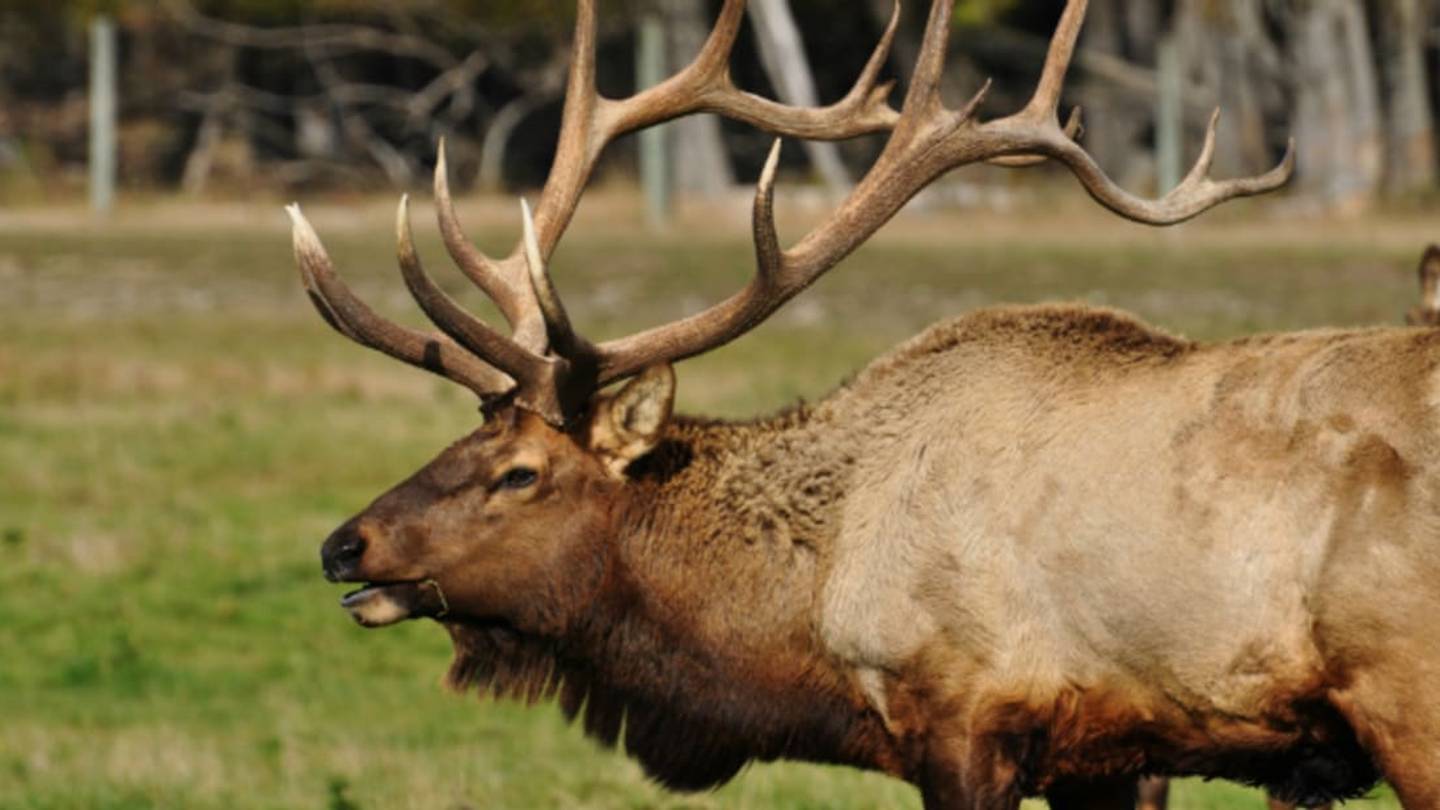
Nature is fairly consistent when it comes to animal noises. For the most part, bigger animals make bigger and deeper sounds. But there are exceptions, of course. The claws of the little pistol shrimp produce a deadly crack, and the enormous deer species known as wapitiâmore commonly called elkâemits a high-pitched shriek that scientists have only just figured out. Their findings are published today in the Journal of Experimental Biology.
The average adult male North American elk ( Cervus canadensis ) weighs in at about 700 pounds, in a sturdy body topped with dagger-sharp antlers. Looking at this beast, youâd guess that his bellow would be of the earth-rumbling, not earwax-melting kind. Youâd be rightâand then again, youâd also be wrong.
Hereâs the bugling call of an adult male:
Kind of makes your hair stand on end, doesnât it? For decades, the elk's eerie calls have haunted scientists, who could not explain how it was producing them. Now, one team of researchers believes theyâve found the answer: Elk arenât really shrieking. Theyâre whistling.
The researchers traveled to Wyoming, California, and Alberta, Canada during rutting season and videotaped nine males as they bugled. Back in the lab, the team pored over the video images, watching the small movements of the elks' lips, jaws, and nostrils.
Animal communication expert and co-author Meg Wyman recorded audio of another four males at wapiti farms in New Zealand. Those recordings were then analyzed for frequency, duration, and content.
During this time, the team acquired a recently deceased adult male elk from a park in France. They arranged the animalâs head and neck so that the body was in a bugling posture, then scanned it using computed tomography (CT). After the scans, the elkâs larynx and part of its skull were sent to a zoo in Germany for further analysis.
The audio analysis revealed that the elkâs high-pitched cries reached as high as 4000 Hz. But there was another sound in there, hovering low around 150 Hzâabout the frequency youâd expect for the call of an animal that big. The two sounds seemed to behave independently: one sound could waver, while the other remained constant. Unlike a chord, where different notes are sounded together, the sounds seemed to be coming from two places at once.
Examination of the elk's vocal cords revealed them to be the right size and shape for producing a low, reverberating bellow. The source of the shrieks? A hollow pathway from the elkâs throat to its nostrils. By forcing air through the chambers, a male elk can essentially play his own head like a flute.
Rather than alternating between broadcasting two messages, the researchers say, male elk simply play two at once: a low, deep call that can only be heard by other elk nearby, and the creepy shrieks that reverberate over long distances.
Loading recommendations... Please wait while we load personalized content recommendations