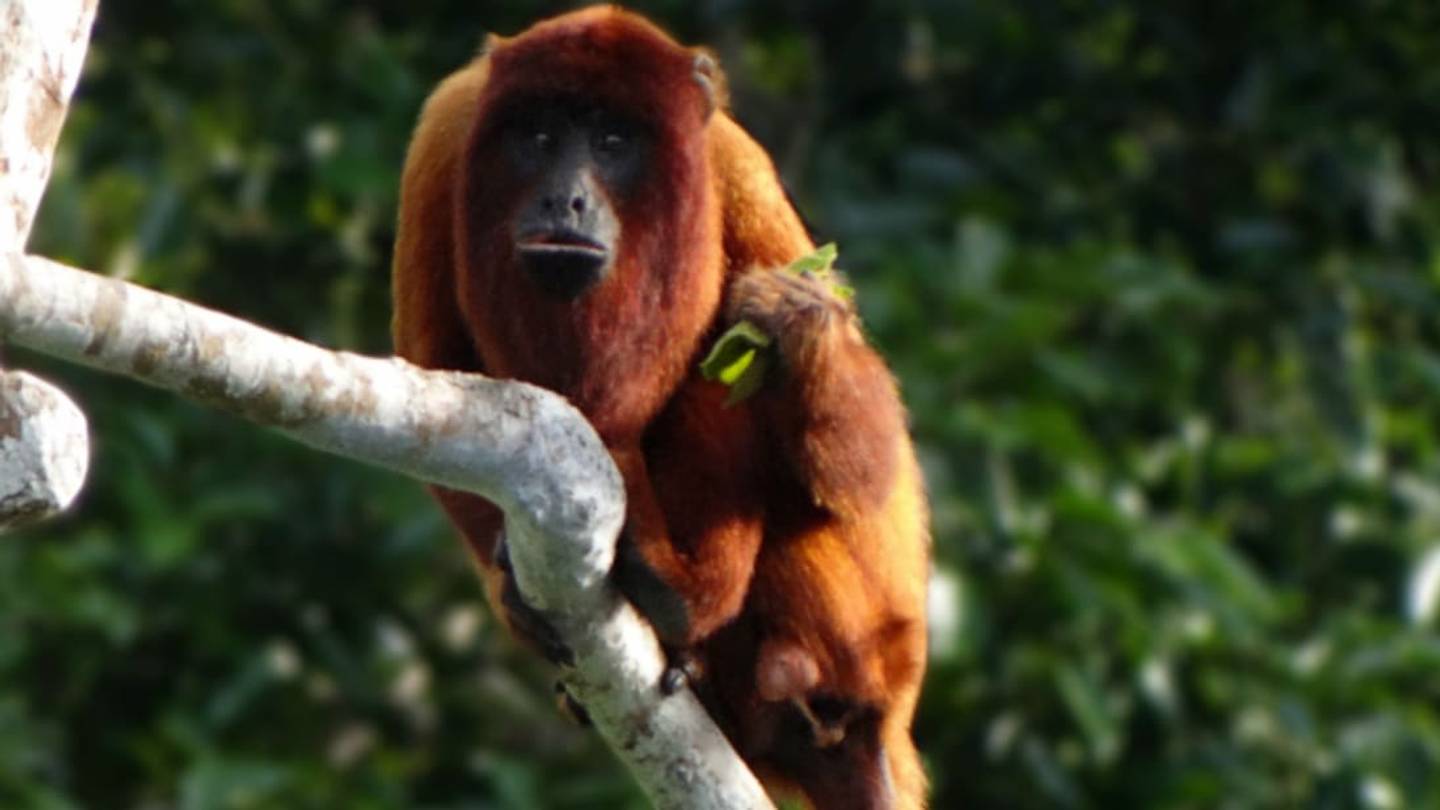
Dating is tough. We all know that. To attract the right mate, or any mate at all, you have to stand out from the crowd. Maybe your best quality is your sense of humor, or your twinkling eyes, or your sweet dance moves. Maybeâif youâre a howler monkeyâitâs your enormous testicles, or your ability to yell louder than anyone else.
To ensure the continuation of their genes, male howler monkeys invest energy in making noise or making sperm. But scientists say they canât do both. New analysis from the University of Cambridge finds that for howler monkeys, louder calls equal smaller balls.
The howler monkey is a curious creature, a terrier-sized primate with a tiger-sized roar. The monkeys can only reach about 15 pounds, but their calls are among the loudest on the planet. The malesâ bellowing, belching calls serve two purposes: to catch lady monkeysâ attention, and to tell other males to take a hike.
The howler monkeysâ larger-than-life noises are possible thanks to a specialized bone called a hyoid. This hollow, pouch-shaped bone acts as an echo chamber, amplifying the calls before they ever leave the monkeyâs mouth. The bigger the hyoid bone, the more noise a monkey can make.
This is more important for some species than others, and it all comes down to sex. Some howler monkeys have harem-type setups, where one male monkey mates with several female monkeys. In those arrangements, the challenge lies in appealing to the ladies and keeping other dudes away, but once mating has taken place, a male monkey can be pretty sure his sperm are safe.
Other species have a more relaxed sex scene in which female monkeys are free to take as many mates as they want. For these species, the males with the biggest cojonesâand thus the most spermâare the ones most likely to succeed in making monkey babies.
But yelling and making sperm each require a lot of energy. The monkeys canât have their yelling and big balls, too.
These are the conclusions of a new paper published this week in the journal Current Biology . Researchers used 3-D laser scans to measure the hyoid bones and testes of 10 species. They found a distinct inverse relationship between the two. Harem-type species had larger hyoid bones and smaller testes, and the reverse was true for the free-love-type species. Exactly how this trade-off happened is not totally clear, lead author Jacob Dunn said in a press release .
âIn evolutionary terms,â Dunn said, âall males strive to have as many offspring as they can, but when it comes to reproduction you canât have everything.â
Loading recommendations... Please wait while we load personalized content recommendations