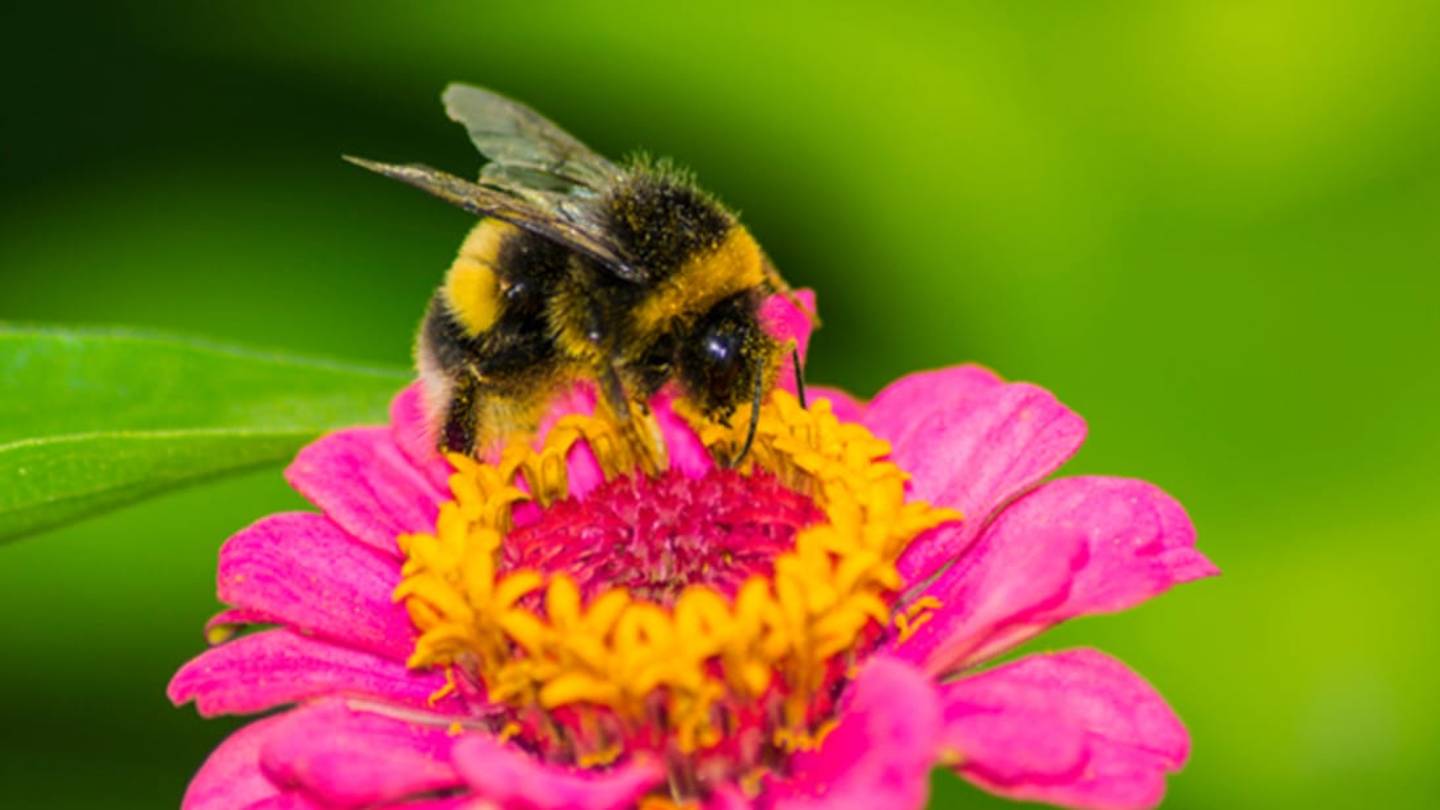
Bumblebeesâthose fat, fuzzy fliersâare fascinating creatures. Theyâre also very hard to study, as are most animals that are too small to tag and can fly away at any moment. Dave Goulson, a scientist who founded a conservation trust to support bumblebee populations, has spent his career researching the habits and mannerisms of the humble bumblebee, a life he chronicles in his book about the bug, A Sting in the Tale: My Adventures with Bumblebees . Here are 15 compact facts we learned about bumblebees from Goulsonâs adventures in bee research.Â
Its queens are described as looking like flying mice .Â
Tiny, tiny sausages.
Thatâs a similar RPM to some motorcycle engines.
Bumblebees have extremely fast metabolisms, so they have to eat almost continuously. âA bumblebee with a full stomach is only ever about 40 minutes from starvation,â as Goulson puts it.
They have a maximum of 300 to 400 worker bees, compared to the tens of thousands found in a honeybee or wasp nest. For context, there are around 25,000 known species of bee, though there are likely more that have yet to be discovered.
Only the fat queen bee survives winter hibernation, and sheâs left to create a colony by herself. Sperm stored up from mating the previous summer survives in her ovaries, ready to fertilize her eggs once she finally finds a nesting place. By the end of the summer, when sheâs a little over a year old, the queen and all her worker bees die, to be replaced by her daughters.
Male bumblebees have only one chromosome, and no father. To produce a son, a queen bee merely has to lay an unfertilized egg. To have daughtersâwho make up the entirety of a bee workforceâa queen bee fertilizes her eggs with sperm sheâs been storing since the previous summer.
Because bee sisters receive exactly the same genes from their fathers, but only share around 50 percent of genes from their motherâs side, a female bumblebee is 75 percent related to her sisters. But sheâs only 50 percent related to her children, who get half their genes from their father and half from her. Thatâs why it makes sense for the majority of bees in the nest to help raise the queenâs offspring, rather than running off to start their own nests. The worker beeâs sisters carry more of her genes than her children would, so she leaves that whole childbirth thing to her mother.Â
Thatâs just a thing in honeybees. So yes, a bumblebee can sting you twice. However, male bumblebees donât have a stinger at all, and female bumblebees arenât very aggressive, so unless you go barging into their nest, youâre likely safe.
Frederick William Lambart Sladen was the first scientist to devote his research completely to bumblebees. He published his first book about the bee at the age of 16, in 1892, solidifying himself as the world expert. And he still kind of is. âSpecies that are today rare or extinct in Britain, such as the short-haired bumblebee, were familiar to Sladen, and his descriptions of the nests of such species remain pretty much all that we know,â Goulson writes. âNo one has come close to matching Sladenâs knowledge of the nesting habits of bumblebees.â
Itâs called a pooter. Hehe. Pooter. In all seriousness, it allows scientists to pick bees up to study them without harming them. Researchers can suck small insects into a jar by inhaling through one end of a tube. Mesh on the mouthpiece prevents the insect from being sucked directly into the scientistâs mouth.
Bees donât really have toes, but scientists snip the final tarsal segment off wild bees to run genetic tests on back in the lab. It doesnât shorten their lifespan or reduce their ability to gather food, so presumably itâs not as cruel as it sounds.
Bees, like all insects, are covered in an oily film that makes them waterproof. When they land on a flower, they leave their chemical signature behind. Other bees can smell these oily footprints left on flowers, and know not to land on the same placeâthe nectarâs already been pillaged. Bees also use these footprints as a sort of smelly âWelcome Homeâ mat; the scent helps them find their way back to the entrance of their nest.
If the nest gets too hot, worker bees post themselves near the entrance and fan the hot air out, like tiny flapping A/C units. The hotter it is, the more workers join in the effort in order to keep the nest at exactly 86 degrees Fahrenheit, their preferred temperature. If their body temperature rises above 111 degrees, the bumblebees will die.
In a study of bees in Scotland, Goulson found that areas atop hills attract an unusual amount of male bees compared to flat areas or midway up a hill. While he speculates that this may be an effort to attract matesâsome other male insects gather at higher altitudes to wait for a lucky lady to come alongâscientists have not observed this pick-up technique succeeding. However, bumblebees produce more eligible bachelors than they do bachelorettes. There are about seven males for every queen born, so most males never mate.
Loading recommendations... Please wait while we load personalized content recommendations