We know what youâre thinking: Youâd like to torch every one of those pesky bugs buzzing around your porch light and banging into your windows.
But forget those white-winged summertime pests that come to mind. An Atlas moth ( Attacus atlas ) would eat them for breakfast ⦠if it had a mouth. A native of Southeast Asia, the Atlas moth rivals any butterfly with its beauty and grandeur, and itâs time to show this insect the respect it deserves. Here are five facts about its life that we find impressive.
Ready for this? The wingspan of a female Atlas moth can reach up to 12 inches with a surface area of 62 square inches. Go ahead and hold up a ruler ⦠thatâs one big insect.
Many see the word Atlas as a reference to the bold and distinct lines that form the map-like pattern found on its wings, the different colors representing different geological formations.
A second theory is based on Greek mythology. The moth is said to be named after Atlas, the Titan condemned by Zeus to hold the sky upon his shoulders. The reference is more about the large size of the moth than the idea that they are bearing some sort of burden.
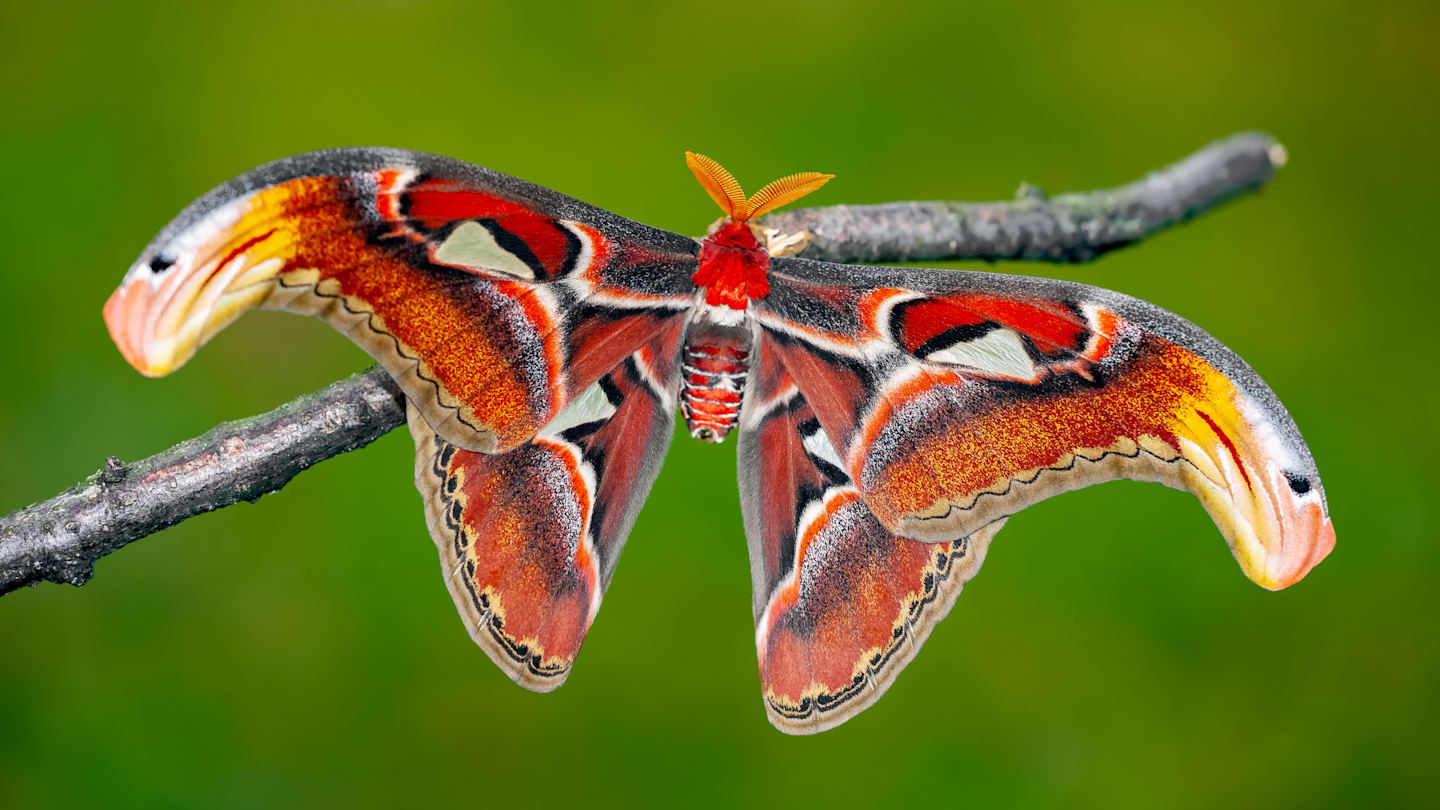
Lastly, in China, the Cantonese name for the moth translates into âsnakeâs head moth,â referring to the outer tips of the wings that look very similar to the head of a snake; you can see this very clearly in just about every photo of an Atlas moth.
The cocoons are very durable and spun from broken strands of brown silk known as fagara , which local communities non-commercially collect and turn into useable products, including purses . Some vacated cocoons donât need to be deconstructedâthey can be used âas foundâ as small pocket-change purses by simply installing a zipper!
You donât have to worry about the Atlas moth munching on the clothes in your closet. Despite their large size, they have no mouths and donât eat once emerging from their cocoons, relying on fat storage from their immature stages of life.
After spending about a month in their cocoons, Atlas moths emerge as the beautiful creatures weâve been describing above. Unfortunately, this state is short lived as the adult moths typically die within a week or two of spreading their wings.
Read More About Insects:
A version of this story originally ran in 2013; it has been updated for 2025.