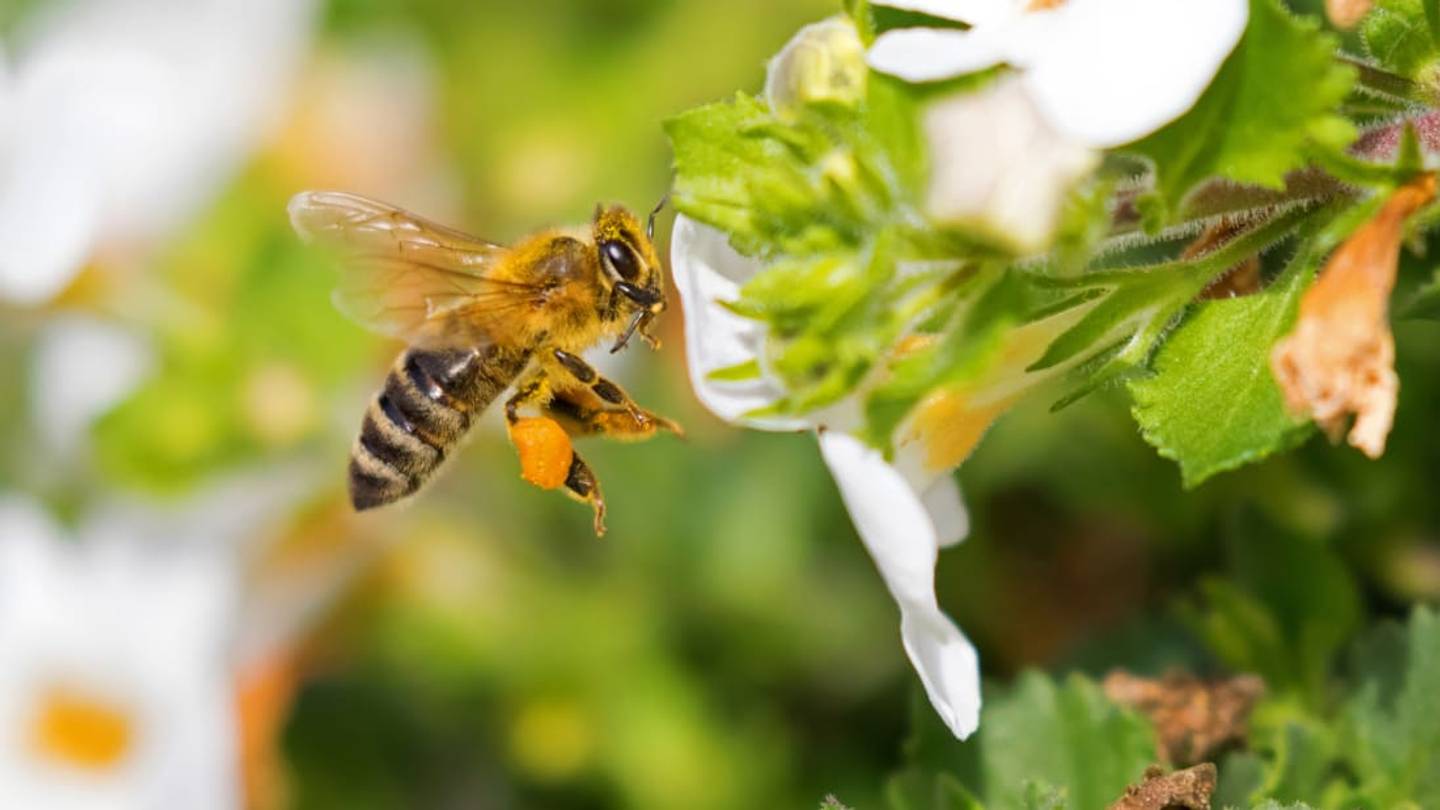
Thereâs a reason everyone wants to save the bees. They pollinate our crops, give us honey , and inspire medical research . Now, theyâre helping scientists figure out how to make stronger adhesivesâan endeavor that could improve everything from construction materials to the everyday glues we use.
As part of a new study, researchers from the Georgia Institute of Technology analyzed the methods by which honey bees get heavy bundles of pollen to stick to their hind legs. Two of these âpollen pelletsâ can weigh more than a quarter of a beeâs body mass, so itâs crucial that these packages remain properly secured while a worker bee flies back to its hive. âPollen is a significant nutrient source for bees and their efficient collection and transport is essential for both the plant and animalâs survival,â the researchers wrote in their study, which was sponsored by the Air Force Office of Scientific Research and published this week in the journal Nature Communications .
To keep their precious cargo from being compromised in a storm or humid weather, the bees use a mixture of spit and flower oil to create an effective, water-resistant adhesive. By drinking nectar, they are able to excrete a sugary saliva that binds the pollen grains together. The plant-based oil, called pollenkitt, is also applied to keep the adhesive properties of the nectar intact while shielding the pollen from humidity.
âIt works similarly to a layer of cooking oil covering a pool of syrup,â J. Carson Meredith, a professor in Georgia Techâs School of Chemical and Biomolecular Engineering said in a statement . âThe oil separates the syrup from the air and slows down drying considerably.â
This could have a number of practical applications. âTapes, glues, adhesive sealants, and even caulks used in humid environments either in construction or in consumer products would perform better were they able to withstand changes to humidity,â Meredith tells Mental Floss.
It isnât entirely unusual for scientists to study animals in hopes of yielding âbioinspiredâ products that mimic the natural processes they're based on. For example, in 2014 Stanford scientists created gecko-inspired adhesives that can help humans climb glass walls.
Loading recommendations... Please wait while we load personalized content recommendations