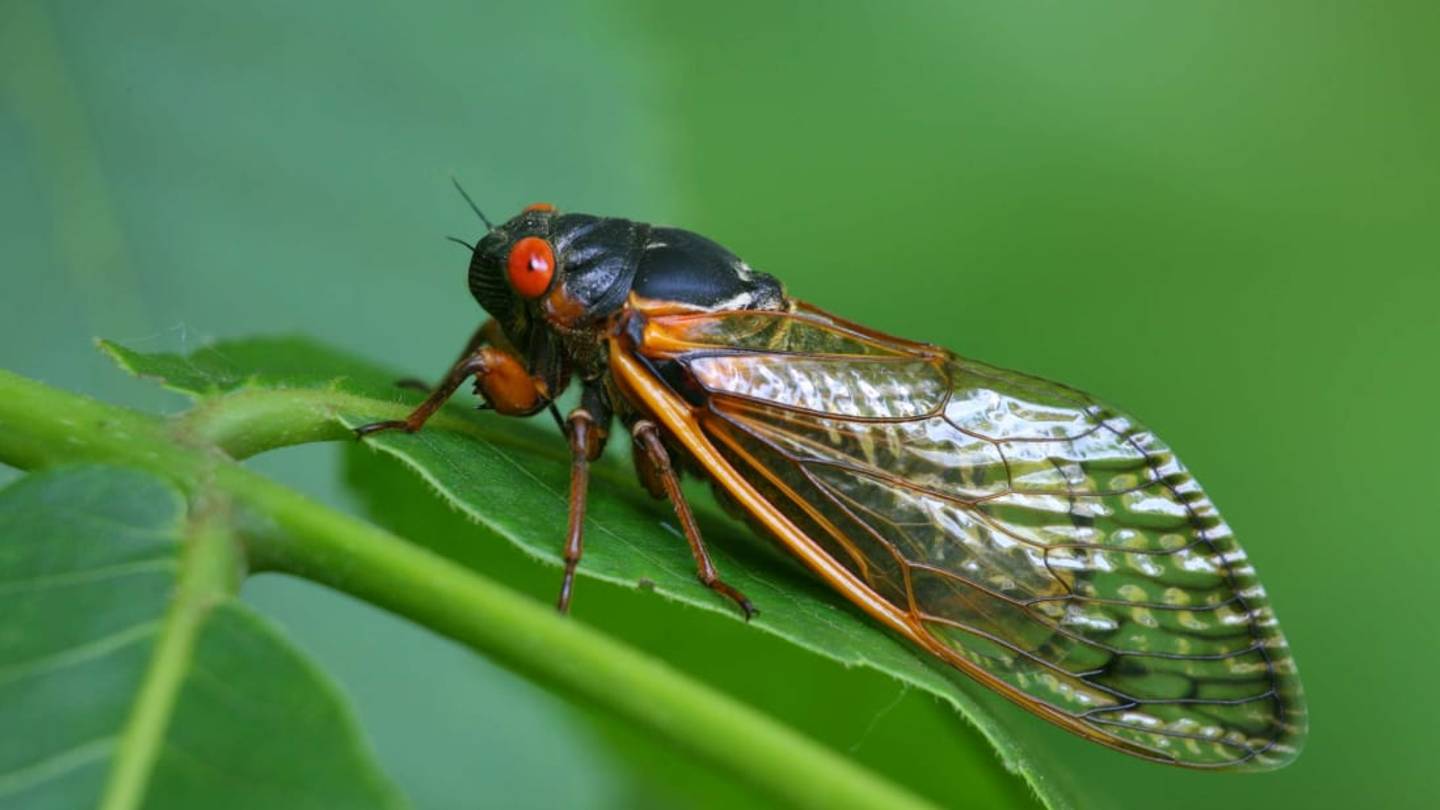
Cicadas are relatively harmless compared to some insects. They don't bite , and they typically stay away from the plants in your garden . But if you're sensitive to sound, the bugs can be a major nuisance. Their choruses can reach up to 100 decibelsâwhich is equivalent to a car stereo playing at max volume. For an idea of what cicadas sound like, listen to the videos below.
As their name suggests, 17-year-cicadas emerge once every 17 summers after spending the majority of their lives as nymphs underground. In 2021, Brood X âthe most widespread cicada brood in the U.S.âwill crawl out of the ground, molt into their mature forms, and spend a few weeks copulating before ending their brief adult lives. Male cicadas attract mates by letting out chirps, rattles, and high-pitched screams from the tops of trees. Females can hear the songs from up to a mile awayâas can anyone else with functioning ears.
The key to a cicada's deafening call is a pair of percussive organs called tymbals on either side of the males' abdomen. Cicadas buckle these organs by contracting the muscles attached to them. The compression creates a loud clicking sound, which travels to a large air sac in their abdomen and is amplified by their eardrums. When cicadas produce a series of clicks in rapid succession, it creates a buzz , and numerous males buzzing together creates an ear-splitting roar.
The 100-decibel screams of cicadas rival traffic, lawn mowers, and low-flying planes . They exceed public noise ordinances in some parts of the country, and can disrupt everything from sports games to mid-afternoon naps. If you live in an area of the east coast where Brood X will appear this summer, noise-canceling headphones may be a good investment. Of course, you can always sit outside and bask in the cacophony; you won't get to hear this particular brood of cicadas again for another 17 years.
Loading recommendations... Please wait while we load personalized content recommendations