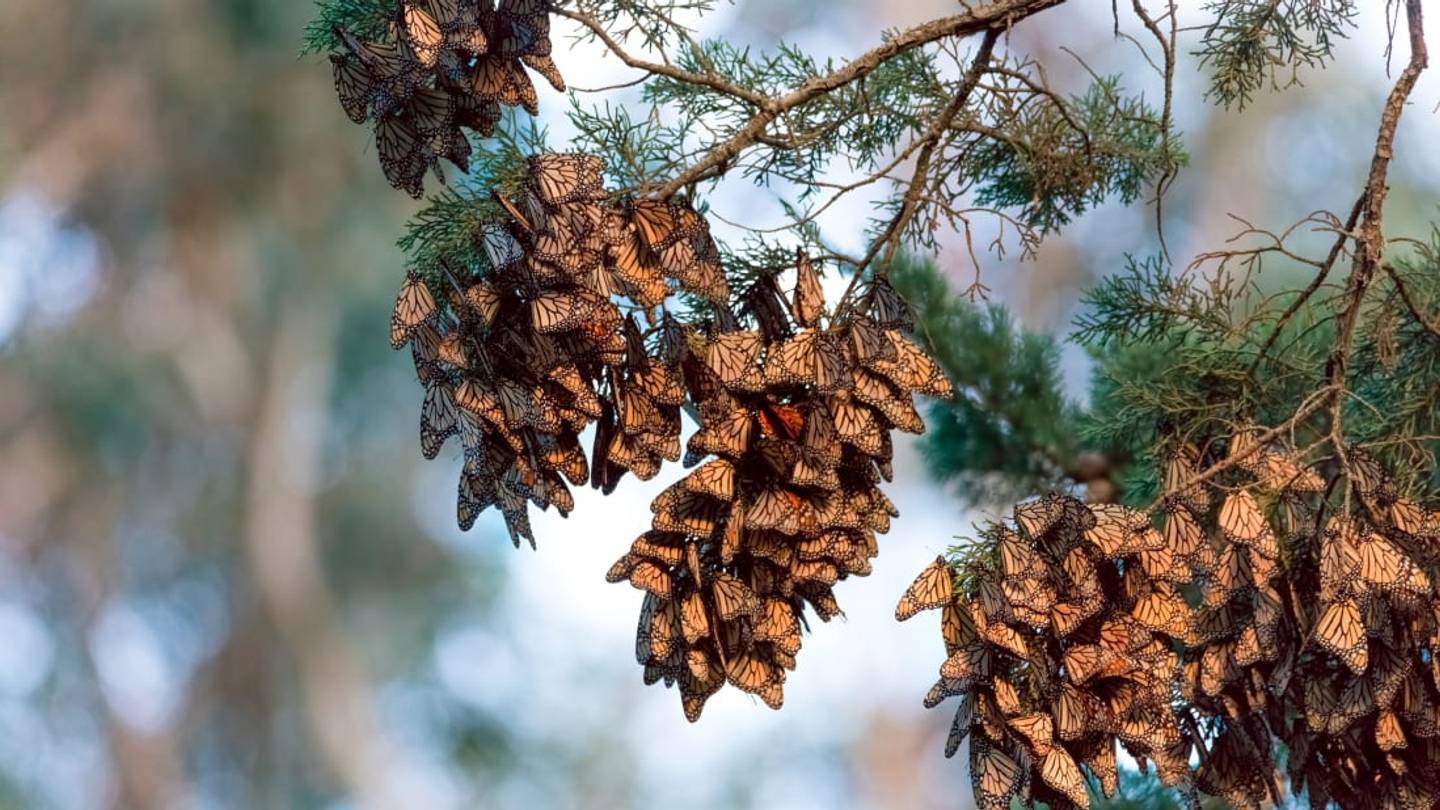
Each fall, millions of migrating monarchs return to Mexico to wait out winter. The gathering makes Woodstock look like a business conference. Hereâs how they get there.
In the mountains of central Mexico, the butterflies crowd on the branches of oyamel fir trees. The trees provide a perfect microclimate that prevents the butterflies from getting too hot or cold.
After winter, the butterflies fly north to Texas in search of milkweed, where they lay their eggs. Many adults will die here; northbound monarchs generally live only three to seven weeks.
One of the reasons monarchs love milkweed? Protection. As caterpillars, they absorb the toxins in the plant, which makes them less tasty to birds.
Eventually, a new generation of butterflies will make its way north to Canada. It takes multiple generations of butterflies to reach their final, most northerly destination.
On the way, butterflies will eat practically anything. Sure, thereâs nectarâbut theyâll also slurp the salts in mud.
When fall returns, a new generation of monarchs rides the air currents more than 3000 miles back to Mexico. They navigate by calibrating their body clocks with the position of the sun. (An internal magnetic compass helps them navigate on cloudy days.)
Monarchs âare one of the few creatures on Earth that can orient themselves both in latitude and longitude,â The New York Times reportsâa feat sailors wouldnât accomplish until the 1700s.
Miraculously, each generation of southbound monarchs lives up to eight monthsâsix times longer than their northbound descendants. Their longevity might have something to do with a process known as reproductive diapause (which is a fancy way of saying that the insects wonât breed until winter ends).
Loading recommendations... Please wait while we load personalized content recommendations