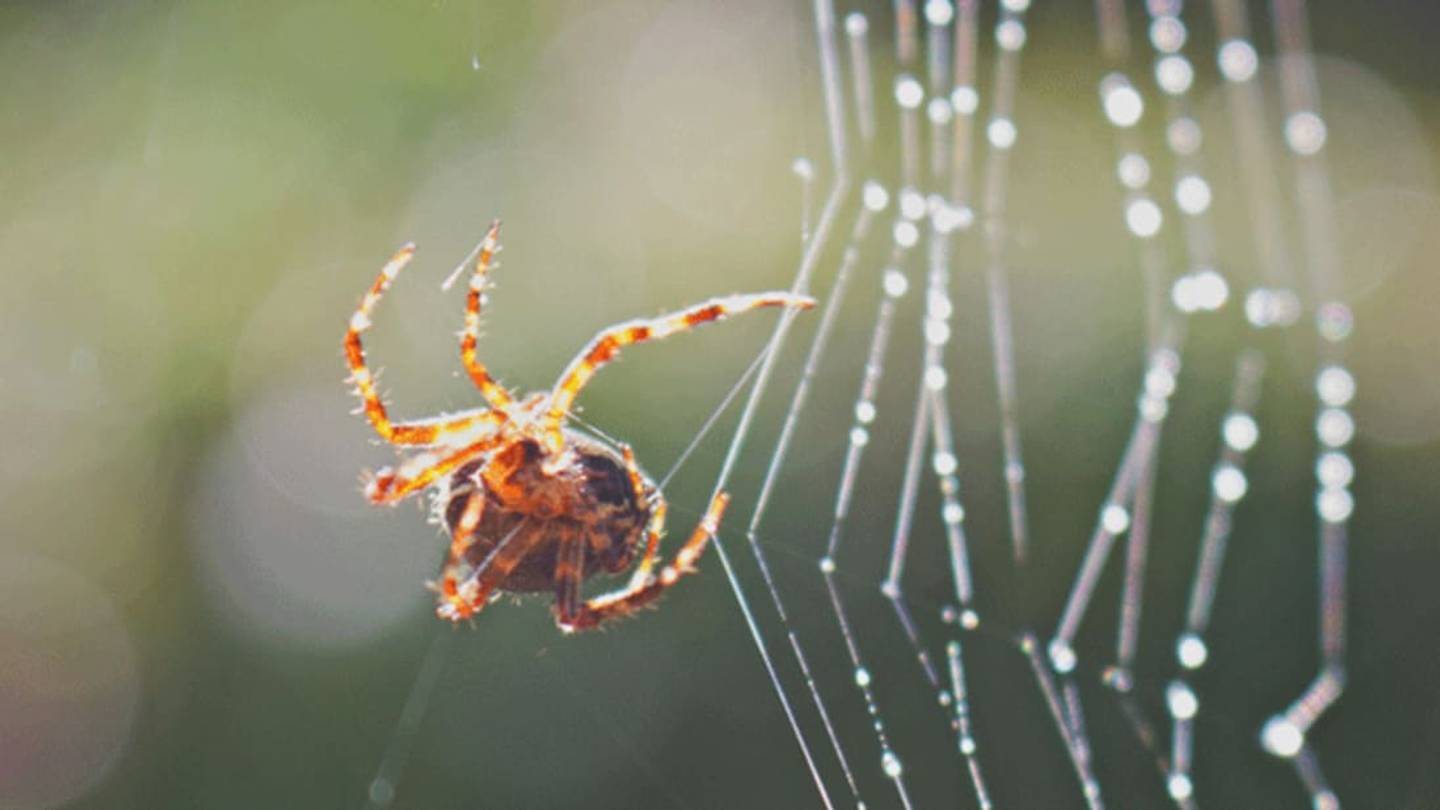
Spider silk is remarkable: The material boasts some of the highest tensile strength found in nature. Itâs also capable of transmitting vibrations like the strings of a guitar. According to new research, spiders have adapted to tune these strings like tiny, eight-legged musicians, Gizmodo reports.
The study, recently published in the Journal of the Royal Society Interface , examined the webs of the garden cross spider ( Araneus diadematus ) to see what makes them such great natural instruments. Certain frequencies can tell a spider a lot: They might signal prey, potential mates, or structural issues with the web.
Measurements of web vibrations taken with lasers revealed that web tension, silk stiffness, and the shape and structure of the web all impact its data transmitting capacities. The research also showed that spiders can alter each of these qualities. When a spider modifies the threads of its webs, tweaking things like tension and stiffness, itâs doing more than building a sound trap. Itâs tuning the web to transmit frequencies it recognizes.
The researchers suggest that a spiderâs dragline silkâthe silk used to weave the spokes and outer rim of a webâmay have evolved so spiders can adjust it for this reason.
âSpiders, unlike most other animals are able to shape their immediate environment through making their own materials for integration into highly adapted structures,â the study authors write. âSpider behaviour and silk properties are variable but tunable, perhaps allowing spiders to shape their extended phenotype for multifunctional outcomes.â
A spiderâs ability to spin finely tuned webs makes up for an area where it's sorely lacking. Despite sporting eight eyes, spiders have awful vision . Tuning and plucking their webs allows them to detect prey they might not have been able to spot otherwise.
Know of something you think we should cover? Email us at [email protected] .
Loading recommendations... Please wait while we load personalized content recommendations