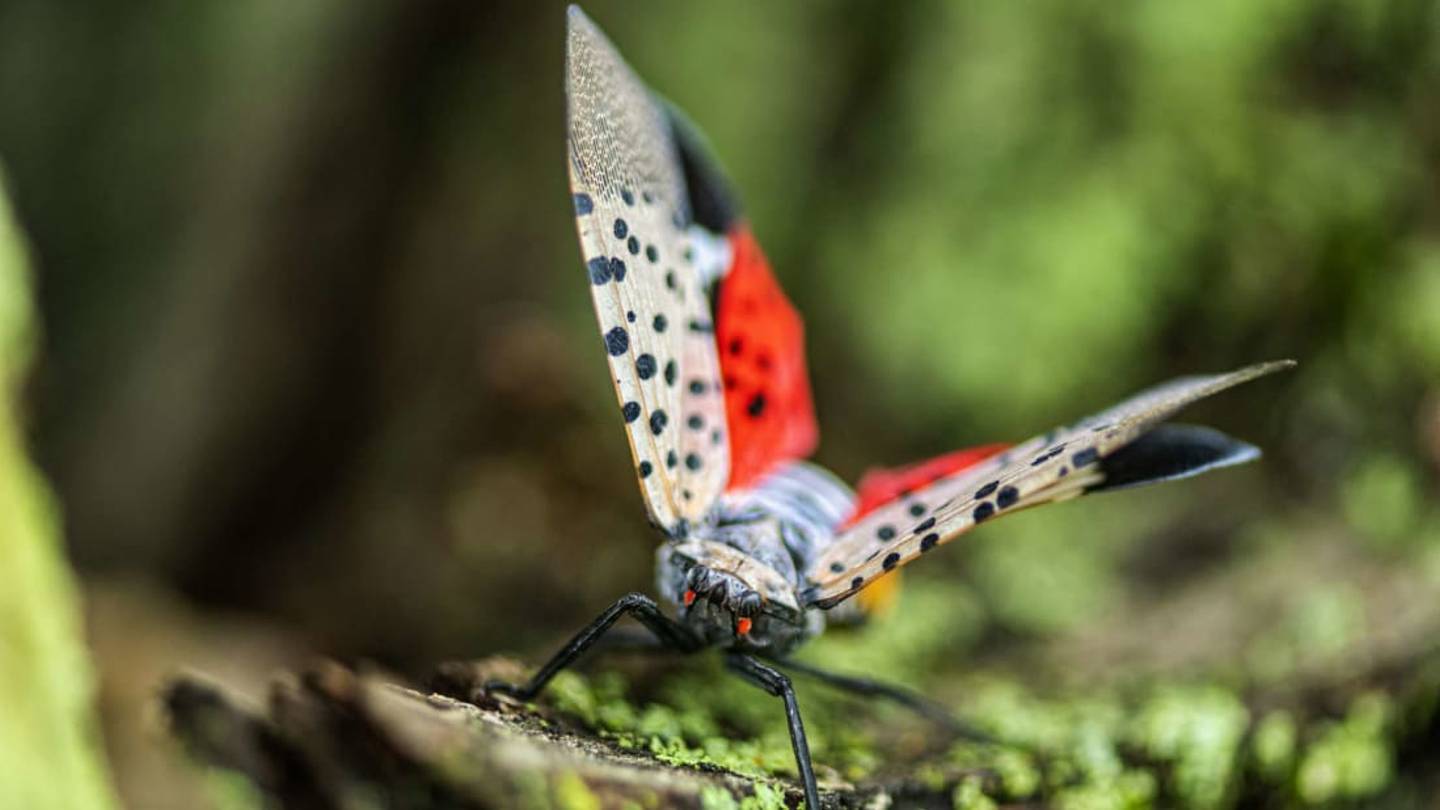
In 2014, a visually stunning winged insect appeared in Berks County, Pennsylvania, and promptly began wreaking havoc on the surrounding plant life. It was the spotted lanternfly, indigenous to Asia, and it soon landed on more than one list of the most destructive invasive insects .
This 1-inch-long agent of chaos is so problematic in part because it isnât picky: Itâll feast on sap from any of about 70 plant species, leaving behind a sappy substance of its own known as âhoneydew.â This propagates black mold, which can severely damage plants . And since spotted lanternflies spawn prolificallyâthey can lay nearly 200 egg masses on just one plant or other surfacesâthey pose a serious threat to crops.
âThe economic impact could total in the hundreds of millions of dollars and hundreds of thousands of jobs for those in the grapes, apple, hops, and hardwood industries,â the Pennsylvania Department of Agriculture warns .
Theyâre also just plain annoying, in the same way that swarms of cicadas or other technically harmless-to-humans insects are. And you donât need to curb your impulse to kill a spotted lanternflyâin fact, the Pennsylvania Department of Agriculture is practically begging you to snuff out its life: âKill it! Squash it, smash it ⦠just get rid of it.â You should then either report it online or by calling 1-888-4BADFLY.
And no, these bad flies havenât confined their hijinks to a single state. As Smithsonian reports , theyâve now ventured across the Northeastâand other states are asking people to kill the pests, too. New Jersey, for example, rolled out a charming campaign encouraging people to âJoin the battle, beat the bug! Stomp it out!â Ohio is telling people to keep an eye out for egg masses on tree trunks, patio furniture, and other flat surfaces, to be scraped off and submerged in alcohol or hand sanitizer (or at least double-bagged and tossed in the trash). According to the Ohio Department of Agriculture, new egg masses âhave a gray mud-like covering which can take on a dry cracked appearance over time,â while older ones are in rows of âbrownish seed-like depositsâ [ PDF ].
Loading recommendations... Please wait while we load personalized content recommendations