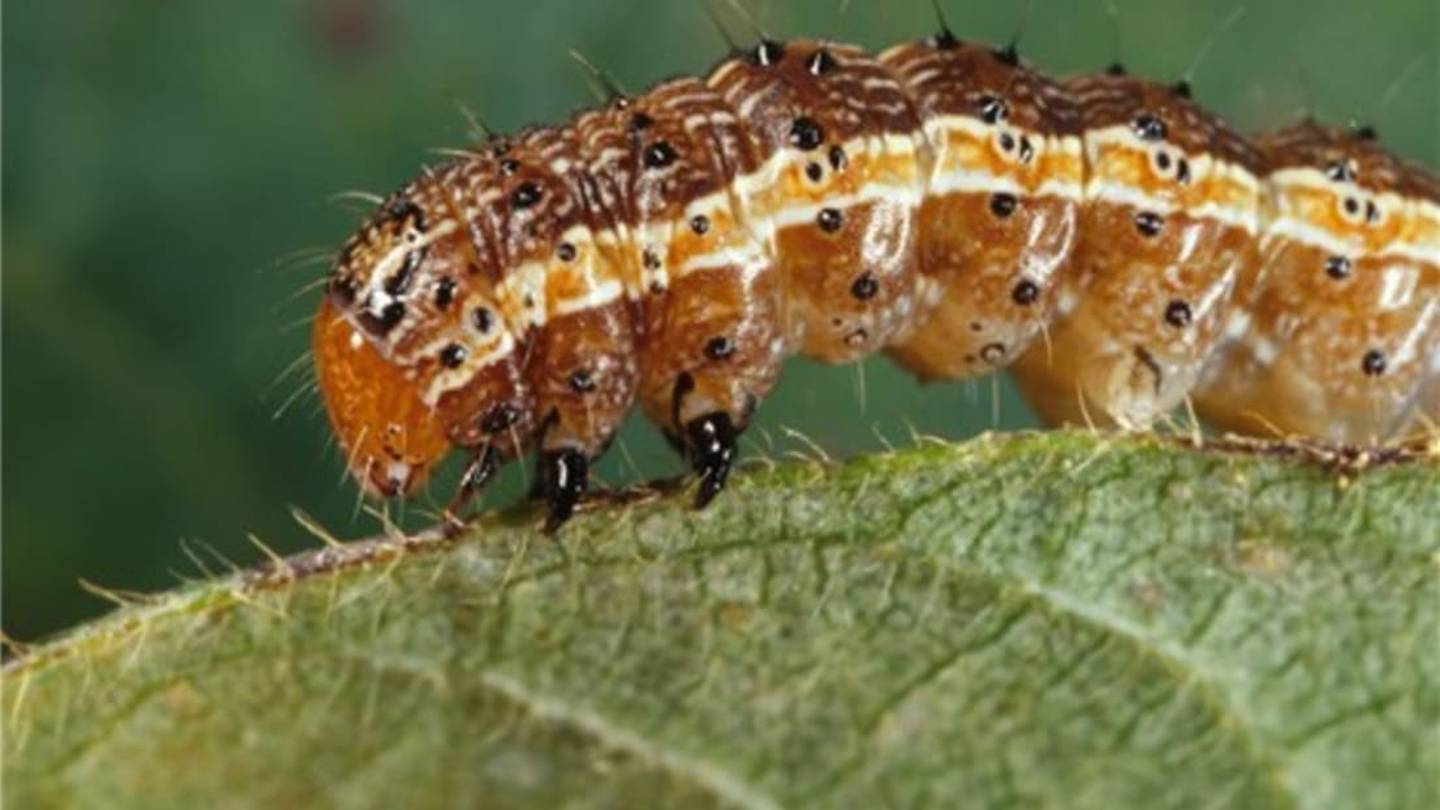
You may have heard the saying âdonât s**t where you eat,â but fall armyworms certainly havenât. These moth caterpillars are a major threat to corn crops, and eat them voraciously. As they feast, they leave what plant stress biologist Dawn Luthe  calls âcopious amounts of frassââthe solid excrement of insectsâon the plantsâ leaves. And according to Lutheâs research, the poo doesnât pile up just because of carelessness or poor manners on the caterpillarsâ part.
While they canât run away or fight back in ways that we can plainly see, plants arenât helpless victims when animals try to eat them. Many plants can quickly kick their chemical defenses into action in response to insects biting into them or even crawling on them. The caterpillars' poop is part of a strategy for taking down the plantsâ defenses: It appears to trick plants into fighting off the wrong attacker, and induces them to mount a defense against fungal pathogens while suppressing their anti-herbivore defenses.
For their new study , Luthe and her team collected armyworm frass, extracted the proteins from it and slathered them on wounded corn leaves. The next day, they looked at what kinds of defense chemicals the corn had produced. They found that plants had reacted as if they were dealing with a fungal infection, and that their pathogen defenses were triggered. Thatâs great news for the armyworms, since a buildup of the hormone that controls fungal defenses inhibits corn from producing another hormone that controls its herbivore defenses. Caterpillars that ate corn leaves that had been rendered defenseless by a 24-hour frass treatment ate more and grew faster than caterpillars that were fed leaves treated for only eight hours.Â
The researchers arenât sure what it is in armywormâs frass that dupes the plants into fighting the wrong battle. It might be a protein thatâs produced by the caterpillars, or by microbes living in their guts. It could also be a protein produced by the corn itself that gets ingested by the caterpillars as they eat and then gets turned against the plant. The researchers want to work on isolating the compound responsible for the caterpillarâs trick in future studies.
Loading recommendations... Please wait while we load personalized content recommendations