All spiders have eight legs, but thatâs where most of their similarities end. Scientists frequently discover new species with unexpected talentsâbe it a flair for cartwheels or the ability to turn itself into a disco ball. Researchers have also found plenty of specimens that are just plain weird-looking. Hereâs a list of 10 fascinatingly freaky arachnids.
A native of the Erg Chebbi desert in southeastern Morocco, Cebrennus rechenbergi âalso known as the flic-flac spiderâhas the remarkable ability to cartwheel its way out of danger. When threatened by a predator, it will leap off the ground and do a series of high-energy somersaults to make a quick exit. An alarmed flic-flac spider can tumble forward at a rate of 6.6 feet per secondâtwice as fast as its maximum walking speed. If pressed, it can even cartwheel uphill. Such talents did not go unappreciated by this spiderâs discoverer, bionics expert Ingo Rechenberg, who has built a somersaulting robot based on the flic-flacâs locomotion.
Those who have read Rudyard Kiplingâs The Jungle Book may have already figured out that this species was named after the panther who helps raise Mowgli. But its pop culture connection is not Bagheera kiplingi âs only claim to fame. It has a plant-based diet , unlike nearly all other spiders, which subsist predominantly on meat. B. kiplingi feasts on the nutritious nubs of Central American acacias, which the trees produce to feed their colonies of guard ants. The ants protect the trees from predators, but the spiders have learned how to swoop in and steal the nubs without providing any symbiotic benefit. The spiders will also eat nectar and ant larvae, and when times are tough, theyâve been known to practice cannibalism.
Two phobias for the price of one! Found only in Australia, the scorpion-tailed spider is so named because adult females have a long, thin appendage on the tip of their abdomens. (Males and juveniles lack this structure.) The females can arch this bendable tail over their backsides, which gives them the appearance of irate scorpions and prompts would-be attackers to keep their distance. But itâs all an act: The tail cannot sting and Arachnura higginsi is mostly harmless to humans.
The male Darwinâs bark spider is eager to please . Really, really eager. The diminutive males exhibit what some scientists have called â a rich sexual repertoire â to their much larger mates. During sex, males nibble on their partnersâ genitals or immobilize them with a web of silk before getting busy. Males will also detach their own sexual organs inside their mates to prevent females from mating with others. Researchers muse that this unusual behavior grew out of malesâ survival instinct: A female Darwinâs bark spider is liable to eat her partner after mating.
Using webs to catch prey is all well and good, but it almost seems tame compared to what spitting spiders do to their victims. To subdue a target, the killers take aim and fire twin streams of venom-drenched silk out of their fangs. At a top speed of 62 miles per hour, the fibers move in a wide-arced, zig-zag pattern. In addition to being coated with poison, this silk drips with a super-sticky glue . Once victims are enmeshed, the glue-covered fibers will shrink, constricting the unfortunate prey. Eventually, the spitting spider will administer a venomous bite and put the trapped entrée out of its misery.
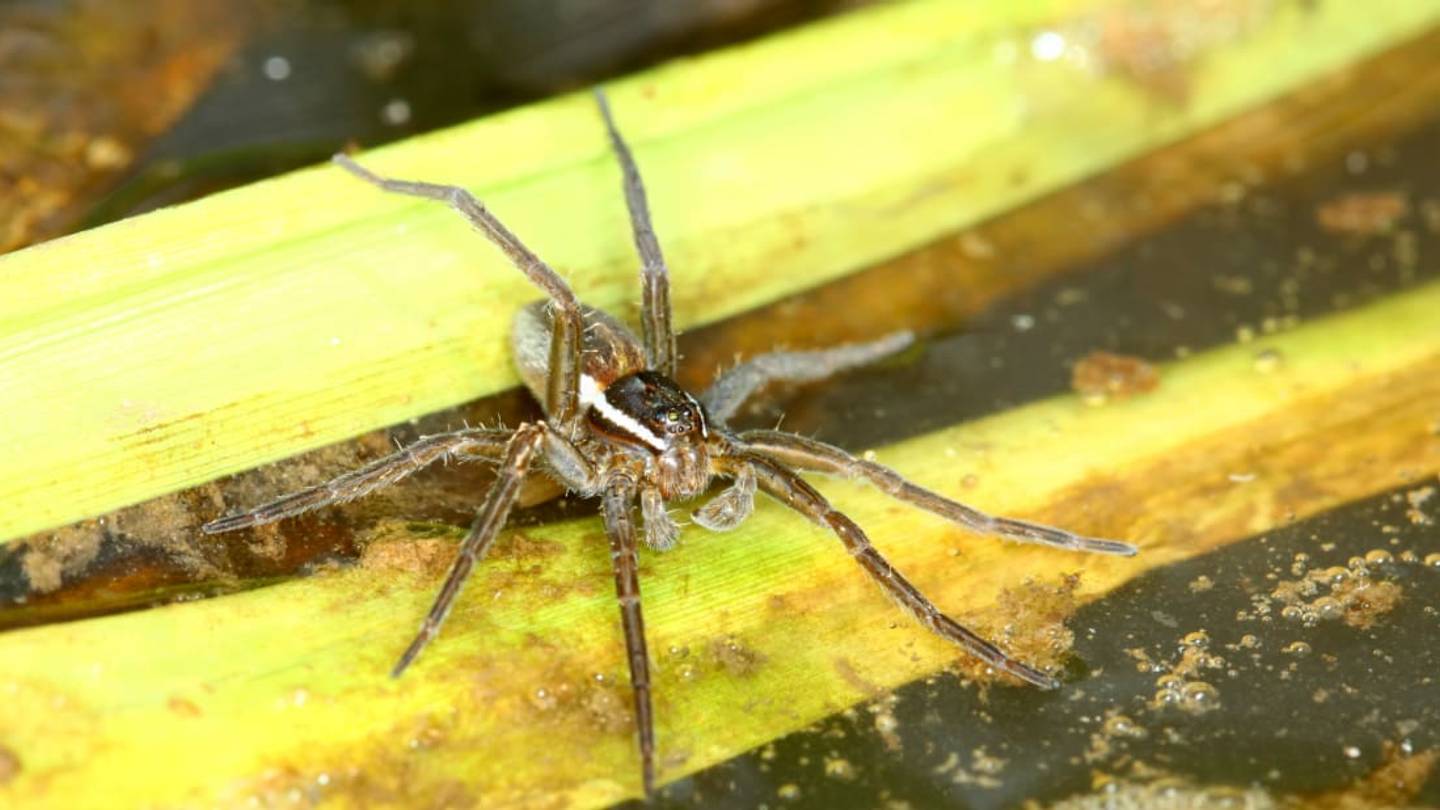
Hydrophobic coats and a knack for exploiting surface tension allow these predators to walk on water . Fishing spiders lurk in North America, Europe, Australia, and New Zealand. To hunt tadpoles, aquatic insects, and even small fish, many species of fishing spiders will splay themselves over the surface of freshwater lakes or streams. Then, using hundreds of ultra-sensitive leg hairs, they monitor aquatic vibrations. When prey swims by, the spider homes in on its precise location and dives for the victim, sometimes as much as 18 centimeters below the waterâs surface.
This little fellowâwhich arachnologist Joseph Koh believes is Cyrtarachne inaequalis , a member of the Cyrtarachne orb-weaver spider genusâmade a vivid impression on photographer Nicky Bay, who captured its singular light show on film. The orb-weaverâs abdomen exhibits a pulsating movement that appear to show its internal organs working under a translucent membrane, Bay writes . Scientists have suggested that the spidersâ display attracts prey or scares off predators, but how and why C. inaequalis puts on its tiny disco act remains a mystery.
Found in tropical and temperate zones all over the world , Myrmarachne spiders pretend to be antsâwhich predators view as aggressive and not worth the effortâto stay alive. With their elongated heads and hourglass-shaped thoraxes, the arachnids look a lot like various ant species (their Latin name even means âant-spiderâ). To help sell the illusion, theyâll wiggle their front legs like an antâs writhing antennae . Of course, a good actor knows when to break character. If certain Myrmarachne species come across predators that eat ants, theyâll drop the ruse.
Assassin spiders are so named because most of them eat smaller, sometimes poisonous spiders. To keep their food from biting back, Palpimanoidea have evolved long, skinny, giraffe-like necks. Their tiny heads sport huge sets of jaws. When an assassin spider finds a meal, those jaws impale the target and swing forward at a 90-degree angle. That keeps victims a safe distance away from any of the assassin spiderâs sensitive body parts. Before long, the skewered prey will die on one of the distended jaws. Then the feasting can begin.
Our planet is home to more than 40,000 different kinds of spiders, and luckily for arachnophobes, none of them can fly. But at least one genus can free-fall like champion parachutists. In a 2015 study , biologists documented this unusual behavior by systematically dropping 59 tree-dwelling spiders of the genus Selenops from âeither canopy platforms or tree crowns in Panama and Peru.â Ninety-three percent of these arachnids steered themselves towards nearby trees to land safely on the trunks. The researchers speculate that such gliding descents happen all the time in nature. After all, the spiders predominantly reside in treesâand the ability to parachute from one trunk to the next would be a huge asset.
Loading recommendations... Please wait while we load personalized content recommendations