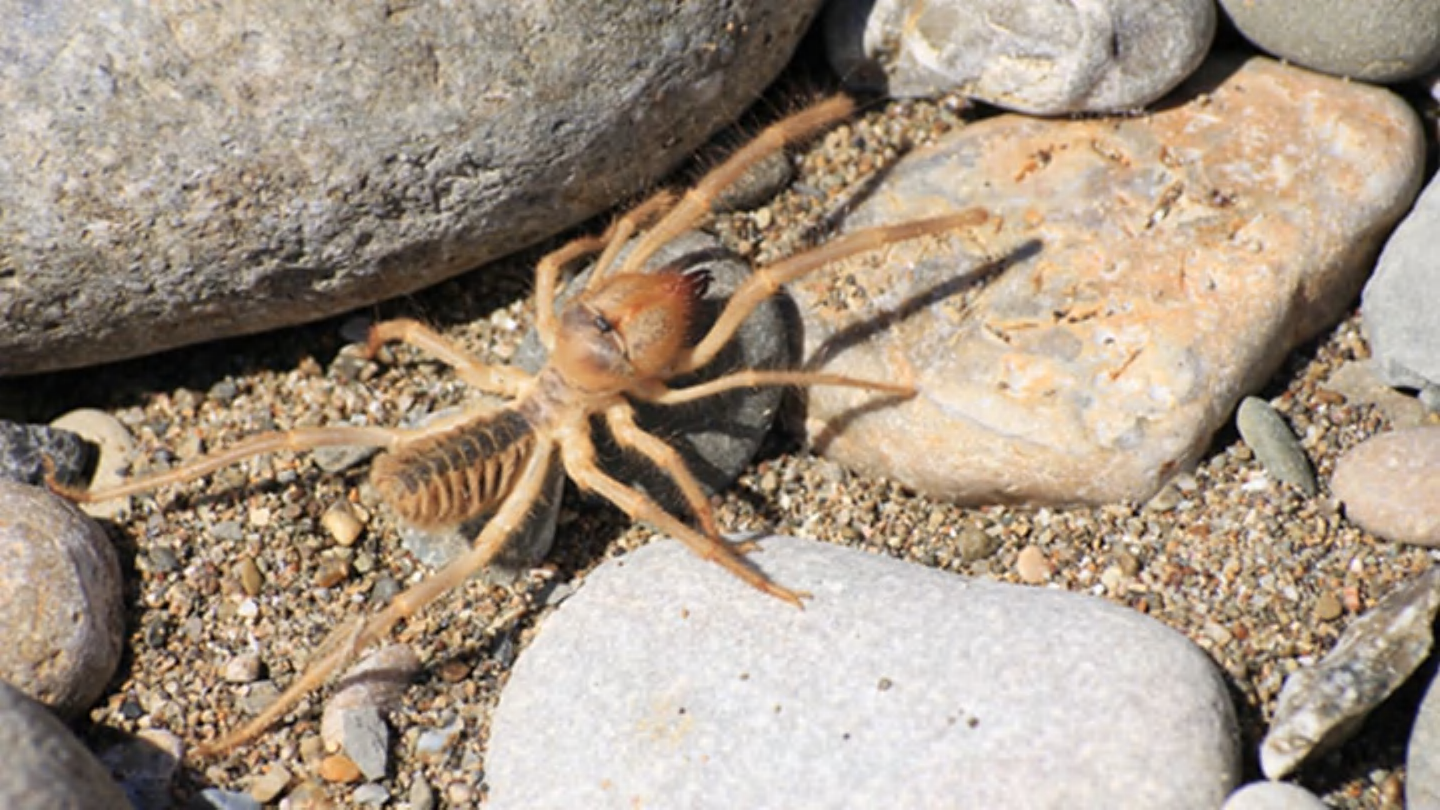
Camel spiders are tricky creatures. These desert arachnids look like they have ten legs, but two of these limbs are really pedipalps, sensors that help them locate prey. Theyâre called spiders, but theyâre not part of the same order of species as a tarantula or a wolf spider. Instead of fangs, they have powerful jaws. Apologies for the nightmare fodderâdespite their fearsome appearance, theyâre not actually very dangerous, unless youâre the size of a grasshopper. Here are 15 intriguing facts about camel spiders:
Camel spiders are arachnids, like true spiders, but belong to a different taxon called solifuges .Â
They can run up to 10 miles an hour, according to some scientific reports.Â
The arachnids can grow up to six inches long, and up to a third of their length is taken up by their terrifying jaws .Â
Camel spiders are also called sun spiders, wind scorpions, beard cutters, or the âKalahari Ferrari.â
Solifuges eat insects and fellow arachnids as well as lizards, snakes, and rodents. The ferocious camel spider will kill and eat poisonous and aggressive creatures, including scorpions and centipedes. Theyâre skilled climbers and can scale walls and trees in search of prey.Â
Camel spiders have garnered quite a bit of attention since the start of the Iraq War. In 2004, a widely debunked image of a camel spider said to be found by American soldiers in Iraq began circulating, along with rumors that the spiders were eating human flesh. In reality, the spiders donât pose much of a threat to humans, since theyâd much rather munch on something more bite-sized. And solifuges arenât limited to the deserts of Iraq. There are species found in the desert regions of every continent but Australia and Antartica.Â
They may look tough, but unlike some of their spider brethren, they aren't poisonous. If you really piss one off, it might inflict a painful bite , but thatâs about it.Â
Scientists have found about 1100 solifuge species.Â
In a study of 188 camel spiders by the American Museum of Natural History from this year, researchers proposed 80 different terms to describe different parts of their sharp-toothed, hairy jaws.Â
While camel spiders do sometimes follow people around, itâs not because theyâre on the hunt. Theyâre just trying to use your shadow to evade the hot sun.Â
Itâs hard to keep camel spiders alive in the lab so that they can be studied. As an entomologist told LiveScience , âthey are quite the divas and require princess-like accommodations to be kept alive.â No doubt this is one of the reasons why camel spiders are not very well studied.Â
Troops stationed in Egypt and Libya during World War I would capture camel spiders and force them to fight each other or scorpions, placing bets on the winners, zoologist Fred Punzo writes in The Biology of Camel Spiders: Arachnida, Solifugae .
Though they do also use sight, one of the main methods camel spiders use to locate prey is substrate vibrations. Because of this, solifuges sometimes donât notice potential meals if the insect stops moving. In laboratories, camel spiders have occasionally been convinced to eat dead insects by manually moving them.Â
âAfrikaaners in South Africa called them 'haarkseerder' (hair-cutters) because many believed that the solifuges were attracted to the long hair of women where they could become entangled, forcing them to use their strong jaws to cut through the hair in order to escape,â Punzo writes.Â
In 1797, zoologist Anton August Heinrich Lichtenstein hypothesized that the Philistine plague of mice referred to in the Old Testament was actually solifuges . The large, hairy arachnids could be mistaken for rodents in some lights, though not everyone agrees with the theory. Â
Loading recommendations... Please wait while we load personalized content recommendations