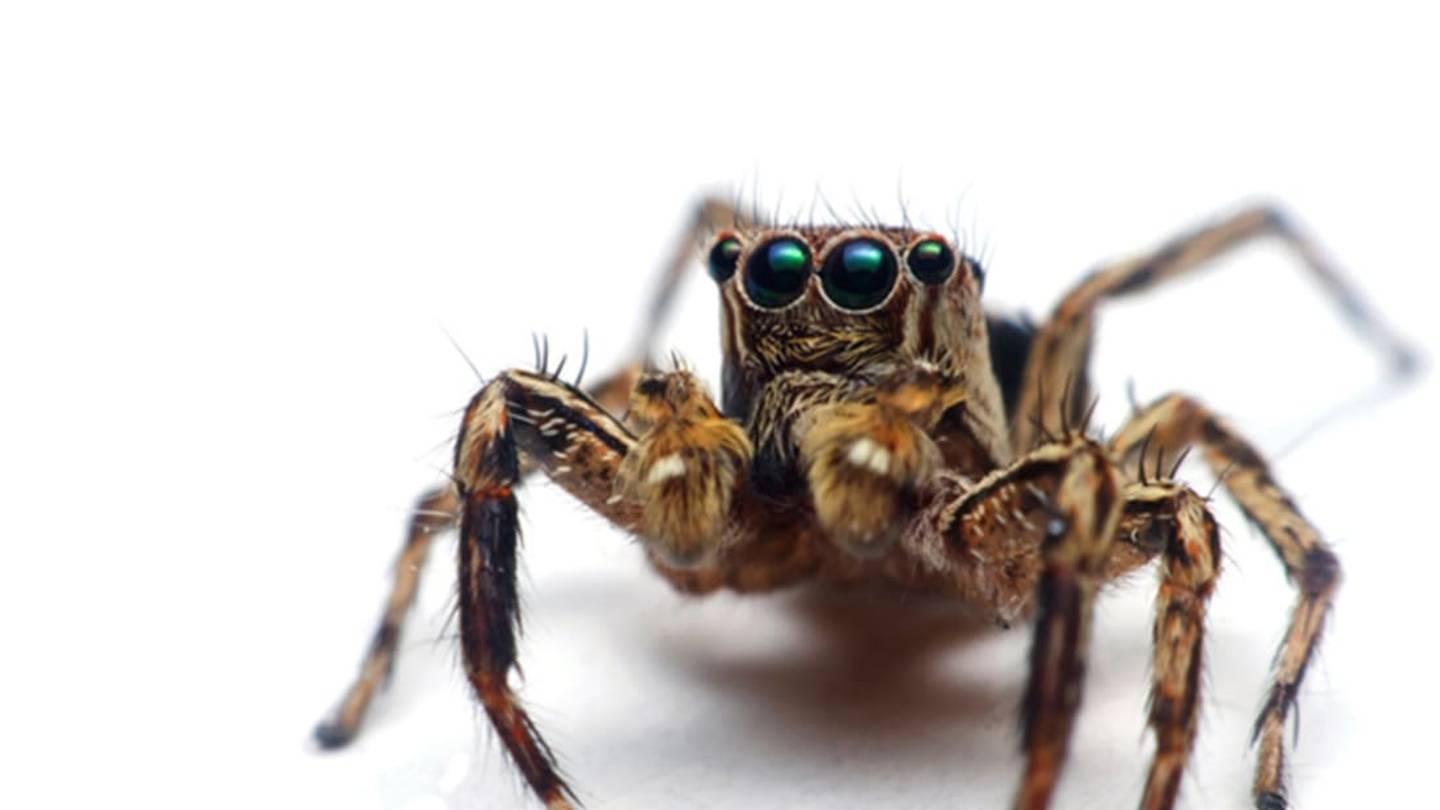
You might know that spiders arenât insects (theyâre part of the Arachnida group , not the Insecta) but many other spider myths still persist. Chances are youâve called any old web a âcobweb,â thought you were being nice by putting a spider outside instead of killing it, and made wild claims about how many spiders people swallow in their sleep each year. Read on to learn whatâs real, whatâs fake, and where the most persistent alternative spider facts got their start.
Webs are not housesâthey are made to catch food . And not all spiders spin webs: some get their dinner by hiding inside flowers or hunting . Their silk production isnât limited to webs, either: Spider silk comes in seven different varieties, from durable draglines and parachutes to the kind used to wrap up prey.
As far as scientists are concerned, âcobwebâ isnât just a synonym for a spider web. Itâs a specific kind of web made by spiders from the Theridiidae family . Unlike the ritzy orb webs you might be more familiar with (like the one above), cobwebs are messy , three-dimensional webs that look more appropriate in a creepy house than a garden, though some Theridiidae species live outdoors .
Sorry, but theyâre just not that into you . Spiders can tell the difference between a person and something they want to eat, and human sleeping sounds, like breathing and snoring, are pretty scary. Even if you roll directly onto a sheet covered in the critters, youâre more likely to make a mess than get hurt: spider fangs donât stick up like dinosaur spikes. They âre on the other side , pointing down.
We all have that friend who makes a face when we kill a spider. They would never do that. They put spiders outside, usually using some stressful combination of a glass and a piece of paper. While there are outdoor spiders and indoor spiders , however, many species canât survive in both environments. If you want to be nice, put the spider in your neighborâs house.
Spiders donât â come inside â in the fall, either. Those are just male spidersâwho already live in your houseârunning around looking for a mate .
It depends on where you are. If youâre at a spider exhibit, sure. If youâre at the top of the Eiffel Tower, chances are pretty slim. This false fact is actually an arachnologistâs fault : In 1995, Norman Platnick started an article with âWherever you sit as you read these lines, a spider is probably no more than a few yards away.â
There are over 40,000 different species of spider in the world, so itâs not totally bonkers to assume thereâs one around you somewhere, but science doesnât have a precise estimate for how close they are to you at any given time.
One of the most famous spider hoaxes involves an âallegedly deadly South American spider, Arachnius gluteus ââand that name should be enough to clue you in. While the original hoax, which began circulating in 1999, had obviously fictional elementsâlike a non-existent Chicago airport and a totally made-up scientific journalârecent versions sound more plausible . There still isnât a venomous spider under your toilet seat, thoughâand if there were, it would be much more scared of you .
Spidersâ reputations precede them: Theyâve been blamed for everything from regular old aggression to eating their mates and laying eggs in the cheeks of little girls . Contrary to popular belief, some spiders can be quite charming when the mood strikes. Both male fishing spiders and male nursery web spiders who treat their ladies to silk-wrapped snacks experience more reproductive success than spiders who show up empty-handed; a study led by Dr. Maria Albo found that nursery web males with gifts were allowed to mate nearly ten times longer than their unromantic counterparts.
We donât swallow four spiders a year, eight spiders a year, 20 spiders in our lifetime, or any such numberâunless, of course, you are a professional spider-swallower. âFor a sleeping person to swallow even one live spider would involve so many highly unlikely circumstances,â Rob Crawford , Arachnid Curator at the University of Washingtonâs Burke Museum, writes.
According to Snopes.com , this myth was started in 1993 when a columnist for PC Professional included it on a list of false facts. She was trying to prove how quickly misinformation spread via email and, well, that is definitely true: It looks like a magazine called PC Professional never even existed .
All photos via iStock.
Loading recommendations... Please wait while we load personalized content recommendations