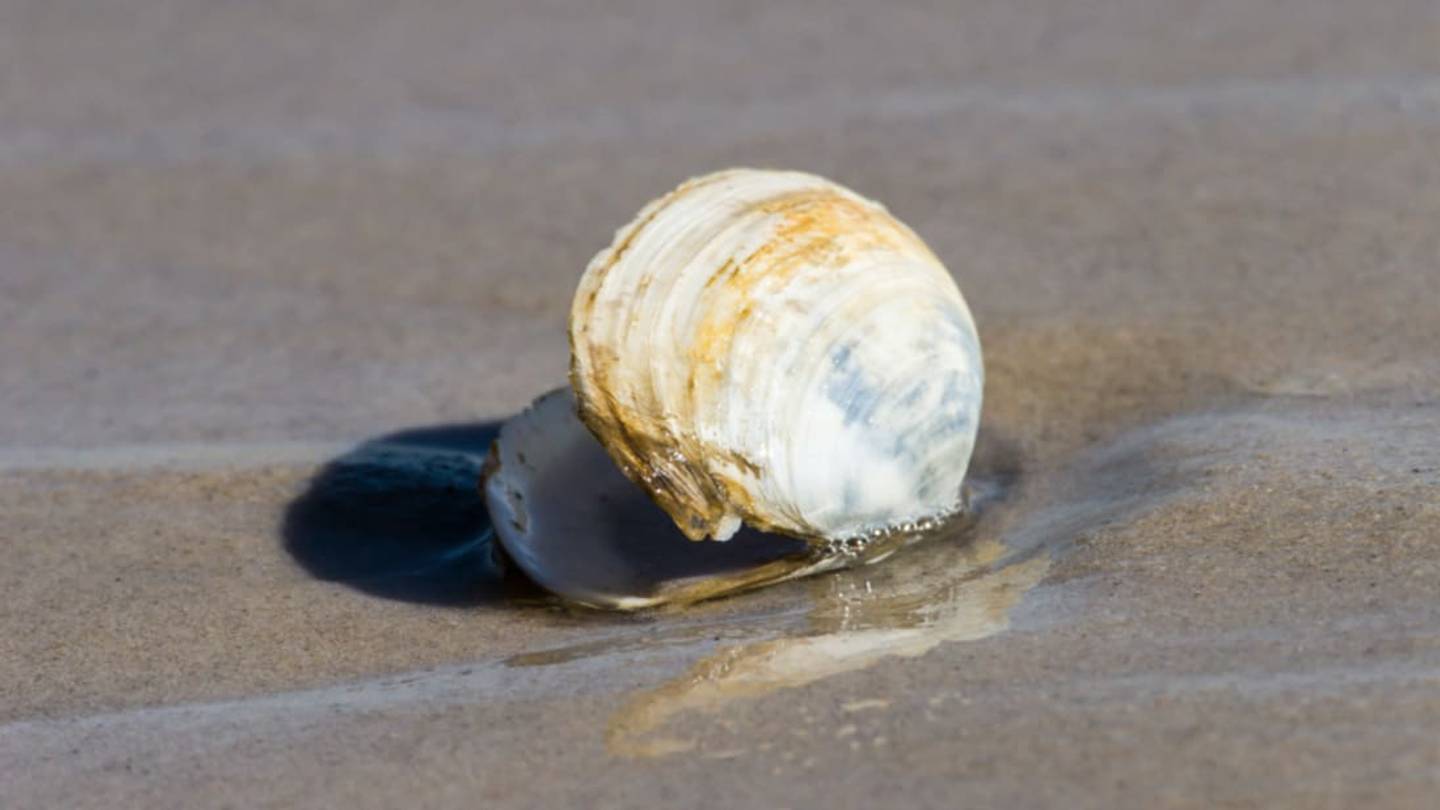
The clams are dying. Since at least the 1970s, soft-shell clams ( Mya arenaria ) from Canada to Maryland have been plagued with a mysterious disease. This month, researchers announced that theyâd finally identified the disease: clam leukemia.
Clams are simple creatures. They donât have legs, or brains, or faces. But they do have hearts , and those hearts pump hemolymph (the clam version of blood) throughout their bodies. Itâs in this hemolymph that the cancer has taken hold.
For years, scientists suspected that the clam-killing disease was caused by a virus. Then a team of researchers specializing in microbiology, cancer, and marine biology examined the clamsâ DNA.
What they found inspired more questions than answers. The clams had cancerâand it was contagious.
Nearly all cancers are a one-shot deal, and canât be passed from one animal to another. Until recently, there were only two known contagious cancers in the world. One is a dog STD called Canine Transmissible Venereal Tumor. The other is Devil Facial Tumor Disease, which is transmitted when one Tasmanian devil bites another one on the face.
But clams arenât humping, and since they donât have faces, theyâre definitely not biting each other. How, then, is the cancer passed from one clam to the next? The researchers arenât totally sure, but they think that the cancer cells may be released into the water. Clams are filter feeders, sucking up liters of water every hour. If a few clam-cer cells happened to be in the neighborhood, they could easily find themselves a new home.
Nobody knows how one clamâs leukemia could become contagious. So where did those free-floating cancer cells come from? To find out, the scientists sequenced cancer cells from clams all up and down the East Coast. Yet again, the answer was mind-boggling: the genes were all identical, which means that every clamâs cancer had all come from a single, original host. Thatâs one unfortunate clamâwhich got cancer more than 40 years ago . That clamâs cancer cells scooted off into the ocean, where they found another host, whose cancer cells eventually scooted off into the ocean ⦠and now itâs 2015. The cancer has traveled hundreds of miles, and weâve got a whole lot of sick clams.
And it may not just be clams. Mussels, oysters, and cockles are all afflicted with similarly mysterious illnesses. As long as people want to eat shellfish, these researchers will have jobs.
Thankfully, only clams can get clam-cer. Eating seafood and swimming in the ocean are still safe for humans. As safe as theyâve ever been, anyway.
Loading recommendations... Please wait while we load personalized content recommendations