Barnacle penises are amazing. Thatâs not a direct quote from Charles Darwin, but it might as well have been; the naturalist was obsessed with the little crustaceansâ very large members. Now scientists say he missed out on one of the best barnacle facts: Many species can change the shape and size of their penises to suit their environment. A report of the findings was published in the journal Integrative & Comparative Biology .Â
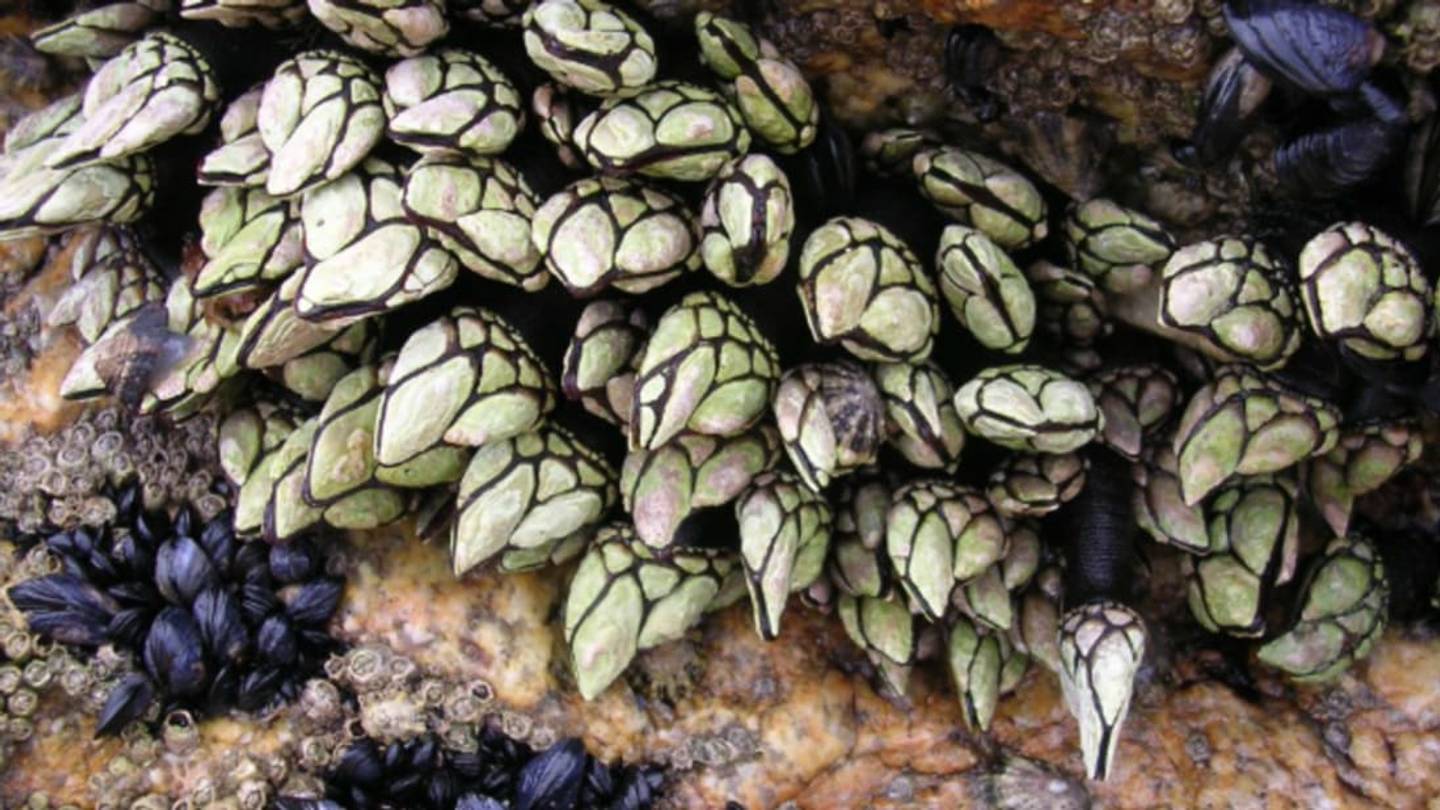
Relative to its body size, the barnacle has the largest penis in the animal kingdom. This is, of course, not just some hilarious joke by Mother Natureâthe length is necessary in order for these sessile (non-moving) animals to reach one another. Barnacles grow in colonies clamped to rocks, piers, boats, and sometimes large animals like whales. They feed by extending little feathery sensory appendages called cirri into the water to catch plankton.Â
In their resting state, barnacles are simultaneous hermaphrodites, meaning that they have both male and female parts. In many species, mating season begins when one barnacleâs egg glands begin to swell, rendering it âfunctionally female.â That barnacle releases chemicals into the water that tell its neighbors that itâs time to get busy. In response, they become âfunctional males,â unfurling their long, flexible penises into the water like party horns , questing for the right opening. Â Â
For obvious reasons, these bizarre sexual adaptations fascinated Darwin. The naturalist devoted seven years of his life to studying barnacles, in the process compiling descriptions of the âprobosciformâ (elephant trunkâlike) penises of hundreds of species. ( We are not making this up.)Â
A small sample of Darwin's barnacle collection. Image credit: FunkMonk via Wikimedia Commons // CC BY 3.0
Darwin was determined to learn all he possibly could about the animals, their anatomy, and their behavior. When he got wind that a friend of a friend had been lucky enough to see barnacle sex in action, he wrote a pretty intense letter, peppering his contact with questions. An excerpt:
We told you he was obsessed. But he was far from the only one. Darwinâs love of (and thorough notes on) the lumpy little animals left a scientific legacy that continues to this day. Marine biologists J. Matthew Hoch and Daniel T. Schenk of Nova Southeastern University and Quest Universityâs Christopher J. Neufeld have spent years studying barnacles. They collected their researchâand the findings of othersâin the recent review paper, and they came to some very interesting conclusions.
Barnacle reproductive organs. Image credit: J. Matthew Hoch, Nova Southeastern University
âWe know that barnacles are robust in their ability to overcome environmental challenges and to mate successfully,â they write. Sometimes they do that by stretching their penises, making them thicker, or changing their shape altogether. âIn the most extreme circumstances,â they say, âit degenerates and is shed during the first post-mating molt and is re-grown for the next mating season."
These animals are âso robustâ in their sexual prowess, the authors say, that in one case a barnacle with two penises was still able to mate successfully.
âAs barnacle biologists,â they write, âwe understand and identify with Darwinâs excitement about barnacle reproduction and look forward to new knowledge generated through the modern-day comparative approach that has yielded so many new insights.â
Know of something you think we should cover? Email us at [email protected] .
Loading recommendations... Please wait while we load personalized content recommendations