In some parts of the world, everyone knows itâs good luck to insult a baby. In others, elves are a fact of life and city planning. And up and down the East Coast, beachgoers swear that a little music is all it takes to bring a snail out of its shell.Â
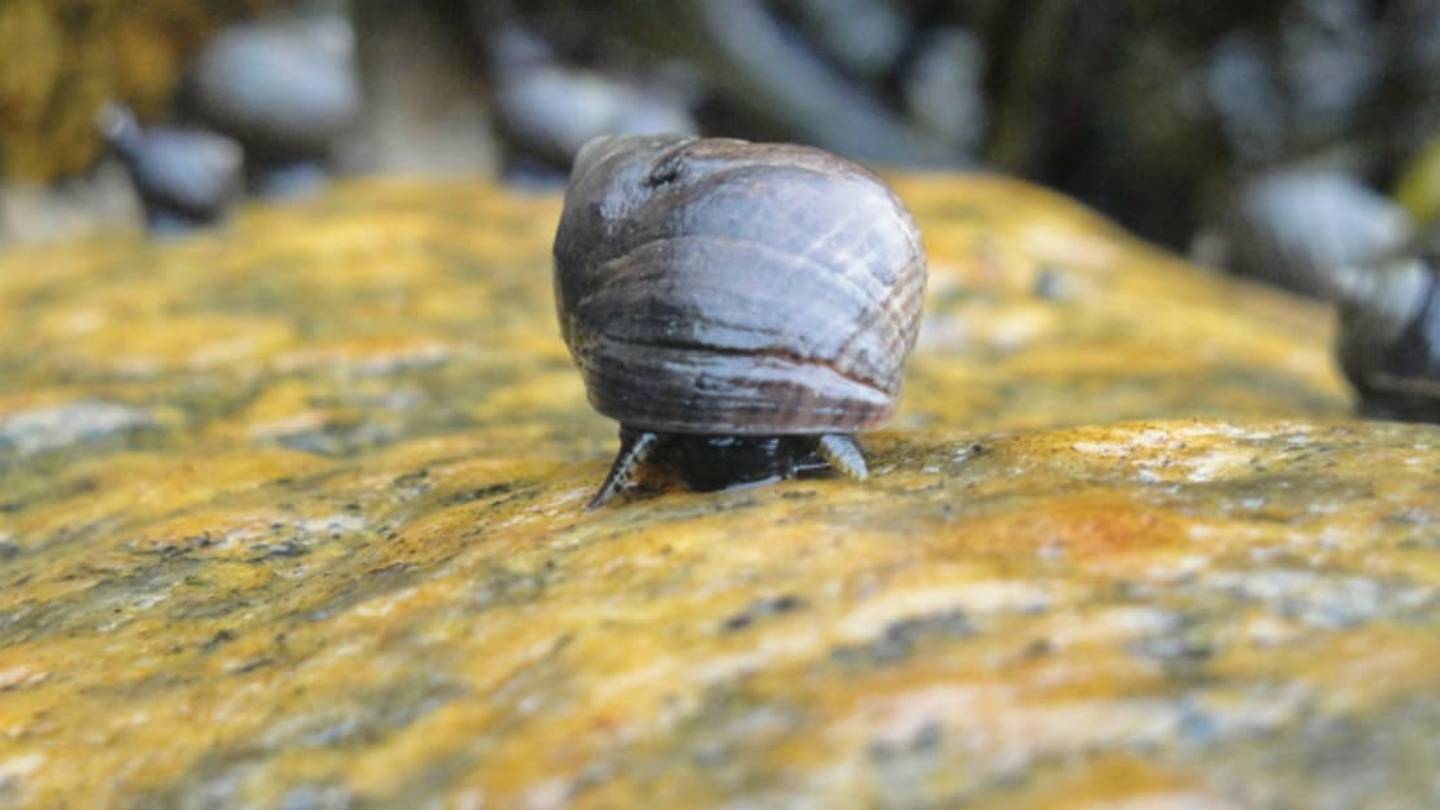
The common periwinkle ( Littorina littorea ) is an unassuming little snail with a striped brown bulb of a shell. L. littorea hails from England, where itâs known as the âedible periwinkle,â and itâs possible that the first American transplants were brought here as food . Others likely made their way across the pond as stowaways on big ships. But no matter how it got here, the periwinkle has made itself quite at home on both American coasts and is a common sight on rocky shores, clumps of seaweed, and in tide pools.Â
We donât know when or how humming to snails started, but we do know that itâs become a pretty popular pastime since then [ PDF ]. Proponents say it works like this: You pick up a periwinkle, hold it gently, and hum to it. Lured by your dulcet melody, the snail will pop open its operculum (a sort of trap door) and poke its head out to say hello.
It, uh, doesnât always work. And when it doesâthat is, when the periwinkle shows itselfâis the humming really responsible? San Jose State University marine biologist and periwinkle behavior expert Luke Miller decided to find out with a small hands-on experiment that involved, well, humming to snails. The results were not encouraging. âThey will emerge after being picked up and carried around, without humming, so Iâm not sure that humming is actually required,â he told the New York Times .Â
A British study published last year came to a similar conclusion. About 15 seconds after a researcher had tapped on their opercula, the periwinkles came out to see what was going on.
Then there's the inconvenient truth about snails' ears: they don't have any. They can't hear anything, at least not the way we hear things. But they can sense vibrations.
Snail humming is a little like flossing. We have no real evidence that it works, but that doesnât mean it doesnât work. As long as you treat each snail, and all wild animals, with care and respect, thereâs no reason to cancel your seaside concert. Â
[h/t The New York Times ]
Know of something you think we should cover? Email us at [email protected] .
Loading recommendations... Please wait while we load personalized content recommendations