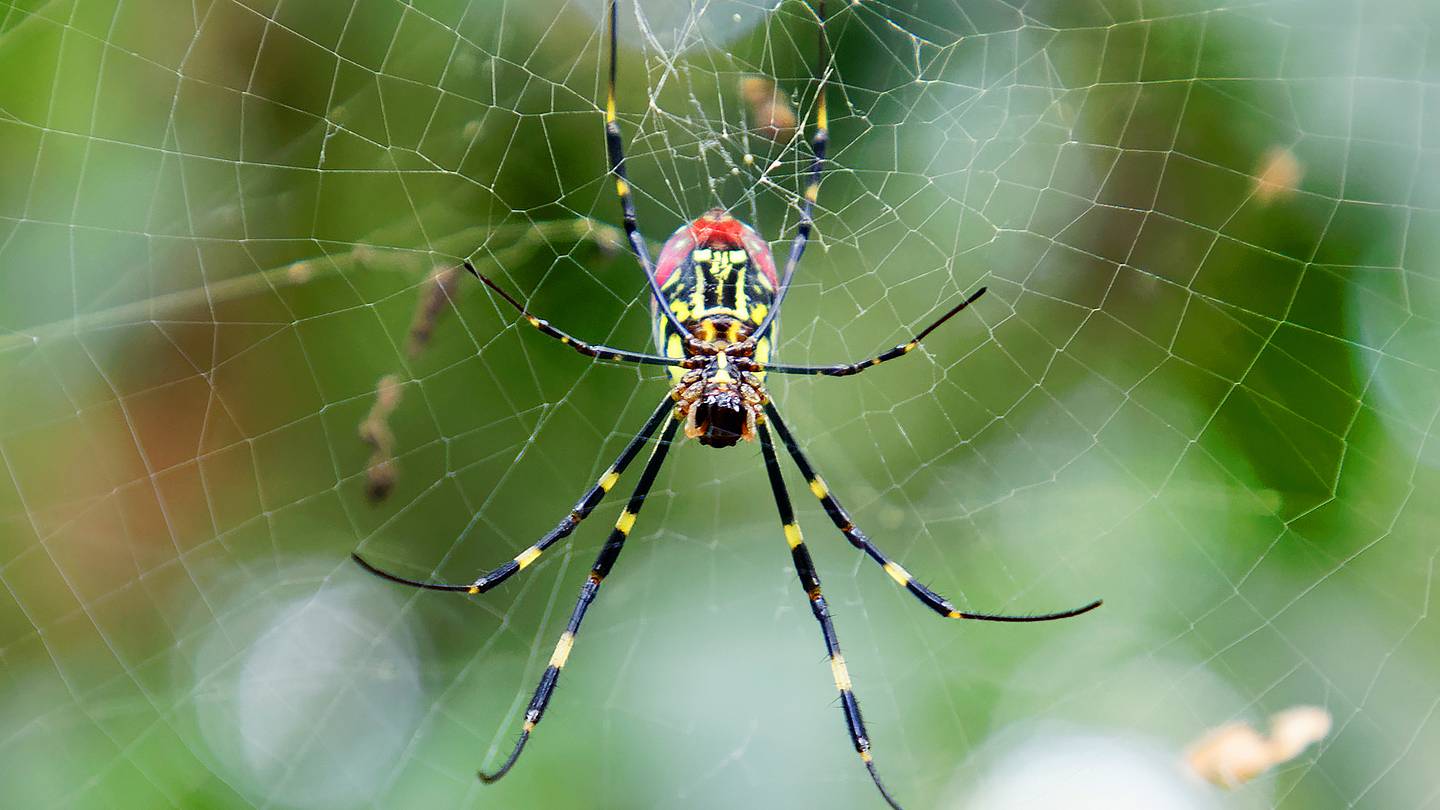
In the past few years alone, Americans have had to worry about murder hornets and spotted lanternflies infiltrating their backyards. If you didn't like those bugs, you likely wonât be thrilled to hear about the latest creepy-crawly invader spreading across the East Coast. As CBS News reports, Joro spiders are already common in the southern U.S., and experts warn itâs only a matter of time before they invade northeastern states like New York and New Jersey. Whether thatâs good news or bad news for the local environment remains to be seen.
Joro spiders, or Trichonephila clavata , have spread around the globe from their native home in East Asia . Itâs unclear how they first landed in the United States, but some experts say they arrived in a shipping container that made its way to Georgia's Interstate 85. Since they were first spotted on U.S. soil in 2013, their populations have exploded.
For the most part, theyâre concentrated in southern states like Florida, Georgia, and the Carolinas, but theyâve been spotted as far north as Ohio. As a 2022 study noted , theyâre capable of expanding their footprint even farther. Joro spiders have a higher heart rate and metabolism than their relative, the golden silk spider, which has been limited to the South since arriving in the country. Their physiology means theyâre capable of surviving in northern states where temperatures dip below freezing. They havenât been recorded in New York or New Jersey yet, but some experts suspect theyâll be making their debut in the area this year.
âAs the Joro spider invasion continues its northward trajectory, the possibility of their arrival in New Jersey later this year has heightened concerns among residents and authorities alike,â New Jersey Pest Control wrote on its website earlier in 2024. âThe potential for these spiders to establish populations in new regions raises questions about how local ecosystems will respond and adapt to their presence.â
If you live within their range, the invasive spiders are hard to miss. They spin golden, three-dimensional webs capable of covering trees, homes, and power lines. Their bodies sport a vivid yellow, red, and blue pattern, and their spindly legs span as wide as an adultâs palm. Theyâre also venomous, though their fangs arenât strong enough to pierce through human skin. On top of all that, they can use tiny silk parachutes to fly.
As long as you can stand the sight of them, the Joro spiders may not be that much of a nuisance. Thereâs even a reason to welcome their arrival. One of their favorite meals is the brown marmorated stink bug , another invasive pest thatâs proven much more disruptive to local ecosystems. But experts warn itâs still too early to say if the Joro spider will end up displacing native species from the environment. Here are more invasive bugs to look out for as the weather warms up.
A version of this story was originally published in 2022 and has been updated for 2024.