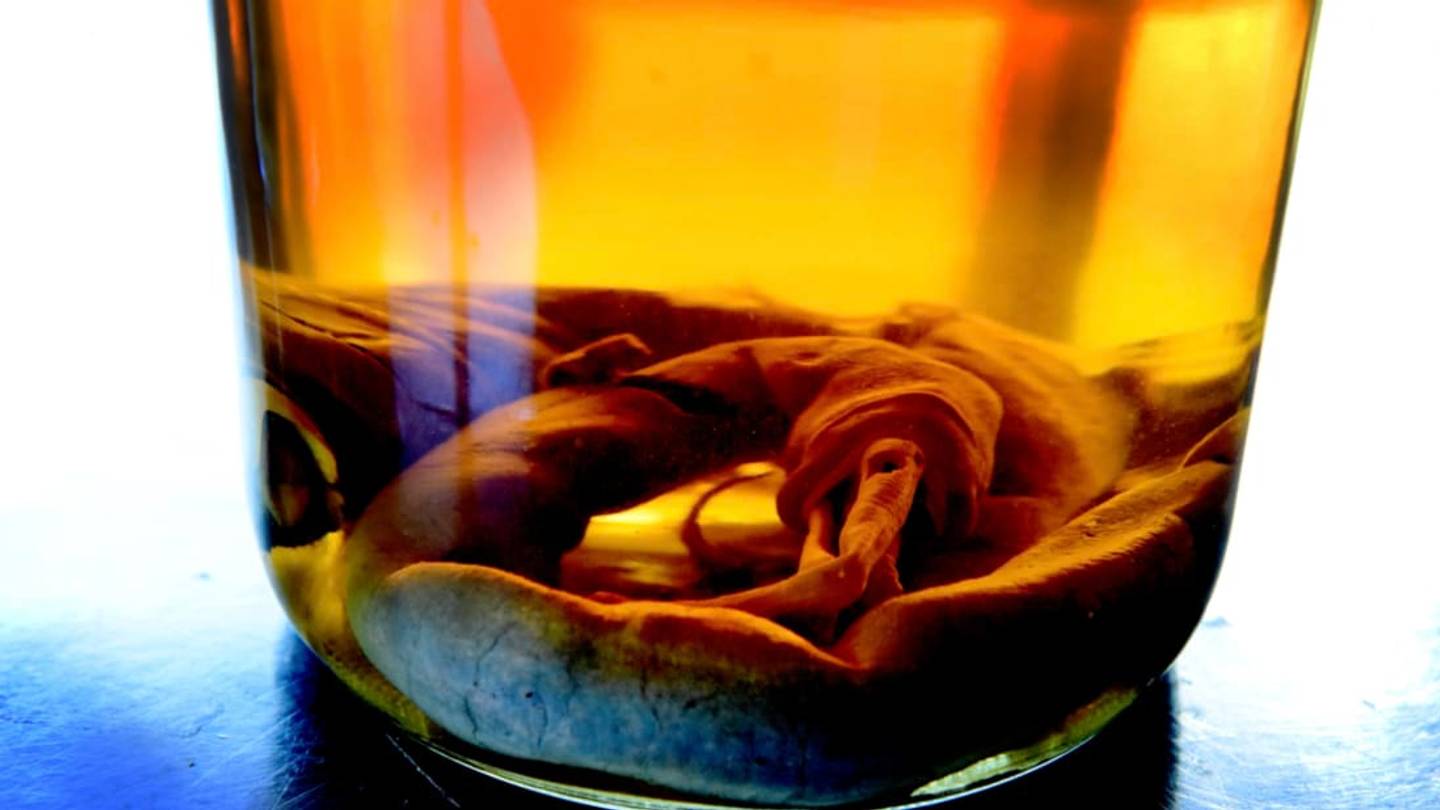
Scientists recently found a massive, suggestively shaped shipworm squelching through the mudflats of the Philippinesâthe first time the creature has been spotted alive. They described the âbeefy, muscularâ animal in the Proceedings of the National Academy of Sciences .
Shipworms are extraordinary creatures. Theyâre best known for making marine archaeologists' lives harder by riddling sunken ships with holes. As our planet's oceans heat up, so, too, does the rivalry between researchers and shipworms, which are moving fast into now-comfortably warm waters full of Viking ships. It's an "alarming scenario," the leaders of Denmark's Wreck Protect project note on their site.
Shipworms aren't true worms, but bivalves like mussels and clams. But where a clamâs slimy foot is relatively short, the shipwormâs just keeps going. The majority of shipworm species are âvery delicate, translucent, usually white, beige or pink,â lead investigator Daniel Distel of Northeastern University in a statement . âTheyâre mostly small, a few centimeters long.â
And then thereâs Kuphus polythalamia , which is decidedly ⦠not delicate. People have been finding its rigid, tusk-like, 3- to 5-foot-long shells for hundreds of years, so scientists knew the giant shipworm existed. Theyâd just never seen one alive.
Then a Philippine television channel aired a documentary about a strange lagoon where long, stiff stalks emerged like fence posts from the mud, and local people ate the shipworm as a delicacy. A researcher sent the video to Distel and his colleagues, all of whom got pretty excited.
"For a biologist who is interested in these bivalves, it's like a unicorn," said senior author Margo Haygood of the University of Utah.
Distel, Haygood, and their team went on an expedition to the muddy lagoon, and there they found the shipworms. They rinsed off one specimen, packed it in a PVC pipe, and ferried it carefully back to the lab for closer inspection.
"When I took that thing out of the tube, there was a collective gasp among the whole group," says Distel, "along with quite a number of expletives." The shipworm was âlike a baseball bat.â
The creature from the sticky lagoon is more than just an oddity. Unlike other shipworms, it doesnât seem to eat woodâor anything else, for that matter. Itâs not a matter of scarcity; the lagoon where the researchers picked their K. polythalamia was full of rotting wood. But that bounty goes untouched, and the giant shipwormâs digestive organs have withered to nearly nothing. So how does it live?
By making friends with microbes. The shipworm "consumes" hydrogen sulfide gas, a natural byproduct of wood decay, which is then processed into nutrients by the bacteria living within its enormous gills.
If it doesn't feed on the wood itself, why bother with wood at all? The researchers believe K. polythalamia is a descendent of a wood-eating ancestor, but that over time it formed this unique relationship with the bacteria it hosts. "We believe that somewhere along the line a shipworm acquired a sulfur-oxidizing bacteria as a symbiont, and it was able to get energy not just from the wood but also from the inorganic gas hydrogen sulfide coming from the wood as it rotted," Distel said. "Eventually the new symbiosis completely replaced the old symbiosis."
Now there's a way to make nice with the archaeologists.
Loading recommendations... Please wait while we load personalized content recommendations