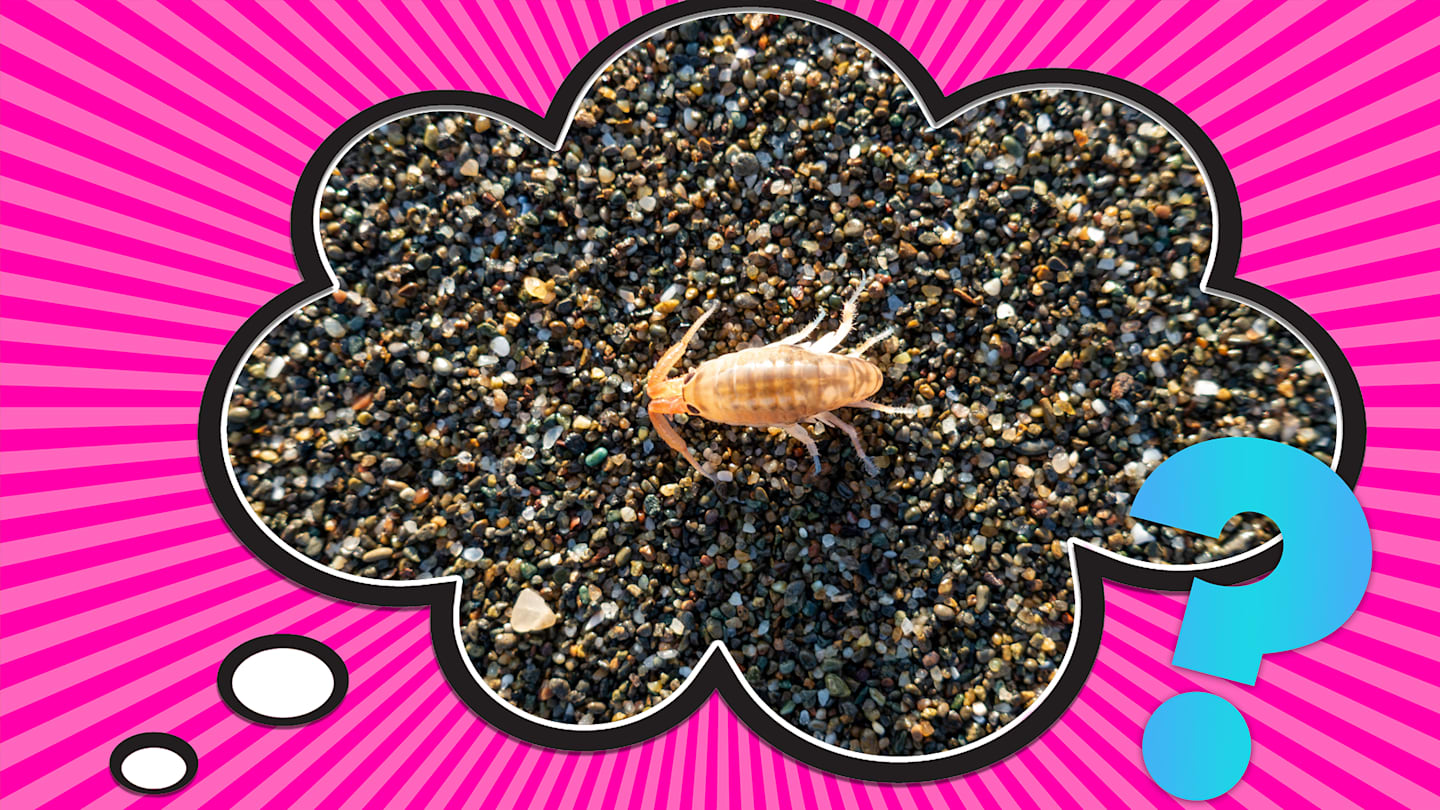
Having a little fun in the sun at the beach is often one of the best parts of the summer: You can work on your tan, hang out with friends and family, enjoy some waves, and even observe a beautiful sunset or two.
But a day at the beach isnât always just a day at the beachâsometimes, you have to deal with a few party crashers. And thatâs essentially what sand fleas could be, though their name is something of a misnomer: The sand fleas youâre most likely to encounter arenât even actually fleas. Instead, these tiny pests (part of the Talitridae family, and sometimes called âbeach hoppersâ) are actually crustaceans that linger in the sand.
The name primarily comes from the fact that they can hop and jump out of the sand, similar to how fleas move. You typically wonât see these sand fleas around any lakes, but they pop up across coastline beaches all around the world, including in the United States, the Caribbean, and other countries. A Florida beach even recently made the news after a swarm of thousands surfaced and were captured on video, digging into the sand.
Below, weâll break down a few helpful things to keep in mind about these critters, plus a couple tips to avoid them while youâre shoreside with your loved ones.
There are roughly 90 different species of sand fleas across the U.S. alone. Those in the Talitridae family are mostly harmless and likely wonât bite humans much at all, though they might spook you outright if you happen to catch the sight of one jumping out from the sandâthey can leap up to 15 inches into the air.
Most sand fleas that are native to the U.S. opt to munch on decaying organic matter like seaweed. They can also enjoy devouring plankton and algae, as well as other smaller crustaceans.
Thatâs not to say people are always entirely off the menu. Some might still nibble on humans, burrowing into skin along the feet, ankles, and/or lower legs and consuming blood. The bites are often small, appear in clusters, and look like raised bumps. Although they are usually red and can be itchy or cause allergic reactions in some, most experts claim that the bites are generally not that serious.
Many small, jumpy, bitey organisms are commonly called âsand fleasâ even though they belong to different taxonomic groups. While Platorchestia platensis , the common sand flea on eastern U.S. beaches, is a crustacean, the Tunga penetrans sand flea speciesâalso known as jiggers or chigoe fleasâare insects . T. penetrans sand fleas are not present in the U.S. or Europe but can be found in warm, dry soils in the Caribbean, South America, India, and sub-Saharan Africa, where people walking barefoot are often at the most significant risk.
While a bite from a sand flea of the crustacean variety is most likely to just be annoying, one from a jigger is a different story, as these pests could pass along more than just an itchy bite: They cause tungiasis , a serious parasitic skin disease that occurs after the female sand flea burrows permanently into the skin.
The condition, which can also affect animals like dogs , can have dire consequences. The bite area itself can become a lesion, marked by a telltale black dot at the center of the raised bump. Beyond the risk of inflammation and ulceration around the bite area, tungiasis may lead to secondary bacterial infections , such as gangrene, which can result in more severe medical issues.
Sand fleasâthe relatively harmless crustaceans youâre most likely to see at the beachâare often situated around where the shoreline meets the sea. Sand fleas thrive in cool, wet conditions and are often most active during early morning hours and at night, as well as after it rains . To avoid them altogether, try to get to the beach when itâs at its warmest, sometime during the late morning or early afternoon.
To give yourself added peace of mind and protect yourself from potential bites, wear protective clothing around your feet, ankles, and lower legs. While it may seem counterintuitive to wear pants and socks to the beach, a good pair of sandals or beach shoes can go a long way in preventing unwanted sand flea bites.
Have a cluster of small, red, and itchy bumps on your feet, lower legs, or ankles after a beach trip? You could be dealing with some sand flea bites. As tempting as it may be, try not to scratchâit could make things worse. Consulting with a trusted healthcare provider may be a good idea if youâre concerned about itchiness or a secondary infections from scratching the bites. You can also use topical corticosteroids or hydrocortisone to cope with the itchiness.
Fortunately, itâs extremely unlikely that youâll be exposed to Tunga penetrans or experience tungiasis from a summer trip to a U.S. beach, but if you have a skin lesion that becomes bothersome, it wouldnât hurt to have it checked out.
Humans arenât the only ones who have reason to avoid sand fleasâyour favorite pup could be a prime snack for them, too. If sand fleas bite your dog , clean the area with fresh water and use ice cubes to cool the skin and prevent itching and inflammation, and you can use aloe vera to treat redness and keep their skin cool and calm.
But your best strategy might be preventing bites altogether; after all, no one wants to head to the vetâs office after a day by the ocean. To protect your dog before they hit the sand, consider spraying Fido with a dog-safe bug spray âespecially along the paws, lower legs, and paw pads.
Read More Big Questions: