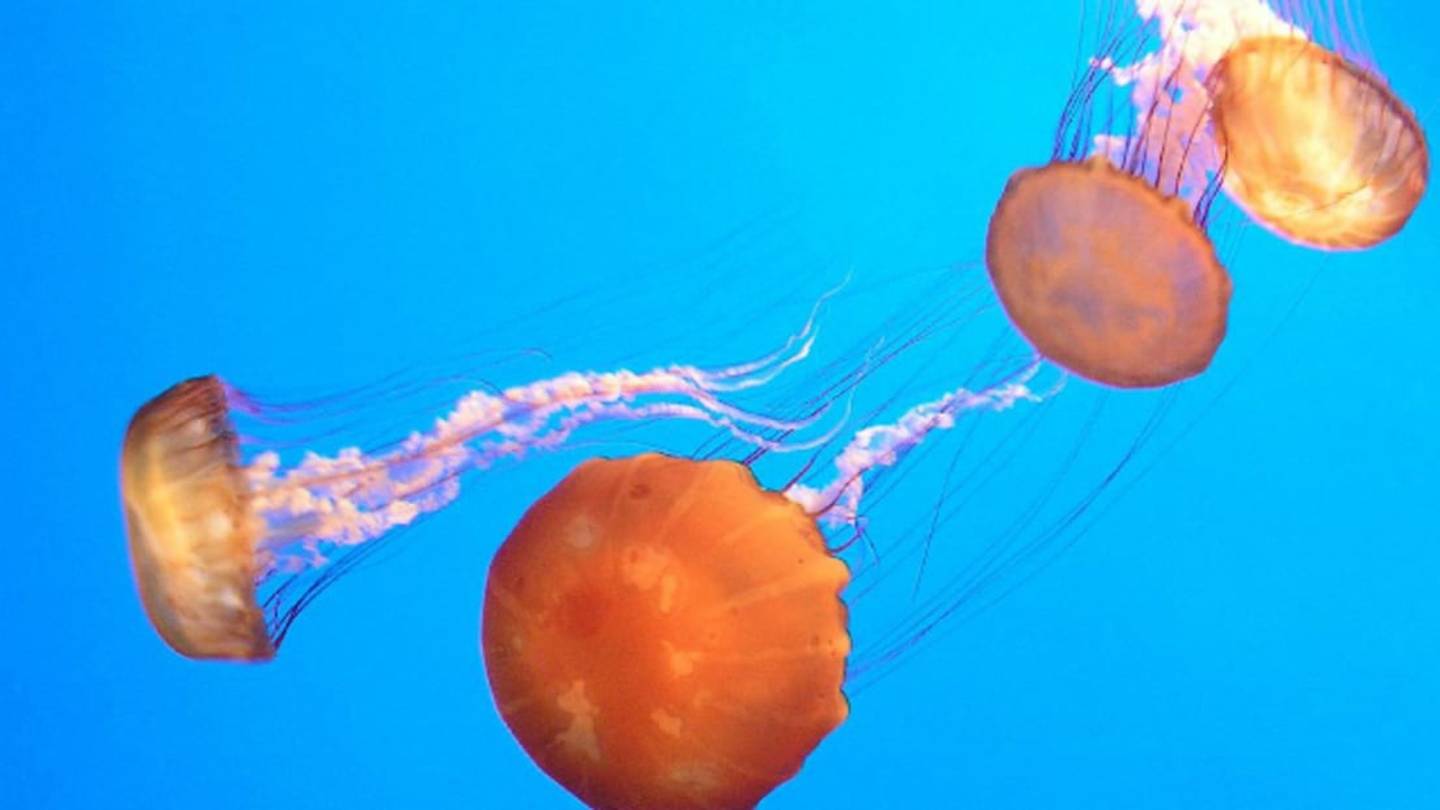
Worried about shark attacks at the beach? Donât be. Shark encounters are extremely rare, and growing rarer as shark populations decline. But while you likely donât need to worry about sharks, jellies* might a legitimate cause for concern.
Every year, beachgoers report more than 150 million stings by jellies and other cnidarians, yet thereâs still a lot of confusion about the best way to treat them. Two researchers from the University of HawaiÊ»i at MÄnoa reviewed all of the scientific literature on the subject and came up with one very clear recommendation: use heat. They published their findings in the open-access journal Toxins .
A sting, or envenomation, happens when a person or other animal brushes against a cnidarianâs nematocysts , or stinging cells, which fire tiny harpoons of venom into the hapless swimmerâs skin. Like bee stings, jelly envenomations can result in minor pain or discomfort, but they can also be fatal.
As venom experts and Hawaiians, authors Angel Yanagihara and Christie Wilcox were getting pretty fed up with the amount of bad jelly sting advice on the Internet.
"Itâs not too strong to point out that in some cases, ignorance can cost lives," Yanagihara said in a press statement. "We conducted this study to rigorously assemble all the published data in hopes that policy makers will revisit this issue and carefully consider the available evidence. We are also engaged in new experimental work with models looking at vinegar effects, as well as well-designed randomized clinical trials.â
Yanagihara and Wilcox reviewed more than 2000 scientific studies on the use of heat or cold as treatment for jelly envenomation. They found a few studies supporting the use of cold water or ice packs, but most found that cold was ineffective on a sting or even made it worse.
They also found a few reports of people using wine, urine, manure, mustard, ammonia, alcohol, gasoline, or a whole fig. None of these treatments were effective. Only one remedy consistently reduced the pain and other symptoms of envenomation: heat, especially immersing the site of the sting in hot water. And not once did heat treatment make someoneâs symptoms worse. Heat treatment is already accepted as the best treatment for stings with other marine venoms, yet somehow it hasnât caught on for jelly stings.
âI was shocked that the science was so clear, given that there is so much debate over the use of hot water,â Wilcox said. âItâs simple, really: If youâre stung, use hot water or hot packs rather than ice or cold packs.â
And donât pee on it.
*Scientists prefer the term âjelliesâ over âjellyfish,â since these invertebrates are not actually fish.
Loading recommendations... Please wait while we load personalized content recommendations