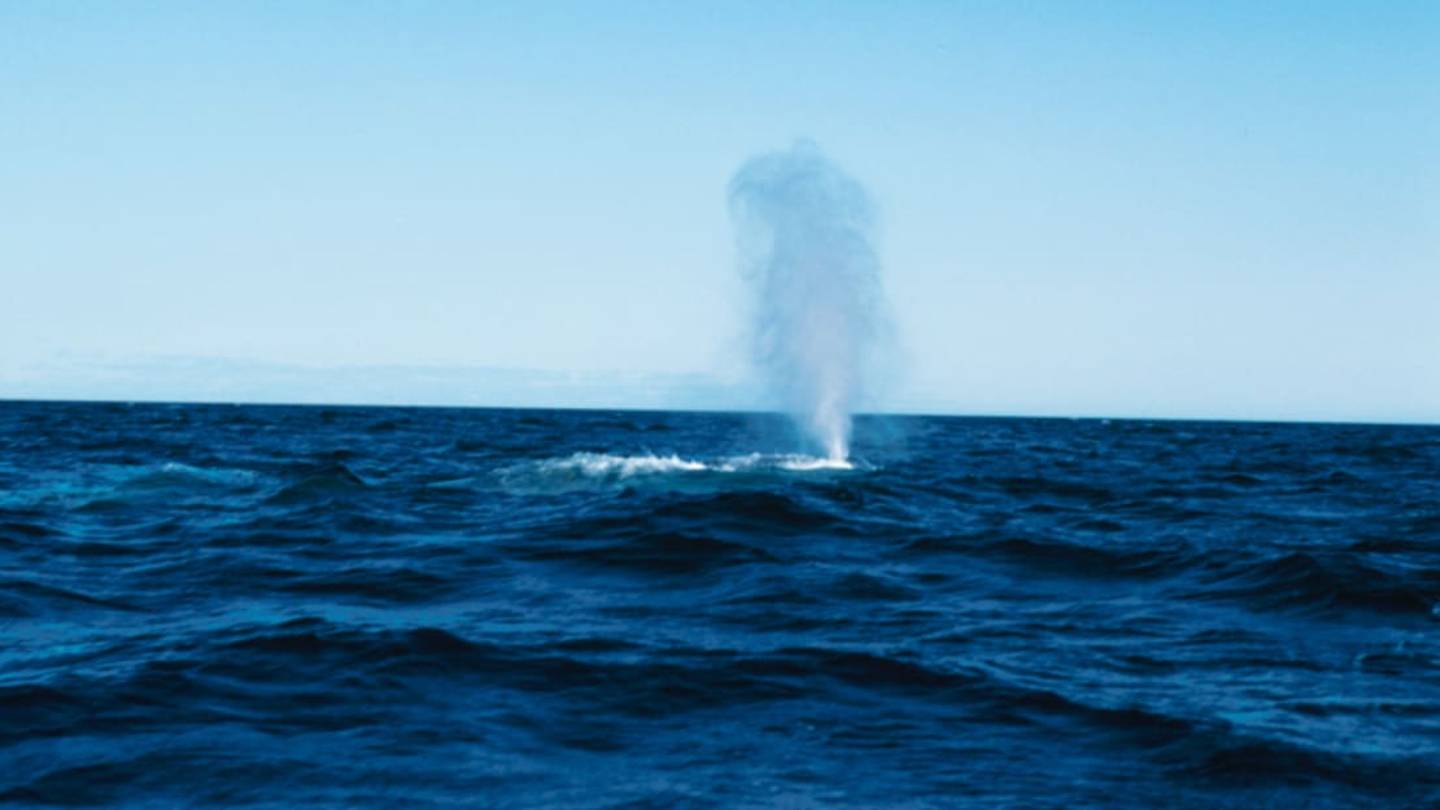
Somewhere deep within the waters of the North Pacific, a whale wanders alone. No one has ever seen him, but theyâve certainly heard him: this mystery whaleâs song has haunted marine researchers since oceanographer Bill Watkins first heard his strange voice calling in 1989. The whaleâs call was pitched higher than other whalesââ52 hertz, to be exact, and so thatâs what they named the mysterious creature.
Watkins, credited with inventing the first underwater recording device, was routinely cataloguing male whale mating calls when 52 Hertzâs unique sound caught his ear. The whaleâs calls demonstrated similar harmonic intervals to a baleen whaleâs, but at 52 hertz, they were higher than they should have beenâunusually, just high enough for a human to hear. He was an outlier, but because Watkinsâs team couldnât think what to do about it, they left him alone.
In 1992, the U.S. Navy released records collected by its system of hydrophones, normally used to track the activity of potentially hostile submarines, which allowed Watkins and a team at Woods Hole Oceanographic Institution to commence logging 52 Hertzâs solitary swimming patterns. After 12 years of observation, the marine scientists were able to conclude that the idiosyncratic whale song was indeed coming from a single source; 52 Hertz was the one and only. In the 2004 paper the researchers published in Deep Sea Research , they noted that not only was his call distinct, but his migration patterns appeared to be âunrelated to the presence or movements of other whale speciesââa lonely existence for the much-studied whale.
Thereâs still no definitive word on what type of whale he is, exactly. Not quite a blue whale, but not exactly a fin whale, theories have suggested that he might be a hybrid of the two, or an undiscovered species altogether. While some have suggested that 52 Hertz might suffer from some kind of malformation, possibly deafness, marine biologist Mary Ann Daher of the Woods Hole team pointed out that a whale hardy enough to survive the harsh North Pacific waters is probably doing just fine, health-wise.
52 Hertzâs distinctive call has mellowed over the years, growing just the slightest bit deeper, but his frequency remains about the same as that of the lowest note produced by a tuba. If youâre interested, head over to the National Oceanic and Atmospheric Administration website and have a listen for yourself .
Loading recommendations... Please wait while we load personalized content recommendations