It may be tempting to channel your inner Disney princess and befriend (or at least, attempt to befriend) every animal you come across. But wildlife is always better left alone. In this list, adapted from an episode of The List Show on YouTube, we cover 22 creatures whose personal space you should really respect.
And remember: while these animals are all pretty intense, donât forget that most animals, including a lot of the ones listed here, donât actually want to hurt you. If they attack, itâs usually because theyâre scared or injured.
In 1987, a dangerous killer named Gustave began stalking Burundi. He haunted the area for decades, claiming upwards of 60 victims before vanishing at some point in the 2000s.Â
Gustave was no human serial killer. He was a Nile crocodile.Â
These reptiles live in freshwater habitats throughout the Nile Basin, sub-Saharan Africa, and Madagascar. Theyâre the largest crocodile species on the continentâand the most dangerous. Itâs estimated they attack at least 300 people every year. They can take down a buffalo or wildebeest, so a humanâespecially a small childâis an easy target. Nile crocodiles can weigh more than 1500 pounds and have as many as 68 razor sharp teeth.
Itâs incredibly hard to fight one off once an attack has begun, especially if they bust out their death roll , where they grab their victims and spin around under water, drowning them. And even if the surface of a lake or river looks calm, a person can never truly tell if thereâs a killer croc lurking below the surface: They can stay underwater for over an hour.Â
The animals arenât just in Africa now, eitherâtheyâve popped up in Florida in recent years.Â
Add Mental Floss as a preferred news source !
Itâs easy to forget that panda bears are bears (and yes, they are bears. The notion that theyâre giant raccoons has been disproven). People with sturdy stomachs can check out the paper âThree cases [of] giant panda attack on human at Beijing Zoo,â which has pretty graphic pictures of the aftermath of giant panda attacks on humans, including one drunk visitor who leapt into an enclosure to try and pet the bear. And while they are exceedingly rare, there are accounts of wild giant pandas attacking humans, though like most bears many of them are probably cornered and scared or protecting cubs.Â
And these animals donât just eat bambooâas giant panda expert Bill McShea put it, âChinese villagers report pandas breaking into livestock pens and consuming goats and sheep. In China, we recently photographed a giant panda feeding for several days on the carcass of a takin (a large goat-like ungulate).â
There are a bunch of species of ticks crawling around the Earth, and many of them are capable of spreading dangerous diseases . The tiny blacklegged tick, commonly called the deer tick, is infamous for spreading Lyme disease. They also carry the parasite that causes babesiosis, which infects a personâs red blood cells. American dog ticks can spread Rocky Mountain spotted fever, and the Lone Star tick can make people develop an allergy to red meat.Â
Mosquitoes , like ticks, are another common pest that can really, truly suck. Sure, their bites are itchy and annoying. But they can also be fatal. The Centers for Disease Control and Prevention calls mosquitoes âthe worldâs deadliest animal.â The insects can transmit terrible diseases like malaria, the Zika virus, yellow fever, the West Nile virus, and dengue viruses.Â
According to one estimate, mosquitoes have spread illnesses that have killed 52 billion people throughout historyâthatâs almost half of all the humans who have ever lived. The World Health Organization estimates that the ailments these buggers carry go on to kill over 400,000 people a year And, thanks to climate change, their range is expanding . Mosquitoes love warm, wet areas. So as the planet becomes warmer and wetter, it makes it easier for them to thrive in new places.
The geography cone is a type of snail that lives in reefs throughout the Indo-Pacific region. They only grow to be about 6 inches long and live in a beautiful reddish and white shellâbut donât let their pretty appearance and small size fool you.
These snails are the most venomous type of cone snail. They inject toxins into their victims via what National Geographic describes as a âharpoonlike tooth.â The toxins are powerful enough to kill a person, and thereâs currently no antivenin that can help anyone who has been stung. The best doctors can do is try to keep someone alive long enough to let the toxins dissipate.Â
Tigers are the worldâs largest wild cats . The animals are endangered and elusive, so the average personâs chances of encountering a wild one are slim. That said, tigers do kill between 40 to 50 people each year. Humans arenât usually their first choice when it comes to food, but shrinking habitat has driven them closer to human settlements. Old wounds or illnesses may also cause a tiger to hunt humans. Famous âman-eating tigers,â like the Champawat Tiger, which was blamed for the deaths of more than 400 people in the early 20th century, and the Tiger of Segur, which killed five people, had injuries that prevented them from going after their usual prey.
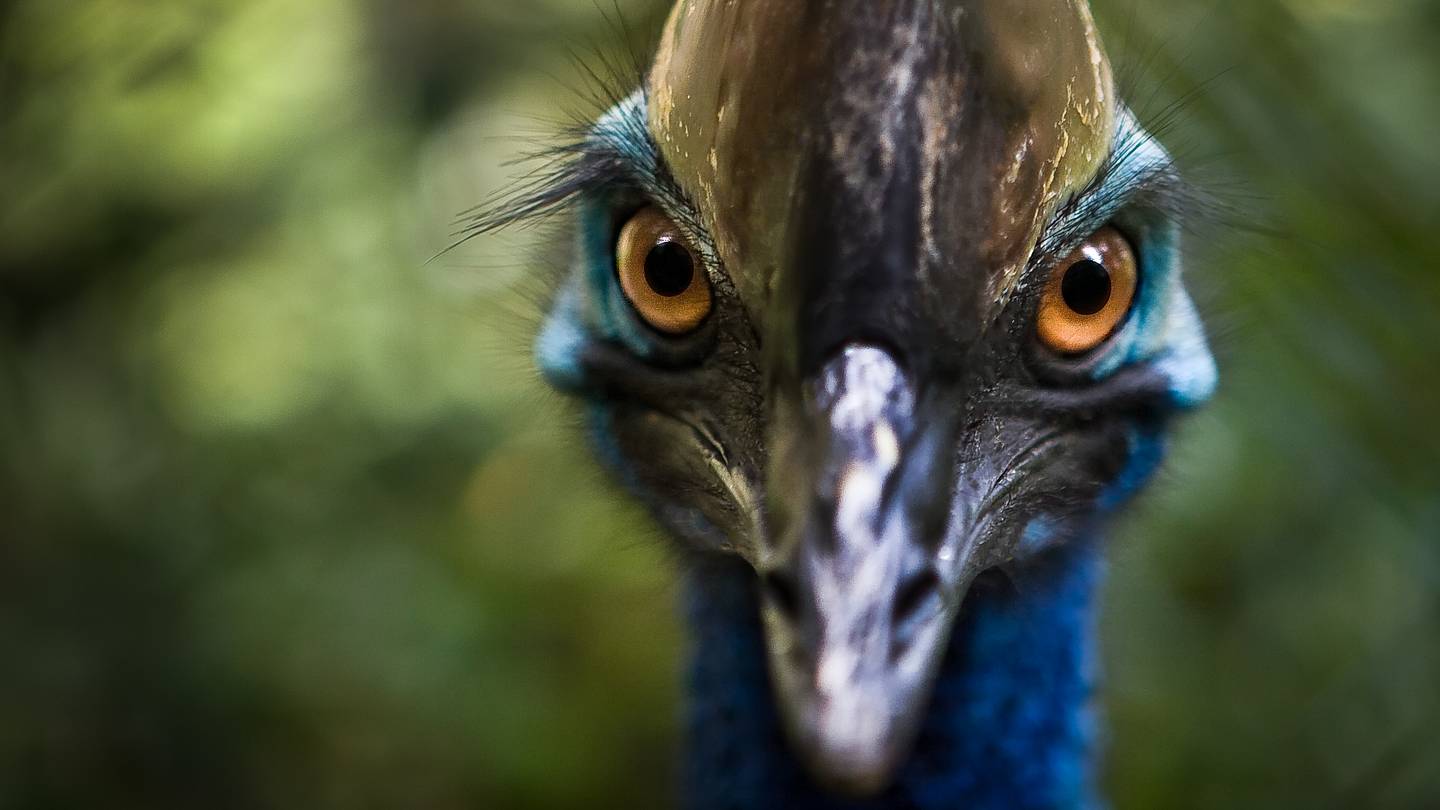
Cassowaries have been dubbed the worldâs most dangerous bird . These winged beasts can reach upwards of 5.5 feet tall, and while not that aggressive on their own, if something goes wrong theyâll do more than just peck their opponent: Cassowaries will also head-butt.
But what a person really has to watch out for is their feet. They are equipped with sharp claws that can fatally slash another animal, and their signature downward kicks are powerful enough to break bones. In the 1920s, a teenager died after a cassowary pinned him down and slit his neck.Â
Ostriches are the worldâs largest bird. They can get aggressive, and their kicks can cause some painful damage. Country singer Johnny Cash learned this the hard way when Waldo, an ostrich he kept at his Tennessee home, turned on him. Waldo jumped into the air and struck Cash with his clawed foot.
As Cash recalled in his autobiography, âHe made contactâIâm sure there was never any question he wouldnâtâand frankly, I got off lightly. All he did was break my two lower ribs and rip my stomach open down to my belt. If the belt hadnât been good and strong, with a solid buckle, heâd have spilled my guts exactly the way he meant to.â Fortunately, the musical legend was then able to fend the angry bird off with a stick.
Saw-scaled vipers arenât the most venomous type of snakeâthat honor goes to the inland taipan of Australia. But the saw-scaled viper, which lives throughout parts of Asia and Africa, is widely considered the most dangerous . According to Britannica, across their range theyâre thought to kill more people than every other type of snake combined. These vipers are highly excitable, unpredictable, and aggressive.
The snakes usually come out to hunt around twilight, and their brown and gray colors allow them to blend in a little too well with their surroundings. This unfortunately makes it easy for unsuspecting people to accidentally close to one.
A saw-scaled viperâs venom isnât always lethal if antivenin is administered, but in impoverished places, many people arenât able to access medical treatment in time.
Kangaroos have sometimes been called âthe white-tailed deer of Australiaâ because theyâre as common there as the ungulates are in North America. But Bambi they are not. Thereâs a reason these marsupials have also been called â vegetarian gladiators â: They hop quickly, swim well, and can wallop the heck out of a person with their powerful hind legs. They also have sharp claws and are not afraid to throw a punch .Â
But kangaroos are similar to white-tailed deer in one dangerous way: They share the same unfortunate inclination to cross in front of moving vehicles , which can be very dangerous for both parties.
Kangaroos also donât like dogs. If a dog on the hunt has driven them into a river or lake, the marsupials have been known to try and drown the pursuers. Many human-kangaroo scuffles are caused by a personâs pet dog attacking a kangaroo. The dogâs owner will often try to stop the fight, and the kangarooâacting in self defenseâwill then round on them, too.
Polar bears are the planetâs largest species of bear. According to the American Bear Association , theyâre actually the largest terrestrial carnivore. They mainly eat seals, though theyâve also been known to chow down on walruses and small whales (theyâve even been spotted using rocks and other blunt objects as tools to help them kill walruses). But when hunting conditions are tough and food is scarce, they will turn to humans.Â
According to a 2017 report, there were 73 known polar bear attacks between 1870 and 2014. Most of the attacks happened in the northern hemisphere summer, when sea ice levels were the lowest. It makes sense: Most of the attacks were predatory, and low sea ice makes it harder for the bears to hunt seals, so they have to look for other sources of food. Unfortunately, climate change is drastically reducing the amount of sea ice floating around the Arctic, which is driving polar bears onto land and into areas that are full of people.Â
Tsetse flies arenât just any ordinary fly. They can carry the parasite that causes African trypanosomiasis, or sleeping sickness. An infected fly will leave behind a very painful sore, and the sleeping sickness causes fevers, headaches, muscle aches, extreme fatigue, and other highly unpleasant ailments. The disease is fatal if left untreated. And unfortunately, thereâs no preventative medication or vaccine a person in sub-Saharan Africa can use to protect themselves.Â
If you see a box jellyfish while swimming around Australia or elsewhere in the Indo-Pacific, donât go anywhere near it. These aquatic creatures have the most dangerous venom in the world. Their tentacles are covered with what the National Oceanic and Atmospheric Administration calls âbiological booby trapsâ that are essentially little darts full of venom.
The Australian box jellyfish in particular is the most dangerous of them all. Anyone who gets stung by one can become paralyzed, go into cardiac arrest, or die in mere minutes.Â
If you were on Twitter in 2019, you may have found yourself wondering how you would protect your small kids from a horde of 30â50 feral hogs running into your yard. At least, one Twitter user was. His tweet went viral, but feral hogs are no joke. The invasive swine are super destructive . They travel in large herds and can get aggressive toward people and their pets. They also carry a ton of different diseases and parasites. Â
Raccoons may look like the cute, cuddly burglars of the animal world. But those âtrash pandasâ are deceptively dangerous . They have sharp teeth and claws, and in rare cases, will attack a human. And because theyâre a rabies vector speciesâmeaning they can carry the diseaseâany sort of human-raccoon interaction is risky. Rabies doesnât begin to show symptoms until itâs too late to do anything about it, and the disease is fatal without the vaccine. So anyone who comes in contact with a raccoon, whether they suspect the animal is rabid or not, should check about getting their rabies shots ASAP.
Raccoon poop is also something you really donât want to mess with. The animals like to do their business in the same spot. These â community latrines â are full of a mix of old and new poop from several different raccoons, and they may contain more than just droppings: They could also be harboring a particular species of roundworm, a type of parasite that sheds its eggs in raccoon feces. If a person accidentally ingests these eggs, it could cause eye problems, brain or spinal cord damage, or death. Kids are particularly at risk of getting into trouble with raccoon latrines, as theyâre more likely to accidentally eat contaminated soil.
Bullet ants probably wonât kill you (unless you happen to be allergic to them), but they will really, really hurt you. Their stings are rated a level 4 âthe highest ratingâon the Schmidt sting pain index. One researcher described the pain they cause as âa deep drilling pain you feel in your bones with sweating and goosebumps.âÂ
It isnât a quick ordeal, either. The effects of being stung by a bullet ant can last for 12 hours. The ants release toxins that target a victimâs sodium channels and prevent them from closing, which makes the pain more intense and long-lasting.Â
You shouldnât get too close to one of these adorable primates âand not just because theyâre wild animals that donât belong in the pet trade. Slow lorises are one of the planetâs few venomous mammals. And their bite is downright nasty. They go about dispensing their venom in a pretty goofy way. First, the animals lift their arms up so they can lick the glands that secrete the venom, which combines with their saliva and allows the venom to gather in their teeth. Then they sink those chompersâwhich are sharp enough to slice boneâinto their victim. Their venom also causes necrosis, meaning itâll make your flesh rot.
Any animal that inflates itself into a giant spiky ball is one you should probably know to stay away from. Just a single one of these fish contains enough poison to kill 30 full-grown people. The type of poison they contain is called tetrodotoxin , or TTX, which causes paralysis and death. Thereâs unfortunately no known antidote.
But that doesnât stop people from eating pufferfish . Theyâre on the menus of restaurants throughout Japan, though chefs need to pass a thorough exam to prove theyâre able to safely cook it: they must remove the liver , kidneys, ovaries, testicles, intestines, brain, eyes, and skin without contaminating what remains of the fish with the toxins its organs contain. So if you do decide you want to taste pufferfish, make sure you or whoever is cooking it knows how to prepare it.
Blue-ringed octopuses are tiny sea creatures that can be anywhere from 5 to 8 inches long, but they can do a lot of damage. They also contain TTX . If someone eats one, theyâll suffer the same fate as if theyâd chowed down an improperly prepared pufferfish. Blue ringed octopuses have also killed people by injecting them with their venom. The bite itself wonât hurt, but it wonât be long before their victim is paralyzed and dying from respiratory failure.Â
A blue ringed octopus may give you a warning before they strike. Their blue rings change color quite dramatically when they feel threatened, so if you see one sporting a series of extra colorful spots, make sure you give it a lot of space.
It can be difficult to conceptualize how big moose are, but they are big âtheyâre among the largest land mammals in North America. A male moose can be 6 feet tall at the shoulder, sport antlers that can be just as wide, and weigh 1400 or 1500 pounds. So itâs probably not surprising that moose injure more people in Alaska each year than bears do.
These massive ungulates can get aggressive if someone harasses them, and like kangaroos, they also donât like dogs and will go after them. Male moose also get particularly feisty during rutting season, and females will attack anyone who gets too close to their calves.
If a moose does charge you, the Alaska Department of Fish and Game advises hiding behind a tree or running inside a car or building. If you arenât able to seek shelter in time and you find yourself getting trampled, itâs best to curl up in a little ball and protect your head from its kicks and stomps until the moose has moved on.Â
Drivers need to be careful, too. Hitting a moose will probably hurt the animal, but it will also do a lot of damage to the carâand the passengers inside. Any incident that sends a 1500-pound animal crashing through your windshield is bad news.
Stay away from bison, too. Tourists have a terrible tendency to get a little too close to them while visiting national parks like Yellowstone. Their encounters donât end well. Bison may charge a person, and being on the receiving end of their horns is no way to spend a summer vacation. These 2000-pound animals have sent people flying through the air and gored them with their horns, resulting in serious injuries. Bison are actually responsible for more animal-related injuries in Yellowstone than any of the other beastsâincluding wolves and brown bearsâthat live there.
There is nothing silly about a goose. Sure, they may star in nursery rhymes and decorate the vintage cookie jars in your grandmaâs kitchen. But these birds have a mean streak. Adults get aggressive during their breeding season, and will go after people who get too close to their nests or babies. The birds will whack someone with their powerful wings, and even though their bites may not break bone, theyâre still painful. And all the poop that geese leave everywhere can also carry harmful bacteria and illnesses.Â
Loading recommendations... Please wait while we load personalized content recommendations