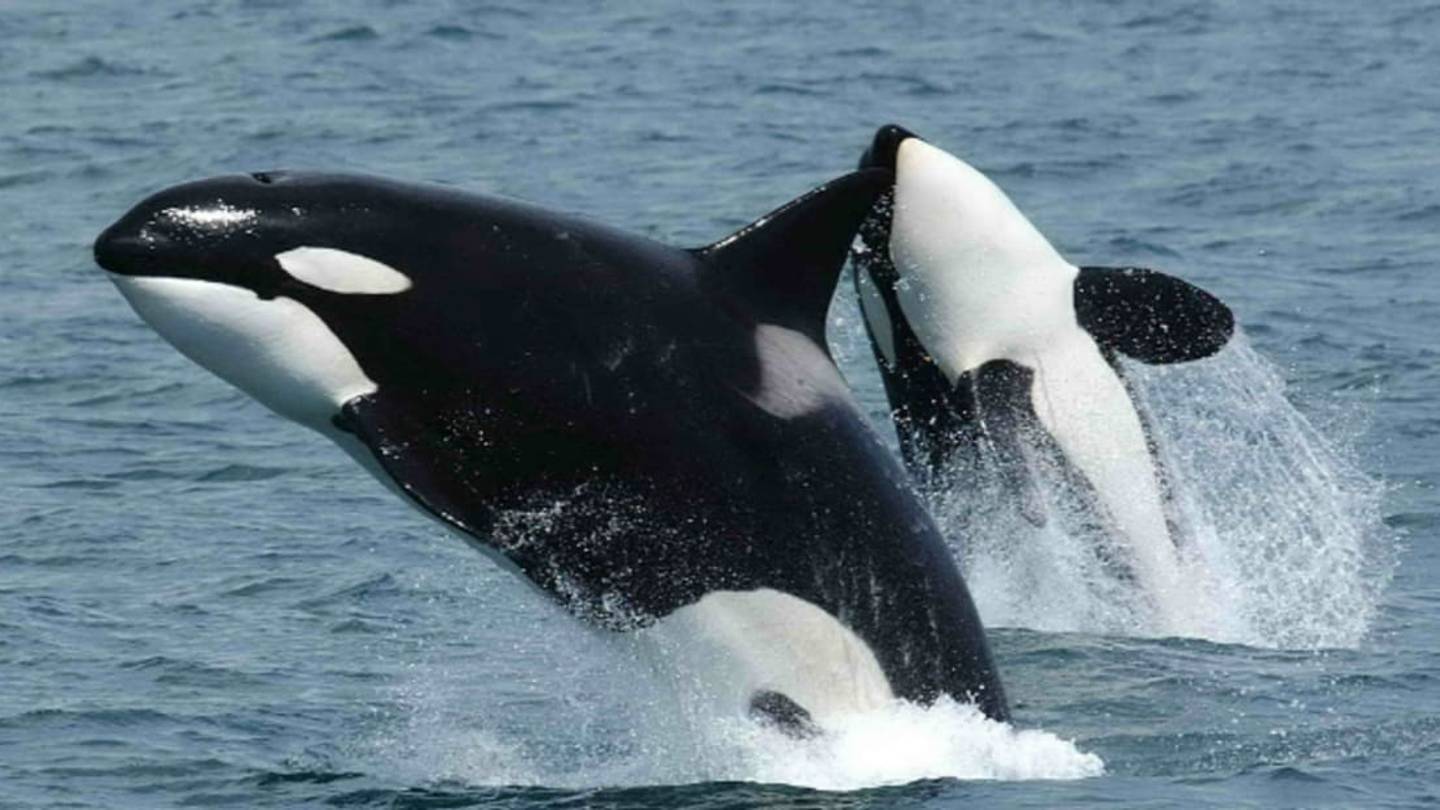
When we talk about "culture," weâre almost always talking about people. But many biologists argue that non-human animals have culture  too, and that their cultures, like our own, can shape and be shaped by the environment and genes. Researchers who have sequenced the orca genome say the cetaceansâ DNA tells a tale of culture, socialization, and dispersal through the worldâs oceans. The findings are published this week in the journal Nature Communications . Â
The study of relationships between culture and genes is a relatively new and limited field, the authors note, so "our understanding of the complex interaction between ecology, culture, adaptation and reproductive isolation at a genome-wide level has long suffered from deficiency of genome-wide data, and, conceptually, from the almost-exclusive focus on these processes in humans and thus a lack of comparative data from other species.â
Enter the orca ( Orcinus orca ) : a highly social species that has managed to find itself at home in oceans from the Arctic to Antarctica. The orca is, the authors write, âtogether with humans ⦠one of the most cosmopolitan mammals.âÂ
"Did somebody say 'cosmopolitan'?" Image credit: John Durban, NOAA Southwest Fisheries Science Center
Orcasâ success is due in part to their practice of sending out small groups to explore and then inhabit unfamiliar territory. Their long life spans and matriarchal social structure also allow settlers to pass on what theyâve learned to the next generation, which makes it more likely that a new outpost will survive. Over time, these little groups, or ecotypes, adapt to their environment, changing their diets and developing new hunting techniques. In other words, they create a new culture.
"There goes the neighborhood." Image credit: John Durban, NOAA Southwest Fisheries Science Center
To get a more molecular look at these ecotypes, an international team of scientists set out to sequence the orcaâs genome. They used biopsy darts to collect tissue samples from 50 wild orcas from around the world. Some of the orcas belonged to ecotypes that ate mostly fish. Others were penguin specialists, and still others preyed primarily on marine mammals like seals.
Analysis of the orcasâ DNA revealed a familiar story: a tiny reflection in genetic code of the orcasâ natural historyâand our own. Tracing patterns of gene expression showed that, across the board, a population shrink (often called a "bottleneck") led to the creation of a new outpost, which, once established, was followed by a population boom as the orcas adapted to their new home.
This orca is doing just fine. The penguin, on the other hand ⦠Image credit: Holly Fearnbach, NOAA Southwest Fisheries Science Center
Each ecotype has a slightly different genetic makeup than that of the group from which it split, but the authors note that this is something of a chicken-or-the-egg issue: âAs with studies on modern humans, it is difficult to demonstrate a causal association between cultural differences and selection on specific genes.â
Did the settlers thrive in their new environment because they had the genes that would allow them to safely change their diet? Or did the change in diet prompt a shift in genetic makeup? That remains to be seen. This is just the first page of a new chapter in science history.
âGiven these findings,â the authors write, âthe almost-exclusive focus on humans by studies of the interaction of culture and genes should be expanded, and exploration of culture-genome coevolution models in suitable non-human animal systems encouraged.â
Loading recommendations... Please wait while we load personalized content recommendations