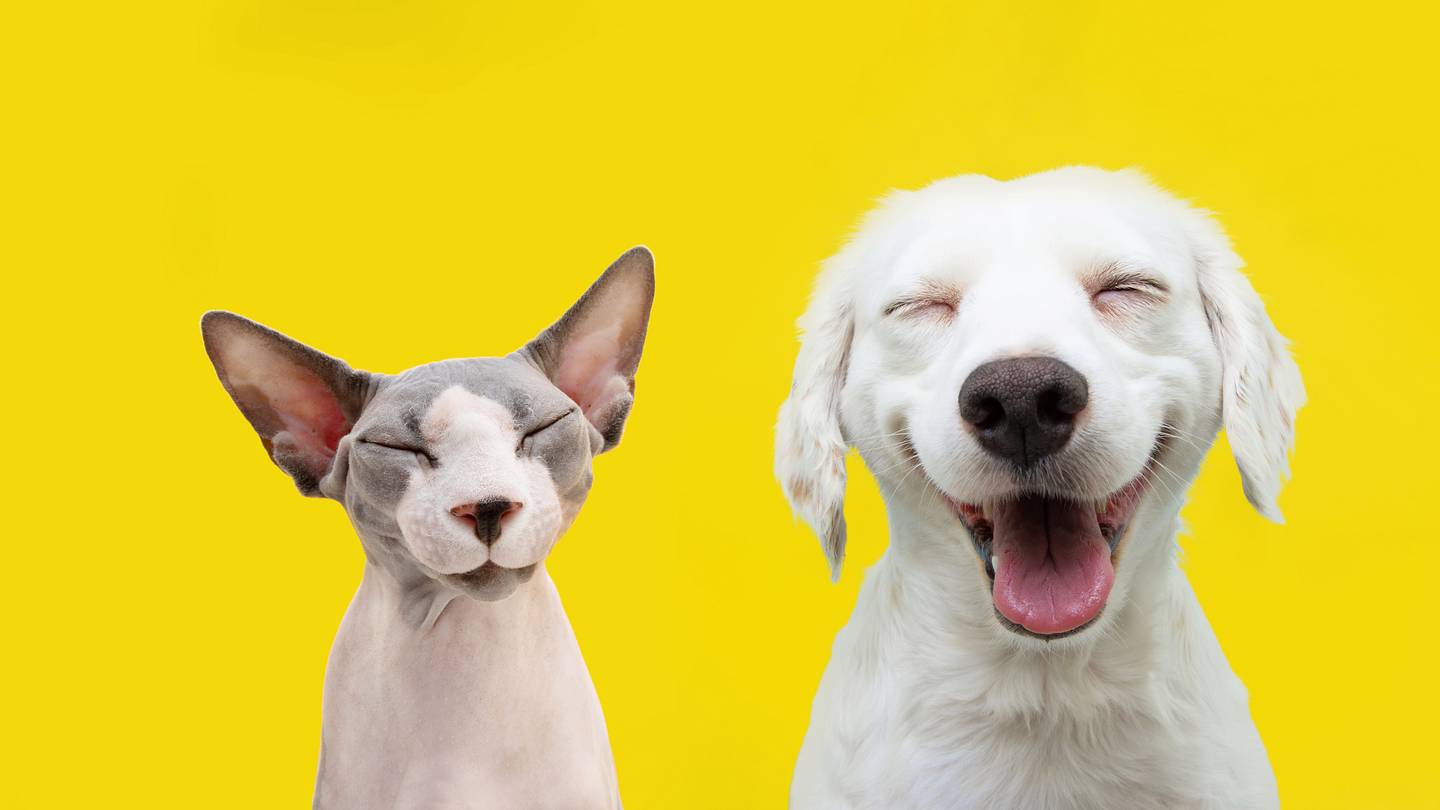
When people arenât debating whether cats or dogs are more intelligent , theyâre equating them as mortal foes. Thatâs a stereotype that both cat expert Jackson Galaxy, host of the Animal Planet show My Cat From Hell , and certified dog trainer Zoe Sandor wanted to break.
Typically, cats are aloof and easily startled, while dogs are gregarious and territorial. This doesnât mean, however, that they canât share the same spaceâtheyâre just going to need your help. âIf cats and dogs are brought up together in a positive, loving, encouraging environment, theyâre going to be friends,â Galaxy told Mental Floss in 2017. âOr at the very least, theyâll tolerate each other.â
The duo had teamed up to host an Animal Planet series, Cat vs. Dog . The show chronicled their efforts to help pet owners establish long-lasting peaceâif not perfect harmonyâamong cats and dogs. (Yes, itâs possible.) Gleaned from both TV and off-camera experiences, here are eight tips Galaxy and Sandor said will help improve household relations between Fido and Fluffy.
Contrary to popular belief, certain breeds of cats and dogs donât typically get along better than others. According to Galaxy and Sandor, itâs more important to take their personalities and energy levels into account. If a dog is aggressive and territorial, it wonât be a good fit in a household with a skittish cat . In contrast, an aging dog would hate sharing his space with a rambunctious kitten.
If two animals donât end up being a personality match, have a backup plan, or consider setting up a household arrangement that keeps them separated for the long term. And if youâre adopting a pet , do your homework and ask its previous owners or shelter if itâs lived with other animals before, or gets along with them.
To set your dog up for success with cats, teach it to control its impulses, Sandor said. Does it leap across the kitchen when someone drops a cookie, or go on high alert when it sees a squeaky toy? If so, it probably wonât be great with cats right off the bat, since it will likely jump up whenever it spots a feline.
Hold off Fidoâs face time with Fluffy until the former is trained to stay put. And even then, keep a leash handy during the first several cat-dog meetings.
Cats need a protected spaceâa âbase campâ of sortsâthatâs just theirs, Galaxy said. Make this refuge off-limits to the dog, but create safe spaces around the house, too. This way, the cat can confidently navigate shared territory without trouble from its canine sibling.
Since cats are natural climbers, Galaxy recommended taking advantage of your homeâs vertical space. Buy tall cat trees, install shelves, or place a cat bed atop a bookcase. This allows your cat to observe the dog from a safe distance, or cross a room without touching the floor.
And while youâre at it, keep dogs away from the litter box . Cats should feel safe while doing their business, plus dogs sometimes like to snack on cat feces , a bad habit that can cause your pooch to contract intestinal parasites. These worms can cause a slew of health problems, including vomiting, diarrhea, weight loss, and anemia.
Baby gates work in a pinch, but since some dogs are escape artists, prepare for worst-case scenarios by keeping the litter box uncovered and in an open space. That way, the cat wonât be cornered and trapped mid-squat.
âPeople exercise their dogs probably 20 percent of what they should really be doing,â Sandor said. âItâs really important that their energy is released somewhere else so that they have the ability to slow down their brains and really control themselves when theyâre around kitties.â
Dogs also need lots of stimulation. Receiving it in a controlled manner makes them less likely to satisfy it by, say, chasing a cat. For this, Sandor recommended toys , herding-type activities, lure coursing, and high-intensity trick training.
âInstead of just taking a walk, stop and do a sit five times on every block,â she said. âAnd do direction changes three times on every block, or speed changes two times. Itâs about unleashing their herding instincts and prey drive in an appropriate way.â
If you donât have time for any of these activities, Sandor recommended hiring a dog walker, or enrolling in doggy daycare.
In Galaxyâs book, Total Cat Mojo , he writes that itâs a smart idea to let cats and dogs sniff each otherâs bedding and toys before a face-to-face introduction. This way, they can satisfy their curiosity and avoid potential turf battles.
Just like humans, cats and dogs have just one good chance to make a great first impression. Luckily, they both love food, which might ultimately help them love each other.
Schedule the first cat-dog meeting during mealtime, but keep the dog on a leash and both animals on opposite sides of a closed door. They wonât see each other, but they will smell each other while chowing down on their respective foods. Theyâll begin to associate this smell with food, thus âmaking it a good thing,â Galaxy said.
Do this every mealtime for several weeks, before slowly introducing visual simulation. Continue feeding the cat and dog separately, but on either side of a dog gate or screen, before finally removing it all together. By this point, âtheyâre eating side-by-side, pretty much ignoring each other,â Galaxy said. For safetyâs sake, continue keeping the dog on a leash until youâre confident itâs safe to take it off (and even then, exercise caution).
After youâve successfully ingratiated the cat and dog using feeding exercises, keep their food bowls separate. âA cat will walk up to the dog bowl âeither while the dogâs eating, or in the vicinityâand try to eat out of it,â Galaxy said. âThe dog just goes to town on them. You canât assume that your dog isnât food-protective or resource-protective.â
To prevent these disastrous mealtime encounters, schedule regular mealtimes for your pets (no free feeding!) and place the bowls in separate areas of the house, or the catâs dish up on a table or another high spot.
Also, keep a close eye on the catâs toysâcompetition over toys can also prompt fighting. âDogs tend to get really into catnip ,â Galaxy said. âMy dog loves catnip a whole lot more than my cats do.â
Socializing these animals at a young age can be easier than introducing them as adultsâ pups are easily trainable âspongesâ that soak up new information and situations, Sandor said. Plus, dogs are less confident and smaller at this stage in life, allowing the cat to âassume its rightful position at the top of the hierarchy,â she added.
Remain watchful, though, to ensure everything goes smoothlyâespecially when the dog hits its rambunctious âteenageâ stage before becoming a full-grown dog.
A version of this story originally ran in 2017; it has been updated for 2023.
Loading recommendations... Please wait while we load personalized content recommendations