For centuries, dogs were dogs and cats were cats. They did things like bark and drink water and lay downâactions that pet parents didnât need a translator to understand.
Then the internet arrived. Scroll through the countless Facebook groups and Twitter accounts dedicated to sharing cute animal pictures and youâll quickly see that dogs donât have snouts, they have snoots. Cats, meanwhile, come in a colorful assortment of shapes and sizes ranging from smol to floof.
Pet meme language has been around long enough to start leaking into everyday conversation. If you're a pet owner (or lover) who doesnât want to be out of the loop, here are the terms you need to know.
You know your pet is fully relaxed when theyâre doing a sploot . Like a split but for the whole body, a sploot occurs when a dog or cat stretches so their bellies are flat on the ground and their back legs are pointing behind them. The amusing pose may be a way for them to take advantage of the cool ground on a hot day, or just to feel a satisfying stretch in their hip flexors. (That said, according to Animal Wellness Magazine , âitâs not a normal position. Sometimes, dogs who âsplootâ their legs do so because theyâre in pain. If your dog frequently lies this way, and his breed (or mix of breeds) is predisposed to hip dysplasia, visit the vet to rule out the condition, along with any associated secondary arthritis.â) Corgis are famous for the sploot, but any quadruped can do it if theyâre flexible enough.
If youâve ever caught a cat or dog poking the tip of its tongue past its front teeth, youâve seen a blep in action. A blep is subtle and often gone as quickly as it appears. Animal experts arenât entirely sure why pets blep, but itâs been suggested that in cats it may have something to do with the Flehmen response , in which they use their tongues to âsmellâ the air.
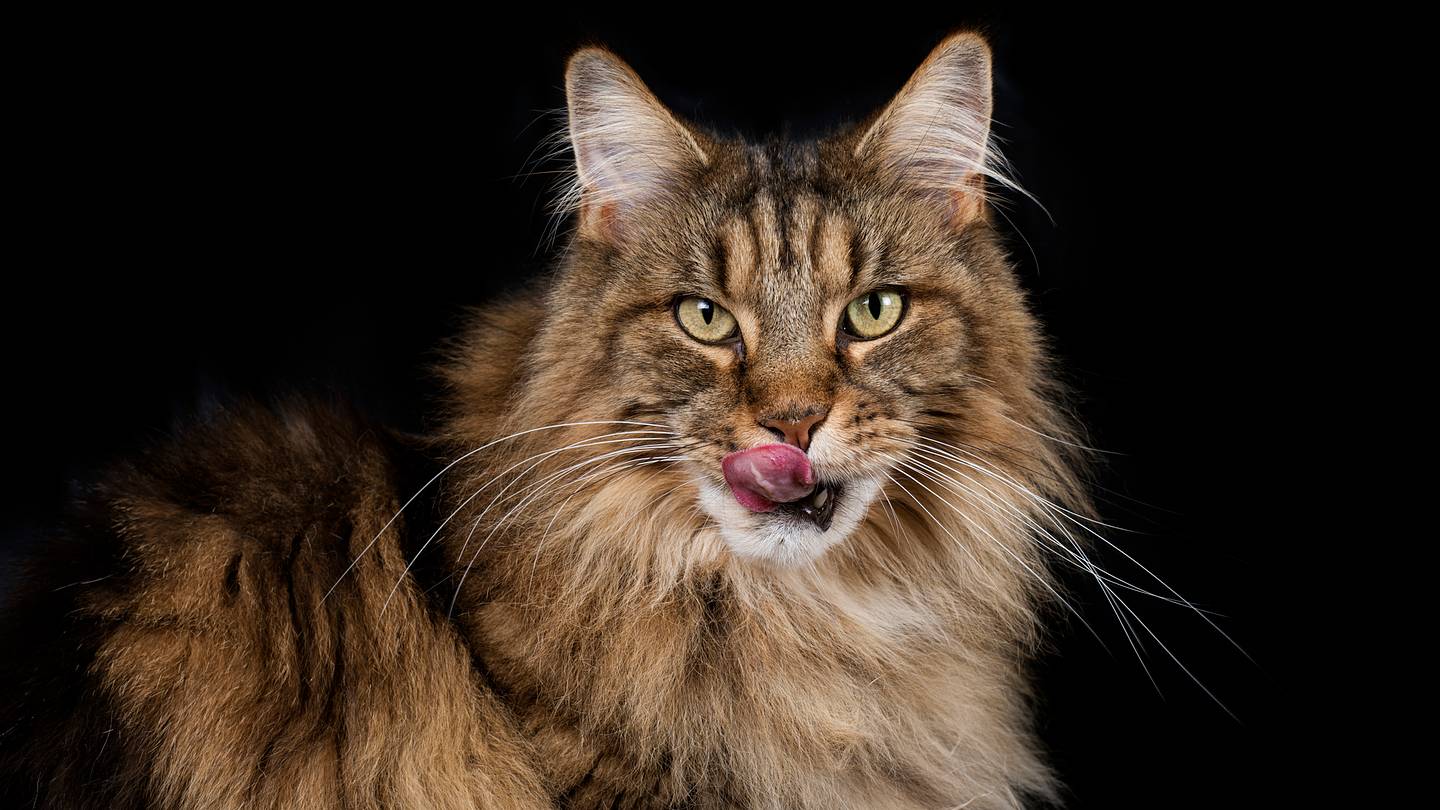
Mlems and bleps, though very closely related, arenât exactly the same. While blep is a passive state of being, mlem is active. Itâs what happens when a pet flicks its tongue in and out of its mouth, whether to slurp up water, taste food, or just lick the air in a derpy fashion. Dogs and cats do it, of course, but reptiles have also been known to mlem.
Some pets barely have any fur; others have coats so voluminous that hair appears to make up the bulk of their bodyweight. Dogs and cats in the latter group are known as floofs . Floofy animals will famously leave a wake of fur wherever they sit and can squeeze through tight spaces despite their enormous mass. Samoyeds, Pomeranians, and Persian cats are all prime examples of floofs.
According to some corners of the internet, dogs donât barkâthey bork. Listen carefully next time youâre around a vocal doggo and you wonât be able to unhear it.
Speaking of doggos: This word isnât hard to decode. Every dogâregardless of size, floofiness, or derpinessâcan be a doggo . If youâre willing to get creative, the word can even be applied to non-dog animals like fennec foxes (a.k.a. special doggos ) or seals (otherwise known as water doggos ). The usage of doggo saw a spike in 2016 thanks to the internet and by the end of 2017 it was listed as one of Merriam-Websterâs âWords Weâre Watching.â
Some pets are so adorably, unbearably tiny that using proper English to describe them just doesnât cut it. Not every small pet is smol : To earn the label, a cat or dog (or kitten or puppy) must excel in both the tiny and cute departments. A pet thatâs truly smol is likely to induce excited squees from everyone around it.
Like the word doggo , pupper is self-explanatory: It can be used in place of the word puppy , but if you want to use it to describe a fully-grown doggo whoâs particularly smol and cute, you can probably get away with it.
Weâve already established that doggos go bork, but thatâs not the only sound they make. A low, deep barkâperhaps from a dog that canât decide if it wants to expend its energy on a full barkâis best described as a boof. Consider a boof a warning bark before the real thing.
Snoot was already a dictionary-official synonym for nose by the time dog meme culture took the internet by storm. But while snoot is rarely used to describe human faces today, itâs quickly becoming the preferred term for pet snouts. There was even a wholesome viral challenge dedicated to dogs poking their snoots through their ownersâ hands.
Have you ever seen a dog snoot so cute you just had to reach out and tap it? And when you did, was your action accompanied by an involuntary âboopâ sound? This urge is so universal that boop is now its own verb. Humans arenât the only ones who can boop: Search the word on YouTube and treat yourself to hours of dogs, cats, and other animals exchanging the love tap.
The internet loves to refer to the paw pads of cats and dogs using the terms beans or toe beans . The latter phrase has more than 700,000 tags on Instagram.
If your dog goes absolutely wild, zinging all over the place, after theyâve pooped or had a bath, youâve experienced the zoomies âor, if you want to use the actual scientific term, a Frenetic Random Activity Period (FRAP). âThere is no known specific cause of FRAPs in dogs,â veterinarian Dr. Pamela J. Perry told Cornellâs Richard P. Riney Canine Health Center. âHowever, they appear to be a way to release pent-up energy, or perhaps, to alleviate stress. ... FRAPs also can occur whenever a dog becomes very excited (e.g., when an owner returns after a long absence).â Zoomies arenât limited to dogs, either: Catsâeven big catsâalso experience them, as do elephants, horses, ferrets, rabbits, and more.
A version of this story ran in 2018; it has been updated for 2023.
Loading recommendations... Please wait while we load personalized content recommendations