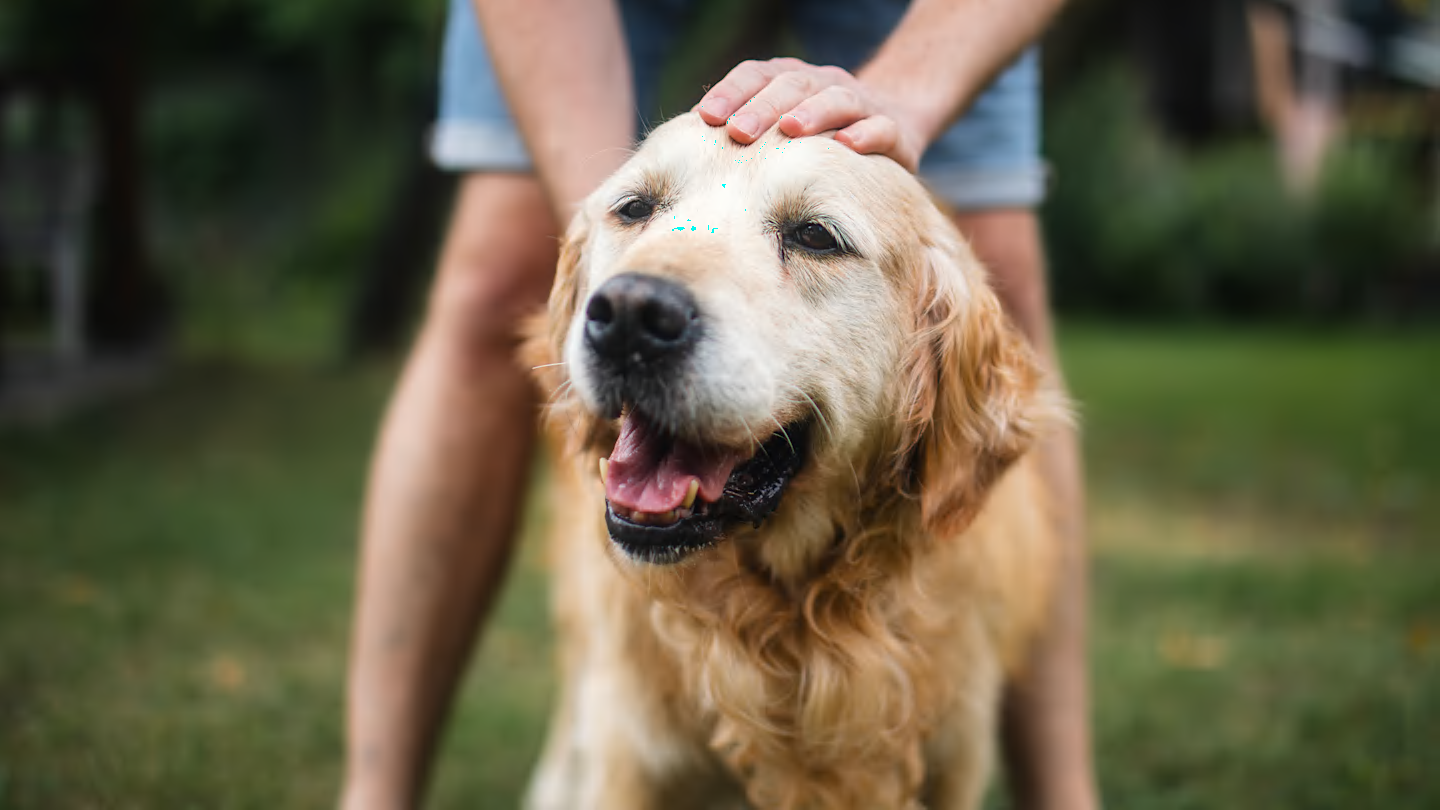
November is Adopt a Senior Pet Month âa necessary campaign, considering many shelters euthanize senior-aged dogs and cats because theyâre viewed as undesirable. Fortunately, several organizations exist across the U.S. to pair senior animals with loving homes.Â
According to a 2017 survey conducted by The Grey Muzzle Organization âwhich provides grants and resources to rescue groups, shelters, sanctuaries, and other nonprofits that take care of at-risk senior animalsâtwo-thirds of respondents reported that things were looking up for homeless senior dogs; half of those surveyed believed more younger people were more open to adopting senior pups.Â
âA grey muzzle just means a dog will be even more grateful for the chance to love and be loved again,â Barbara Castleman, a volunteer media manager at The Grey Muzzle Organization, told Mental Floss. âAfter all, love is ageless.â
Here are seven things to consider when adopting a senior pet, according to animal rescue experts.Â
According to Chewy , small dogs reach senior status at 11â12 years old; medium dogs are considered senior dogs around 8â9 years old; and giant breeds become senior dogs at 6â7 years old. For cats , itâs about 7â10 years old.Â
âWith an older dog, what you see is what you get,â Patty Stanton of San Franciscoâs Muttville Senior Dog Rescue told Mental Floss. âTheir physical size is established so there are no mysteries about whether theyâll exceed the weight limit for your apartment, and by and large, their temperament and personality are also fully developed. In other words, theyâve become what and who they are going to be.â Â
According to the ASPCA, a senior cat is also more likely to already have a fully developed personality, and may even settle into a new home easier than a kitten.
Still, you should make sure the pet youâre interested in is a good fit for your lifestyle and living situation. A high-energy senior cat or dog, for example, may not be a good match for someone looking for a low-key couch potato of a pet .
Add Mental Floss as a  preferred news source !
 âAn older dog has typically had some basic obedience training and is already familiar with the essential commands that will make life enjoyable for both of youâcome, sit, stay,â Stanton said. âEqually important, he or she is more than likely to be house trained, unlike their puppy counterparts.â Â
âTo anyone who has ever had their favorite shoes, the furniture, a rug, or the baseboards of their house chewed with endless abandon, rejoice! This may be typical puppy behavior, but not at all what to expect from a normal adult dog,â Stanton said. Â
A cat, however, could still be inclined to scratch your furniture regardless of its ageâso you may want to take the necessary precautions to curb that habit.
If your senior pet does exhibit some sudden undesirable behaviorsâlike urinating or defecating in unusual placesâyou should consult with your vet, as this could indicate a health problem.
âAs an older dog ages, you can expect him or her to be less frisky and rambunctious than their younger counterparts, and in most cases, the requirement for exercise will be less,â Stanton said. âThis attribute makes the older dog a great fit for many family situations and an ideal match for the aging adult as well.âÂ
That doesnât mean you can entirely skip out on exercising your pet, though. Walking a dog not only encourages much-needed exercise, but also social interaction; cats also require daily play and stimulation.
One added health benefit: pets, regardless of their age, make great companions and reduce anxiety and lower blood pressure.Â
Vet bills for a senior pet might be pricier than those for a younger, healthier animal. Be sure to look at the cat or dogâs vet records, keeping an eye out for everything including bloodwork results, past surgical procedures, and any known health conditions. And keep in mind that older pets often typically require more visits to the vet .
Caring for a senior pet can be costly, but there are organizations that can offer some financial assistance. The Philadelphia-based The City of Elderly Love Rescue, for example, has the Letâs Stay at Home Fund âthis allows those experiencing financial hardship to receive funds to cover their beloved senior petâs medical bills, food, and supplies so the companion wonât end up in a shelter.Â
Muttville is one of many organizations that offers a Seniors for Seniors program , in which people 62 years and older can adopt a dog for no adoption fee. The organization even provides things like dog bowls, food and medication, and a doggy gate and stairs. If seniors arenât quite sure about comitting to adoption, they can still spend quality time with the animals and participate in Muttvilleâs Cuddle Club , which is as adorable as it sounds.Â
Loading recommendations... Please wait while we load personalized content recommendations