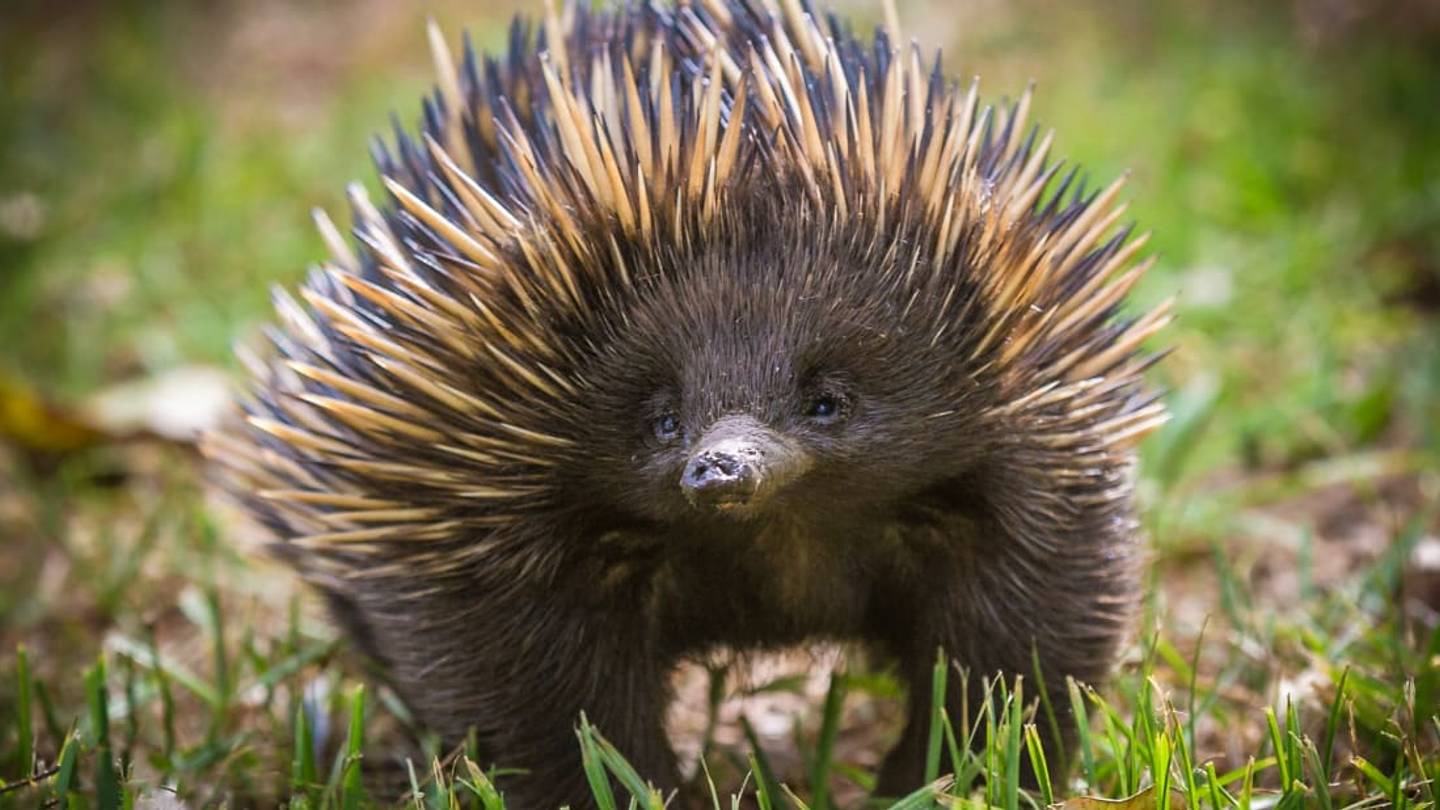
Most of the time, an echidnaâs penis is tucked safely inside its body, keeping itself clean and leaving unsuspecting passersby to assume it looks like any other garden-variety mammalian male member.
Dear reader, it does not: Short-beaked echidna penises have not one, not two, not three, but four heads.
As ScienceAlert reports , itâs not the only surprising feature of the short-beaked echidnaâs reproductive process. Echidnas, like platypuses , are monotremesâthe only type of mammal to lay eggs. Male monotremes lack a scrotum, and their sperm swim together in packs of about 100. Another defining characteristic that sets them apart from other mammals is that they donât use their penises to urinate; for that, they have a multi-purpose orifice called a cloaca.
But the abundance of penis heads, or glans, is arguably the most baffling attribute of the echidna. (Platypus penises, for reference, only have two glans.) Thanks to a recent study published in the journal Sexual Development , we now know more about how it functions.
Australiaâs Currumbin Wildlife Sanctuary often has to euthanize short-beaked echidnas injured while crossing roads, and scientists from the University of Melbourne, the University of Queensland, and Monash University used modified CT scans to examine some of their penises. A live, tame echidna was studied, too.
In an echidnaâs penis, the urethra and the main blood vessel split into four parts, one for each head. The corpus spongiosum , the penile tissue responsible for ensuring that semen makes it through the urethra, starts as two parts and remains as two parts: one for each pair of heads. For other mammals, the corpus spongiosum usually fuses into one branch toward the head.
Itâs definitely a lot of moving parts, but the echidna doesnât use them all simultaneously. Instead, only one corpus spongiosum operates at a time, so only two urethra branches will stay open, and semen will only ejaculate from two heads. In other words, the short-beaked echidna basically has two two-headed penises.
Why the short-beaked echidna has such a fancy phallus is still a mystery. The researchers suggest that it could be a mating advantageânot necessarily because itâs attractive, but because itâs really productive.
âBy alternating the use of each side, our tame echidna can ejaculate 10 times without significant pause, potentially allowing him to out-mate less efficient males,â they wrote in an article for the University of Melbourneâs research site Pursuit.
Echidna penises also may have evolved with some extra bells and whistles because they didnât have to operate as both a sperm railroad and a urine dispensing service. Other species, meanwhile, have had to make do with what the researchers called âthe standard penis design.â
Loading recommendations... Please wait while we load personalized content recommendations