Though the most widely known royal pets may be Queen Elizabeth II âs brigade of Pembroke Welsh Corgis , the late monarchâs furry friends are far from the strangest companions kept by those who have worn the crown. Exotic pets have played a much more significant role in royal life than many have imagined. They functioned as both diplomatic envoys and as symbols of a monarchyâs far reaching influence. While many of the unusual pets on our list may be counted as yet another eccentricity, collections of exotic pets also served as emblems of their ownerâs vast wealth and royal connections.Â
Empress Joséphine de Beauharnaisâfirst wife of French despot Napoleon Bonaparteâonce had a beloved, quasi childlike pet orangutan named Rose. Rose was one of the many animals in Joséphineâs extensive menagerie of exotic pets; the empress reportedly dressed the young orangutan in childrenâs clothing and even invited Rose to dine at the table with her and Napoleon. Rose is said to have had a particular proclivity for turnips and could even eat her food with cutlery.Â
Sadly, Rose did not take well to life at the Bonapartesâ palatial Château de Malmaison and died less than a year after arriving. Joséphine sent her remains to French zoologist Georges Cuvier to be studied.Â
The âwhite bearâ gifted to King Henry II by Haakon IV of Norway is widely believed to have been an actual polar bear . The arctic carnivore was a popular attraction at the Tower of London âs royal menagerie and was even allowed to march the grounds (on a chain) and venture into the River Thames to hunt and swim.Â
The royal menagerie in the Tower of London housed animals like lions, kangaroos, monkeys, and even elephants. It remained in operation until Arthur Wellesley, Duke of Wellington ordered its closure in the early 19th century.Â
Henry VIIIâs first wife , Catherine of Aragon, appears in multiple royal portraits with her primate pal. Historians suspect the monkey was a Panamanian white-faced capuchin . Exotic pets, particularly primates, were widely considered to be symbols of worldliness and wealth throughout the 16th century. Later portraits depicting Margaret TudorâCatherineâs sister-in-law and Queen of Scotlandâshow the Scottish queen cradling a monkey of her own (possibly a marmoset).Â
Alongside Catherine and Margaret, numerous other royals including John, Duke of Berry and Queen Isabeau of Bavaria were said to have kept monkeys as pets.Â
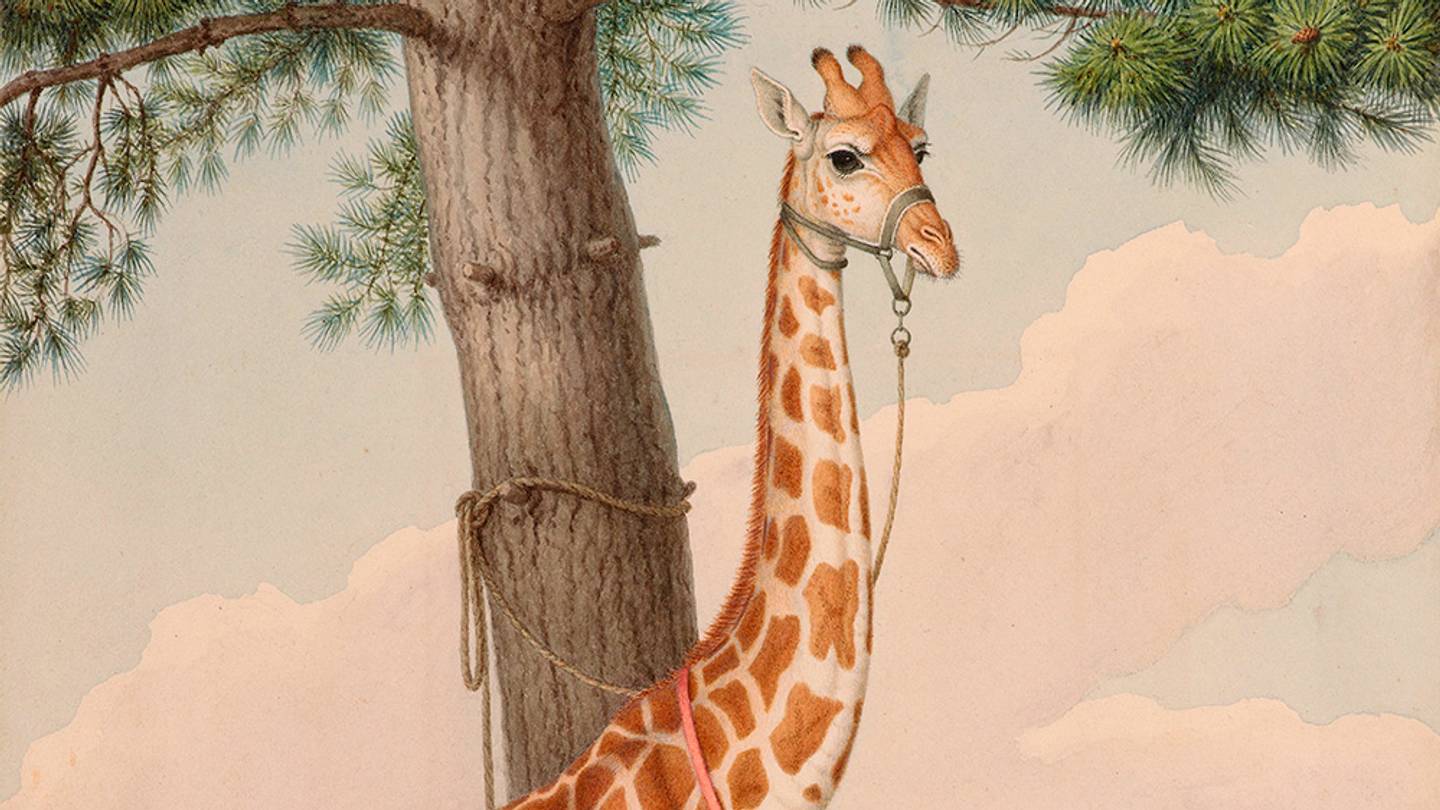
Ottoman viceroy Mehmet Ali Pasha gifted King Charles X of France a young Nubian giraffe captured from Sudan as part of a series of gifts to European rulers. Thousands of Parisians lined the streets to greet her and the young giraffe became something of a cultural sensation throughout France. She was the subject of songs, paintings, poems, and even inspiring a popular hairstyle .Â
The Nubian giraffe died in early 1845 after living in the Parisian botanical garden Jardin des Plantes for almost two decades. She was then stuffed and displayed in the gardenâs foyer before eventually being moved to the Museum of Natural History of La Rochelle, where she resides to this day.Â
Elizabeth and her sister, Princess Margaret , were gifted a pet chameleon by Lord Louis Mountbatten when the former was 15 years old. The sisters fashioned their reptilian friend an enclosure from a small box and pages torn from Debrettâs (a tome outlining proper British etiquette) and would carry it around the royal palace to snap up unsuspecting flies.Â
After the chameleon died, a grief-stricken Elizabeth insisted on giving the pet a proper burial complete with a white, chameleon-sized coffin. In Marion Crawfordâs book Elizabeth the Queen , the young royalâs nanny wrote of the reptileâs royal interment: âThen the three of us marched into the gardens to find a suitable cemetery. We had not yet gone far when Princess Elizabeth stopped with a look of horror on her face. âBut how do we know heâs dead?â she asked. Then we had to undo the coffin and make sure. There was no doubt about it, so we buried him under a flowering shrub and Princess Elizabeth hummed a hymn tune.â
Sir George Pigot gifted King George III a cheetah by the name of Miss Jenny in a bid to secure himself a second term as governor-general of Madras. After being regifted to the Duke of Cumberland, Miss Jenny eventually joined the famed Tower of London menagerie, where she became one of its most famous inhabitants until passing away about seven years later.Â
Miss Jenny also became the subject of a well known painting by renowned English artist George Stubbs. The artwork depicts the cheetah, blindfolded and restrained, being prepped for a stag hunt staged by the Duke of Cumberland at Windsor Great Park. The hunt was a total failure, resulting in an understandably frightened Miss Jenny cowering when faced by the large stag sheâd been meant to slay.Â
Queen Victoria was gifted a pair of Tibetan mountain goats from Mohammad Shah Qajar (who ruled Persia from 1834 to 1848) after ascending the British throne in 1837. The pair of goats, whose downy wool yields fine cashmere, were used to establish a royal herd at Windsor. Their descendants still play a role in royal life today.Â
William âBillyâ Windsor I, a cashmere goat directly descended from Victoriaâs original royal herd, served as lance corporal in the British Army from 2001 until his retirement to Hullabazoo Farm in 2009. Following some bad behavior at Queen Elizabeth IIâs 80th birthday celebration in 2006, Billy was temporarily demoted to fusilier before regaining his original rank some months later. After the distinguished goat retired , a young feral goat was selected to succeed him and was appropriately dubbed William Windsor II.Â
As a consolation for refusing Portugal permission to construct a fortress on his land, King Modofar of Cambaia sent Portugalâs king a rhinoceros as a diplomatic gift. The rhinoceros, a female Indian rhino named Ganda, quickly became a popular attraction among the Portuguese. She briefly resided in Manuelâs expansive royal menagerie before the Portuguese king gifted her to Pope Leo X.Â
Sadly, while on a ship bound for Rome, Ganda and the entire crew drowned after a raging squall sank their vessel. King Manuel ordered Gandaâs corpse be recovered from the wreckage so it could be taxidermied and delivered to the Pope nonetheless.Â
Woodstock Palaceâformerly known as Woodstock Manorâwas an English royal residence that also served as King Henry Iâs bestiary. Henry I erected miles of stone walls to serve as an enclosure for his menagerie. His collection of creatures included hyenas, lions, camels, leopards, and even a porcupine gifted to him by William V of Montpellier, a leader on the bloody First Crusade.Â
Following Henry Iâs death in 1135, the palace was used by his grandson, King Henry II, as the site for extramarital trysts with his mistress, noblewoman Rosamund Cliffordâwho, according to legend , was murdered at the palace by his wife once sheâd caught wind of the affair.Â
Discover More Stories About Pets: