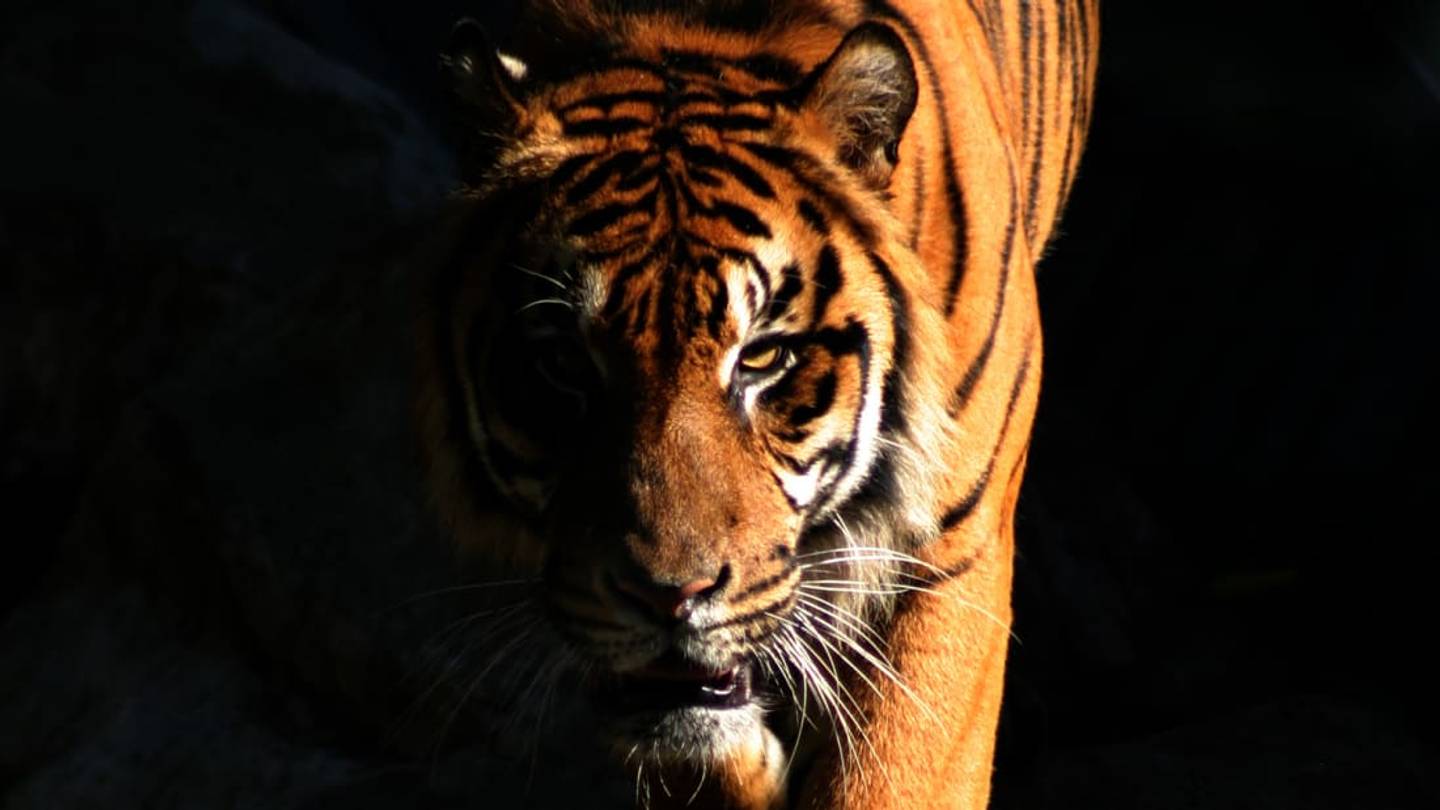
On October 26, 1857, a Bengal tiger escaped from its cage in the backyard of a menagerie in London's East End. Snatching a young boy in its jaws, it ran off down the street. Astonishingly, the boy survived. So did the tigerâand, even more astoundingly, so did the man who wrestled the boy from the tigerâs jaws.
The boyâs rescuer was also the tigerâs owner. Born in Hamburg, Germany, in 1815, Charles Christian Jamrach was a dealer in wild and exotic animals and birds, who, with the help of his father, established a vast business trading and supplying wildlife to zoos, menageries, circuses, and museums across 19th century Europe. (Even Dante Gabriel Rossetti was a customer, purchasing his beloved wombat from Jamrach.)
After his fatherâs death in 1840, Jamrach moved to London to take over the British arm of the business. There, he opened an exotic pet store and museum of natural historyââJamrachâs Animal Emporiumââon St. George Street, as well as a menagerie on Bett Street. In 1891, the Spectator described the emporium as "an exciting place to visit," going on to note:
With an ever-growing list of A-list customers and contacts (including the London Natural History Museum and the recently opened London Zoo), Jamrachâs company was becoming more successfulâand it was at that point when, in 1857, he acquired what was to be a star attraction: a fully grown Bengal tiger, shipped to England from the East Indies.
On the morning of October 26, the tiger (along with a delivery of several other big cats) arrived at the Bett Street menagerie. It was held in a large crate, which had three solid wood sides and thick iron bars across the front. Jamrach himself had decided to oversee the tricky procedure of moving the tiger from its transport crate and into its enclosure, and asked that the crate be positioned so that the open iron bars were placed against the wall of the yard while the tigerâs enclosure was being prepared.
That might have sounded like safest option at the time, but Jamrach had seemingly underestimated just how powerful a fully grown tiger is. "They were proceeding to take down a den with leopards, when all of a sudden I heard a crash," Jamrach later recalled in The Boyâs Own Paper , "and to my horror found the big tiger had pushed out the back part of his den with his hind-quarters, and was walking down the yard into the street, which was then full of people watching the arrival of this curious merchandise. The tiger, in putting his forepaws against the iron bars in front of the den, had exerted his full strength to push with his back against the boards behind, and had thus succeeded in gaining his liberty."
As if that wasn't disastrous enough, the situation quickly went from bad to worse when the tiger spotted a 9-year-old boy, who had reportedly put his hand out to stroke its back as it strode past, and snatched him up in its jaws. "The tiger seized him by the shoulder and ran down the street with the lad hanging in his jaws," Jamrach said. "This was done in less time than it takes me to relate." Without a momentâs hesitation, Jamrach took off after it:
Amid crowds of pedestrians fleeing for their lives, Jamrach quickly caught up with the tiger and, throwing himself onto its back, grabbed it by the scruff of its neck, to little avail. It was still too strong, and as it tossed Jamrach to the ground and dragged him along the street, it still kept the boy in its jaws. Jamrach tried a second time to stop the tiger, this time by tripping it up, and as it finally fell to the ground, Jamrach knelt on its back and forced his hands around its neck in an attempt to strangle it. As he subdued it, one of the workers from his yard ran over and struck it over the head with a crowbar.
Dazed, the tiger dropped the boy from its jawsâand promptly went to turn on Jamrach:
The boy was rushed to a nearby hospital where, despite his ordeal, it was discovered that he had suffered little more than a few scratches.
In the aftermath of the escape, the boyâs father sued Jamrach, who was forced to pay £60 compensation and legal costs of £240 (about $7000 and $28,500 today, respectively). The judge in the trial, although aware he had to pass down a harsh sentence for such a potentially dangerous accident, reportedly sympathized with Jamrach and commented that he âought to have been rewarded for saving the life of the boy, and perhaps that of a lot of other people.â
As for the tiger, he was later sold to George Wombwell, the owner of a famous Victorian travelling menagerie, who reportedly cashed in on the entire affair by exhibiting the creature as âthe tiger that swallowed the boy.â
Jamrach, meanwhile, continued to expand both his collection and his client list, and in 1864 helped the legendary showman P.T. Barnum restock his circus after a devastating fire.
Yet by the time of Jamrach's death in 1891, the trade and public interest in exotic animals was beginning to wane. The business was taken over by his son Albert after his death, but when the outbreak of World War I made the international trade of animals nearly impossible, the company folded. Nevertheless, today a statue commemorates Jamrachâs contribution to Victorian culture and his selfless rescue of the unnamed boyâan extraordinary 7-foot-tall bronze tiger now stands in the entrance to Tobacco Dock, close to where the incident took place.
Loading recommendations... Please wait while we load personalized content recommendations