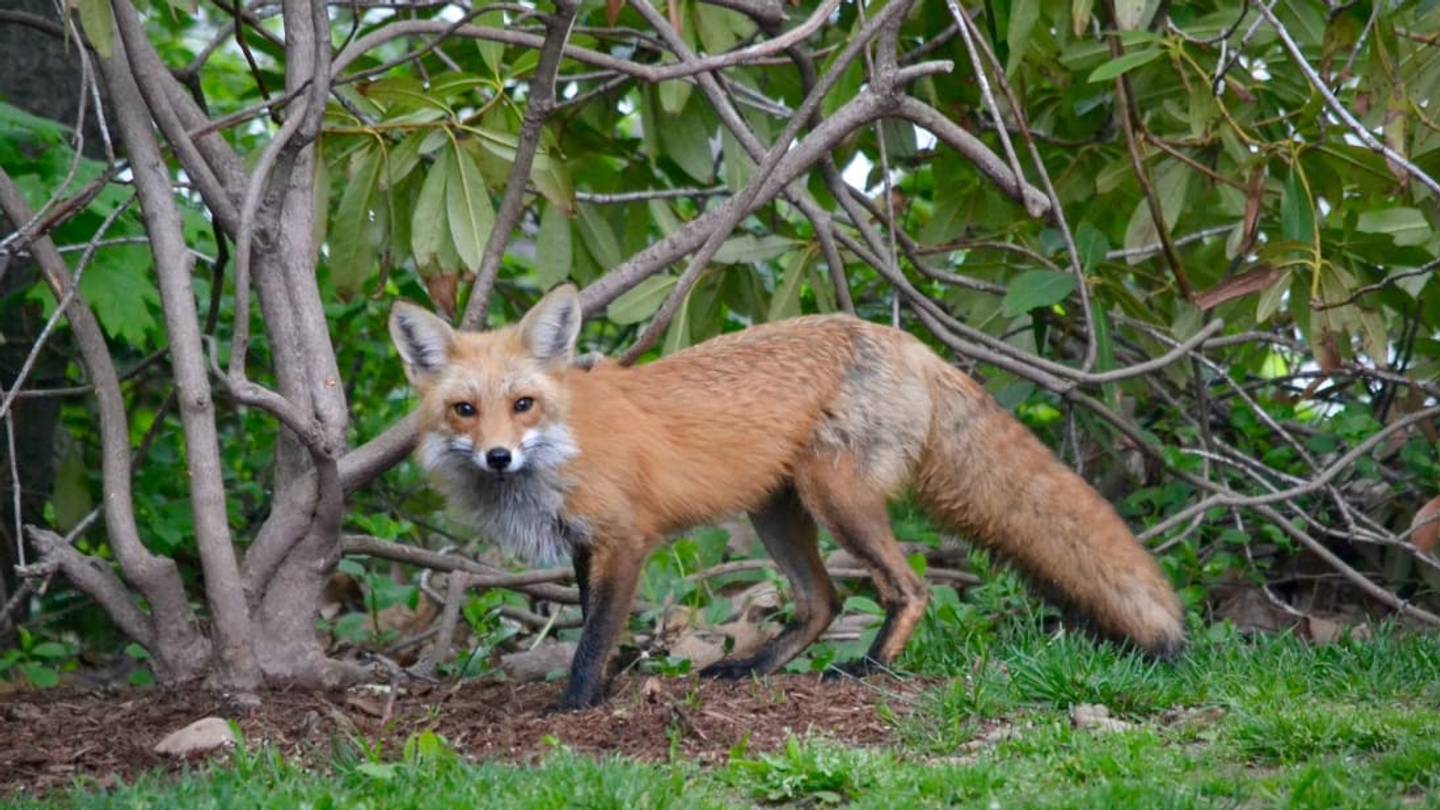
Whether you live among acres of sprawling land or look out over a sliver of city sidewalk, if you pay close enough attention, youâre bound to see wildlife right outside your door. So get familiar with your nonhuman neighbors with these 10 tips for backyard wildlife watching. After all, the animals are thereâwhether you notice them or not.
Watching wildlife is a wonderful way to learn about the other inhabitants of your yard. âYou can go out and go for a hike and walk to find something, but thereâs really a value in sitting quietly in one space and seeing what comes along,â Brian Hess, a wildlife biologist with the Connecticut Department of Energy and Environmental Protection, told Mental Floss in 2020. Charismatic creatures like deer and bears are exciting, but thereâs no need to wait for something large to come ambling through. Peek between the branches of a shrub and you may find a bird nest tucked within the greenery; move a rock and youâll likely spot worms wriggling around in the moist earth. Try varying your routine, too, as different animals become more active depending on the time of day.
Treat wildlife watching as if youâre window shopping in a store stocked with stuff you canât afford: Basically, look but donât touch. âMy general rule of thumb whenever Iâm watching wildlife is if they change their behavior because of my presence, that probably means Iâm too close and should back off,â Hess said.
Keeping your distance will help both you and the wildlife stay safeâand make sure any curious pets donât get too close to wild creatures, either. An animal may attack if it feels threatened, which, as anyone whoâs seen Homeward Bound (1993) knows, can lead to some pretty painful encounters. Thereâs also the risk of zoonotic diseases ; though fairly rare, North Americans in particular have to be cautious of rabies .
Avoid feeding wildlife, too (bird feeders are fineâmore on that later). Donât chuck your dogâs uneaten kibble or your dinner scraps out the back door, as teaching wildlife to rely on people for meals can cause unwanted learned behavior and lead to human-animal conflicts.
One of the best ways to attract wildlife is to add native plants to your yard. âYou can put an oak tree in your yard, watch the life come to it, and help rebuild your local ecosystem,â Doug Tallamy, a professor of entomology at the University of Delaware, told Mental Floss in 2020. A perfectly manicured patch of grass or an exotic shrub may look lovely, but it doesnât create a suitable habitat for many animals. Most insects are specialized feeders, meaning theyâve evolved over millions of years to eat particular plants. Basically, if you want to see more monarchs , you better start planting some milkweed.
Short on yard space? Urban apartment dwellers can stick pots of native plants in window boxes. Adding even a tiny bit of greenery will help city animals who may not have access to as many resources as their rural counterparts.
Finding native plants is fairly simple. Organizations like the National Wildlife Federation and the Audubon Society (and if youâre in California, the California Native Plant Society ) have online databases you can browse.
And, if youâre attracting birds, avoid turning your yard into a stage for Windex commercial-level crashes. If your glass is spotless, stick some decals or tempera paint onto your windows to help prevent bird collisions .
Though native plants are a great way to attract wildlife, you can also supplement your yardâs offerings with various bird feeders [ PDF ]. Make sure you regularly clean your feeders, lest the seeds get wet and grow mold. You should also rake away any discarded shells scattered on the ground, which can collect harmful bacteria. If you live in an area with bears, check with your stateâs wildlife agency for their seasonal best practices regarding bird feeders, as foraging ursines love to snack on high-fat, high-protein seeds.
A tub of water in a shady spot away from your house will help your resident critters and thirsty passersby. If you can, put a large rock or brick in the water bowl, and fill the basin so only part of the object is submerged. This will provide insects and other animals with an extra perch to land on, as they may have a tough time sipping water from a steep-sided dog dish. The rock will also give small creatures an extra escape option, should they accidentally fall into the tub and go for an unplanned swim. Make sure you clean the water bowl regularlyâstanding water can quickly become a soupy mess of dirt, guano, and mosquito eggs.
Put away the insecticide and instead embrace your resident creepy-crawlies. You can have a lot of fun identifying the beetles and butterflies that frequent your yard. And about 90 percent of flowering plants depend on pollinators , so not only is that bee bumbling around your garden cute, itâs also playing a vital role in helping your local ecosystem.
While insects are fascinating in their own right, you can also view them as food for larger creatures. Theyâre a nutritious meal for animals like birds, lizards, frogs, squirrels, bats, opossums, and much more. Caterpillars in particular are a great source of grub for local and migrant bird populations. âIf you want chickadees breeding in your yard, you need to have 6000 to 9000 caterpillars or the chickadees canât rear their young,â Tallamy told Mental Floss.
Thereâs a reason avid birders get to know their bird calls. âHearing wildlife is a great way to start to pay attention,â John Rowden, senior director of bird-friendly communities at the Audubon Society, told Mental Floss in 2020. âLearn the sounds, and it will help you identify the animals.â And if your yard suddenly erupts with a cacophony of squirrel alarm calls , thereâs a good chance thereâs some sort of predator lurking nearby. Identifying the sounds of nocturnal animals like owls and raccoons will help you discern who's been coming after dark.
You may be able to smell some animals, too. Skunks unleash a notoriously stinky spray when warding off threats; foxes and mountain lions mark their territories with their own funky scents; and desert dwellers claim they can often smell javelina before they see them.
You donât have to see the animals themselves to find hints of their presence. A fallen feather, a muddy print , a well-walked trail etched into the dirt, and a heaping pile of scat are all clues as to whoâs been sharing your yard.
Sure, watching wildlife is a great excuse to unplug, but embracing tools and technology can help enhance your experience. A pair of binoculars will transform that blurry blot in the sky into a clearly identifiable bird; a trail camera will snap footage of whatever walks through your yard when youâre not looking. Apps like iNaturalist  and Merlin can help you identify various species and share your findings with fellow members of the community.
Keep a record of the creatures who frequent your yard. This will help you get a sense of their routines and better identify individual animals. You can keep your logs simpleâa quick journal entry or a series of photographs is an excellent way to document your resident wildlife. As a bonus, your observations can also help with citizen science projects, such as the Monarch Joint Venture or Audubonâs Hummingbirds at Home project.
This article originally ran in 2020; it has been updated for 2022.
Loading recommendations... Please wait while we load personalized content recommendations