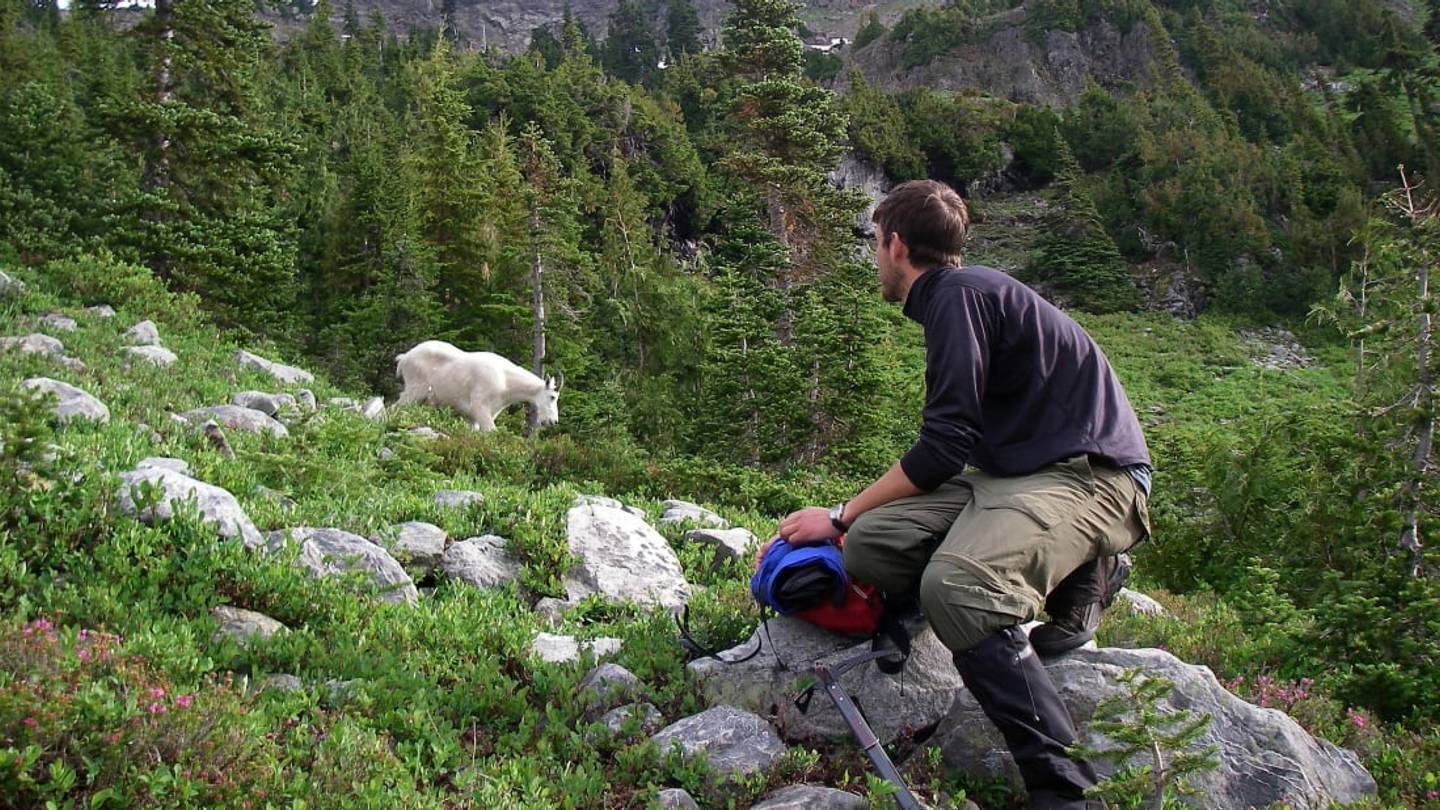
In Washingtonâs Olympic National Park, mountain goats have become quite the nuisance, so much so that park authorities have begun airlifting them out of the area with the help of the National Park Service and the USDA Forest Services, according to Popular Mechanics . Their crime? Theyâve developed an obsessive taste for human pee.
Mountain goats arenât native to the national park, but theyâve lived there for almost a century. Just 12 goats were brought to the park by a hunting group from Alaska and British Columbia in the 1920s, as The Seattle Times reported , but those few goats multiplied rapidly, and by the 1980s, there were thousands of them. The park service has been trying to reduce the population for decades, but the goats are on the rebound. There were more than 600 goats counted in the park in 2016, and those numbers have been rising. There are estimated to be about 700 now.
Park officials argue that all those nonnative goats are chomping down on native plants, harming the parkâs unique ecosystem. Theyâre also a significant menace to park visitors. Theyâre known to get too close to visitors on trails, and some are aggressive and hard to chase away. In 2010, a hiker died after being gored by one.
Their attraction to humans in the park has a gross logic behind it: Unlike in their native habitats, Olympic doesnât offer any of the natural salt resources the goats need to survive. Instead, theyâre forced to hunt around for alternative sources of saltâlike human pee and sweat. âMany hikers know too well about mountain goatsâ lust for salty excretions,â The Seattle Times explained in 2017. âIn some areas, goats seem to magically appear when hikers separate from their parties to pee.â
As part of the effort to remove the problematic goats from Olympic National Park, officials are moving as many goats as they can to North Cascades National Park, where theyâll supplement declining native goat populations. More than 600 goats will be captured, sedated, and airlifted out of the park. Theyâll be examined by veterinarians, fitted with GPS collars and transported to the Mt. Baker-Snoqualmie National Forest as part of the initiative. There, they will hopefully find more palatable sources of salt than hikersâ pee.
[h/t Popular Mechanics ]
Loading recommendations... Please wait while we load personalized content recommendations