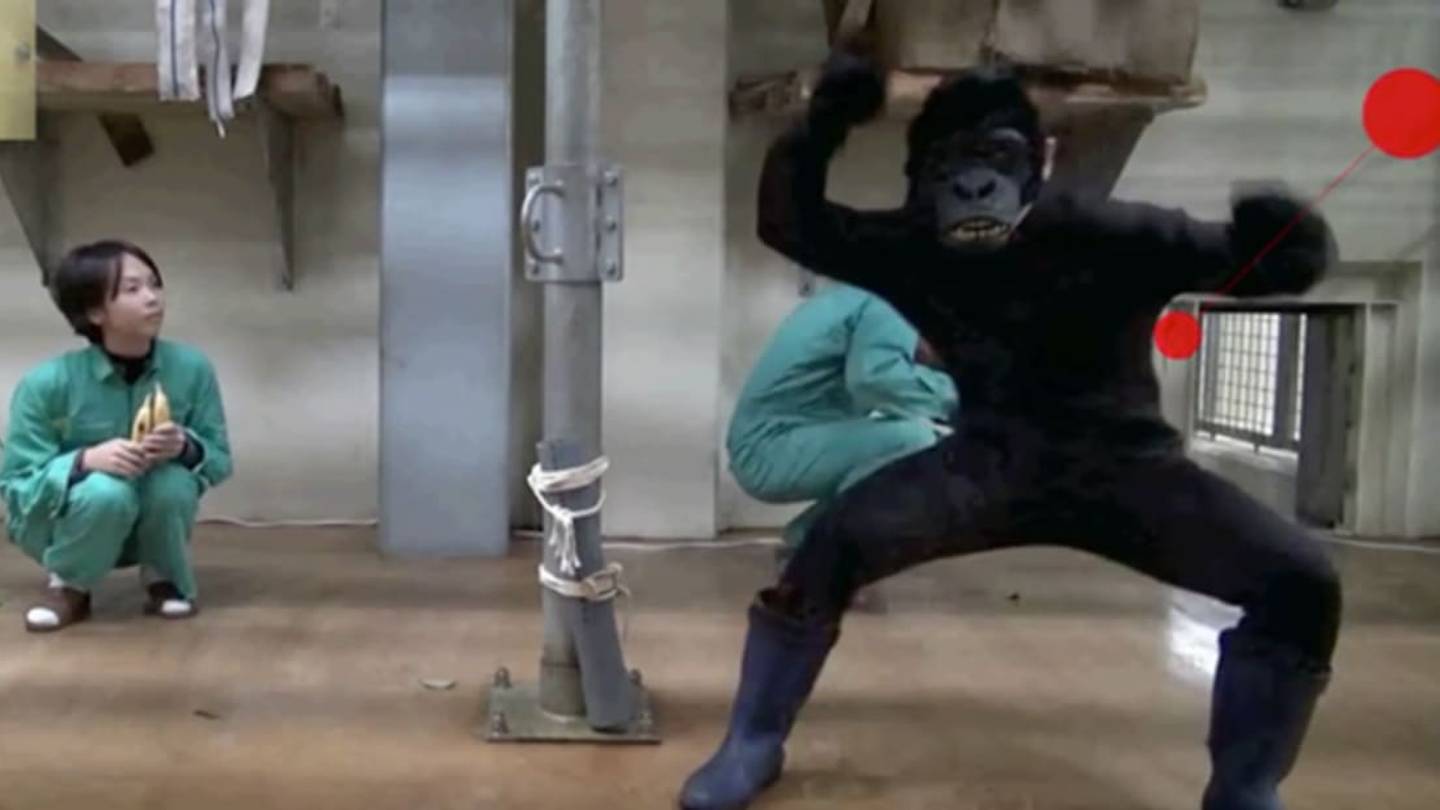
Japan-based researcher and comparative psychologist Fumihiro Kano is also a unique filmmakerâhe makes movies specifically for animals. Kano, who specializes in the study of ape behavior, recently released two short âhorror moviesâ for apes.
The films, designed to be unsettling and entertaining to apes, feature a few simple examples of ape and human aggressionâfor instance, an ape fighting with a human. Dialogue free, just over a minute long, and featuring what is clearly a human in an ape costume, Kanoâs films are unlikely to be popular with a human audience. But to apes, theyâre absolutely captivating.
They also serve an important scientific purpose. According to Smithsonian , the films are more than just entertainment. Kano and his collaborator Satoshi Hirata are using them to study long-term memory in apes.
Smithsonian explains that testing memory in animals has always been extremely challenging for scientists. Since animals are non-verbal, researchers have to come up with creative ways of discerning whetherâand whatâtheir animal subjects are remembering. One of their primary strategies is conditioning, and observing reactions to repeated exposure to specific stimuli can help show how they remember recurring events. Figuring out how apes remember single events, however, is much more difficult.Â
Kano and Hirata had previously observed apes watching human movies. Though the animals were, for the most part, bored by the films, they always perked up when they saw violence or aggression. They began to wonder if, like humans, apes would remember and anticipate their âfavoriteâ movie moments upon re-watching.
So Kano and Hirata decided to produce two short films that feature behaviors they knew apes would respond to. They followed their ape subjects using an eye tracker, which charted the animalsâ eye movement as they viewed the films. After recording their subjectsâ eye movement while viewing the film once, and then again 24 hours later, they found that the second time around, the apesâ eyes would move in advance of an anticipated action. That is, upon second viewing, the apesâ eyes moved before actions occurredâlike an ape attacking, or a human grabbing a weaponâshowing that the apes were remembering the events in the film.
So far, Kano and Hirata have just used their eye-tracking films to study ape memory, but they believe the technique could be usefully applied to a range of cognitive abilities, such as the study of beliefs and intentions. Though the study has received plenty of positive attention in the scientific community, Kano has yet to receive any recognition for his filmmaking abilities; he told Smithsonian heâs still waiting for his âApe Oscar.â
Loading recommendations... Please wait while we load personalized content recommendations