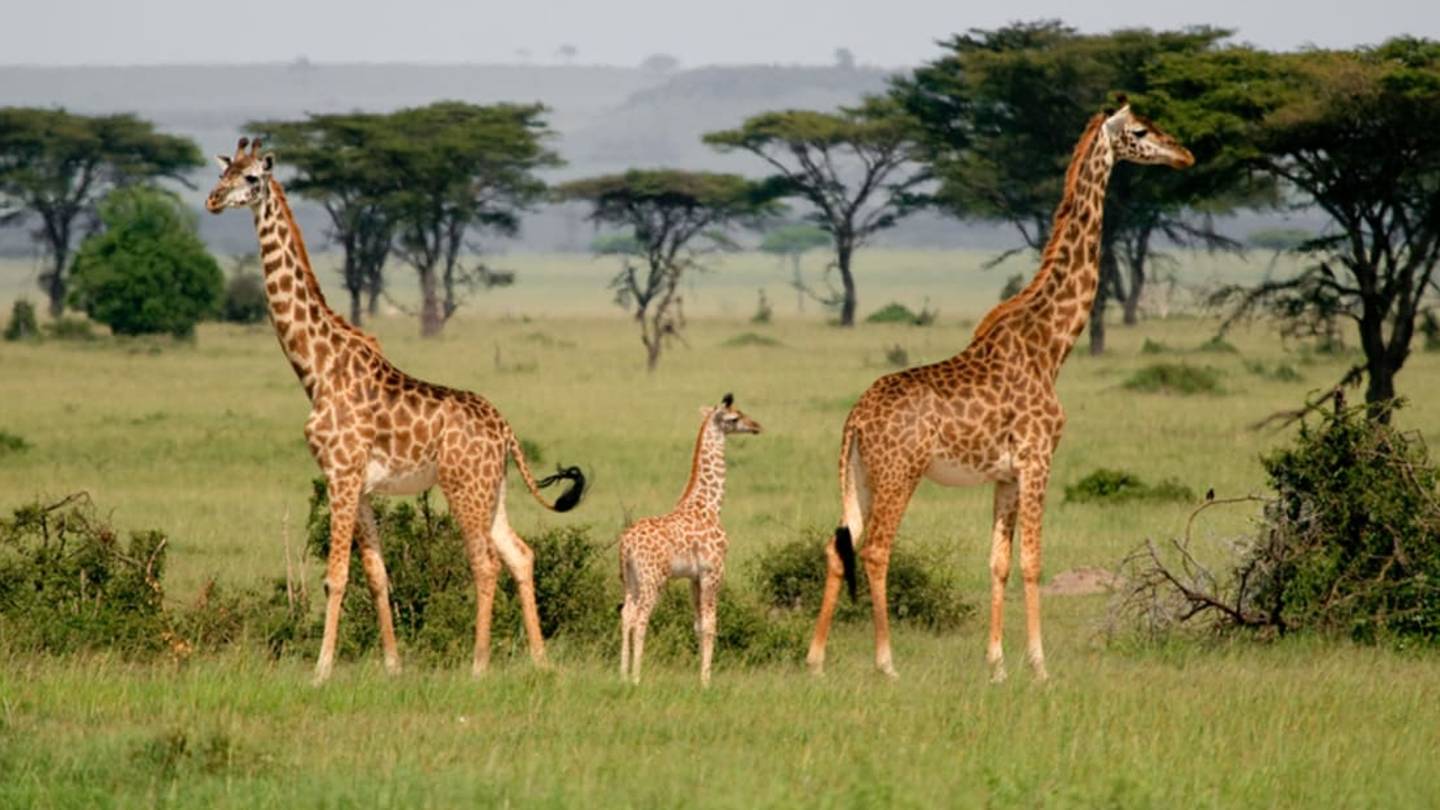
For more than 250 years, there has been one universally accepted species of giraffe: Giraffa camelopardalis . But according to a study of the spotted giantâs DNA published today, September 8, in the journal Current Biology, that one species should actually be several.
This is exciting news, partly because it settles a debate about giraffe identity thatâs been taking place for centuries. While Giraffa camelopardalis has enjoyed its seat at the top of the hierarchy since Carl Linnaeus officially described the animal back in 1758, there has been a lot of back and forth about just how many subspecies of giraffe truly exist. Some scientists believe there are 11 subspecies while most others argue there are just nine.
But it turns out theyâre all wrong, according to the new study, which says there are actually four species of giraffe and five subspecies.
Axel Janke , a geneticist at Senckenberg Museum and Goethe University in Germany, said he and his coauthors were completely surprised by the findings.
âThere is not much known about giraffes,â Janke tells mental_floss . In fact, the worldâs tallest animals get far less scientific and conservation attention than other megafauna like lions and elephants.
To remedy this lack of knowledge, study lead author and Giraffe Conservation Fund co-founder Julian Fennessy spent six years sampling 190 giraffes from all over Central and Southern Africa. Thanks to special darts designed to snag a small tissue sample as they puncture an animalâs skin, Fennessy was able to collect noninvasive DNA samples from all nine accepted subspecies of giraffe, which Janke then analyzed against each other. The study represents the most expansive work on giraffe genetics to date.
Once the scientists started looking at the various genomes, they were surprised to find that all of their samples seemed to cluster into four distinct groups, each as different from the other as a polar bear is from a grizzly. Their analysis suggests that the giraffe family would be best described as containing four main species: the southern giraffe ( Giraffa giraffa ), the Masai giraffe ( G. tippelskirchi ), the reticulated giraffe ( G. reticulata ), and the northern giraffe ( G. camelopardalis ).
Furthermore, the study was able to eliminate some of the subspecies categories by showing that Thornicroftâs giraffe and the Masai giraffe are genetically identical, as are the Rothschildâs giraffe and the Nubian giraffe.
But this is more than some scholarly exercise in giraffe taxonomy.
âThis paper is a much-needed wake-up call to save these magnificent animals,â Douglas Cavener , a Penn State geneticist who studies giraffes, tells mental_floss . (Cavener was not involved with the new study.)
Scientists estimate that there are around 90,000 giraffes left on Earth, he said. Thatâs a low number alreadyâabout a quarter of the number of elephants remaining, and elephants are in decline themselves. And if we can now say that there are four species of giraffes, each genetically distinct from the other and not thought to mate with each other in the wild, then the odds of any one of those species going extinct goes up quite a bit.
âWith each of these four giraffe species now numbering less than 35,000, they are in peril of being lost forever by the end of this century,â Cavener says.
The good news is that a better understanding of giraffe genetics can help conservationists determine which species are in the most need of funding. For instance, now that they are recognized as their own species, northern giraffes and reticulated giraffes appear to be in particularly dire straits, with populations of just 4750 and 8700, respectively.
And thereâs much work yet to be done. The scientists now want to sample every known population of giraffes in Africa to get an even better understanding of their distribution and genetics. And who knows what theyâll find.
âItâs not entirely impossible that we will find another species,â Janke says.
Loading recommendations... Please wait while we load personalized content recommendations