The environmental threats caused by an industrialized society are well known at this point, but a new study is casting the problem in a dire light: In their search for sustenance, whales might be ingesting up to 10 million pieces of microplastic in a single day.
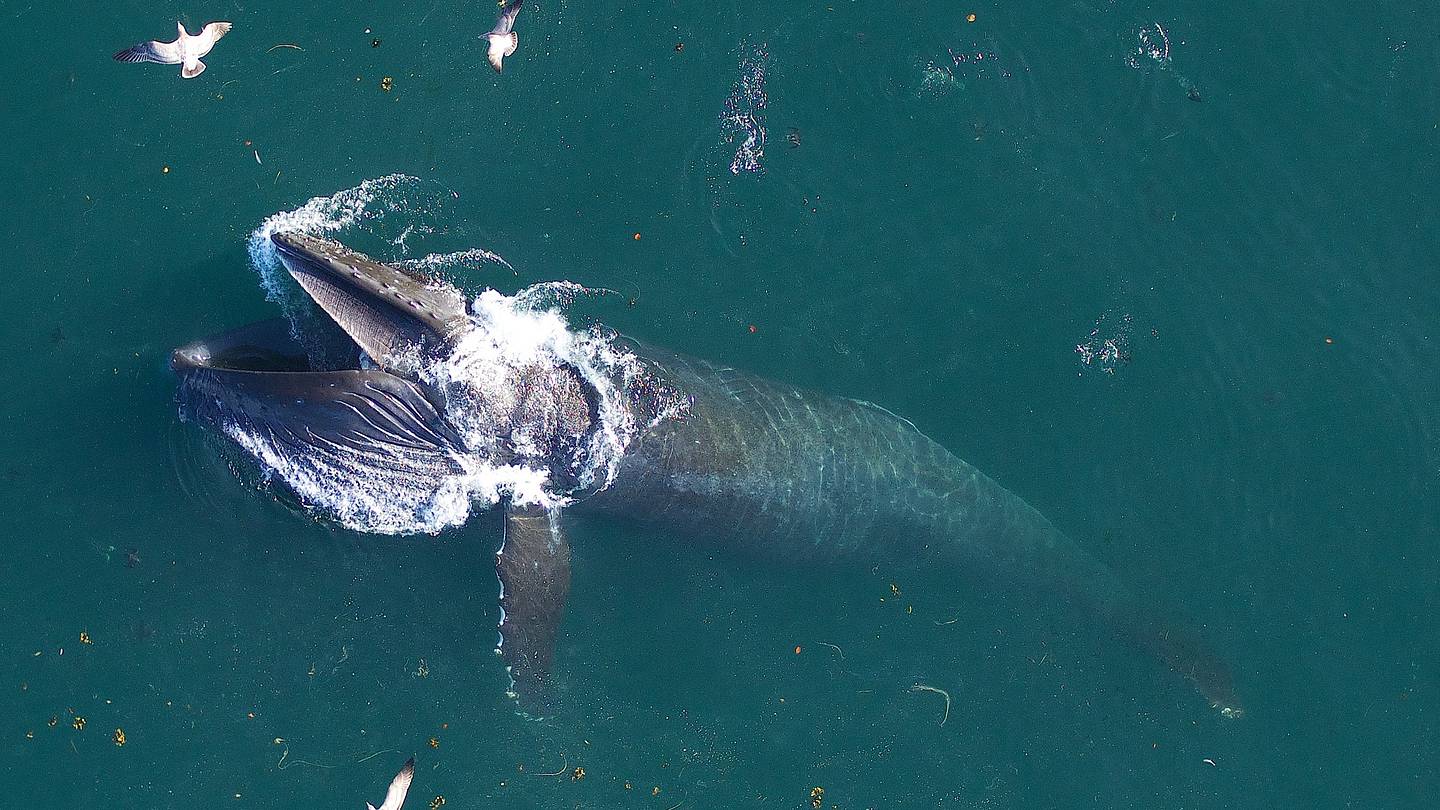
In their paper, published this week in Nature Communications , researchers from several West Coast institutions examined the behavior of tagged blue, fin, and humpback whales off the California coast between 2010 and 2019. These baleen whales frequently foraged for food, such as krill and small fish, 50 to 250 meters (164 to 820 feet) below the waterâs surface. Those depths coincided with the highest concentrations of microplastics, particles of synthetic plastic roughly the size of grains of sand, often ingested by the krill. The small crustaceans became an efficient plastic delivery system when they were eaten by whales.
Just by eating their normal prey, blue whales can inadvertently ingest up to 10 million bits a day. Fin whales, the second largest whales on Earth, can ingest between 3 to 10 million pieces. Humpback whales prefer anchovies and herring to krill and could still consume around 200,000 particles, while other whales might swallow 1 million pieces each day.
The staggering numbers likely indicate that the whales could be becoming nutrient-deficient. While theyâre ingesting plenty of food, that prey could be less nutritiousâthe equivalent of humans eating junk food. It doesnât bode well for threatened and endangered cetaceans.
âWhale populations, like those of blue, fin, and humpback whales, are still recovering from being hunted, and still have not reached even 10 percent of their previous numbers in some locations,â lead author Shirel Kahane-Rapport, now a postdoctoral scholar at California State University, Fullerton, tells Mental Floss. âWe think that microplastic is another human-caused stressor that will affect their recovery in conjunction with other stressors, like ship-strikes and ocean noise.â
While whales are not the only marine animals threatened by plastic pollution, they have the largest appetiteâand, potentially, the most risk from consuming microplastics. In addition to lowering the quality of the whalesâ diets, microplastics could also damage the animalsâ stomach lining or be absorbed into their bloodstream, though scientists are still looking at those mechanisms. More study is needed to understand how environmental factors concentrate plastic waste at the whalesâ favorite feeding sites and what a high-plastic diet could mean in the long term.
Kahane-Rapport says regular people can help the situation by âdisposing of waste properly so it doesnât end up in the sewer, and adding a simple filter to your washing machine to catch microfibers.â Citizens can also lobby their community leaders for more responsible practices. âAdvocating for better wastewater treatment that prevents microplastic from entering the water system in your city by speaking to your local council-people and politicians can help bring about larger change,â she says. âAnd, also, put pressure on large corporations to dispose of their waste responsibly.â
Loading recommendations... Please wait while we load personalized content recommendations