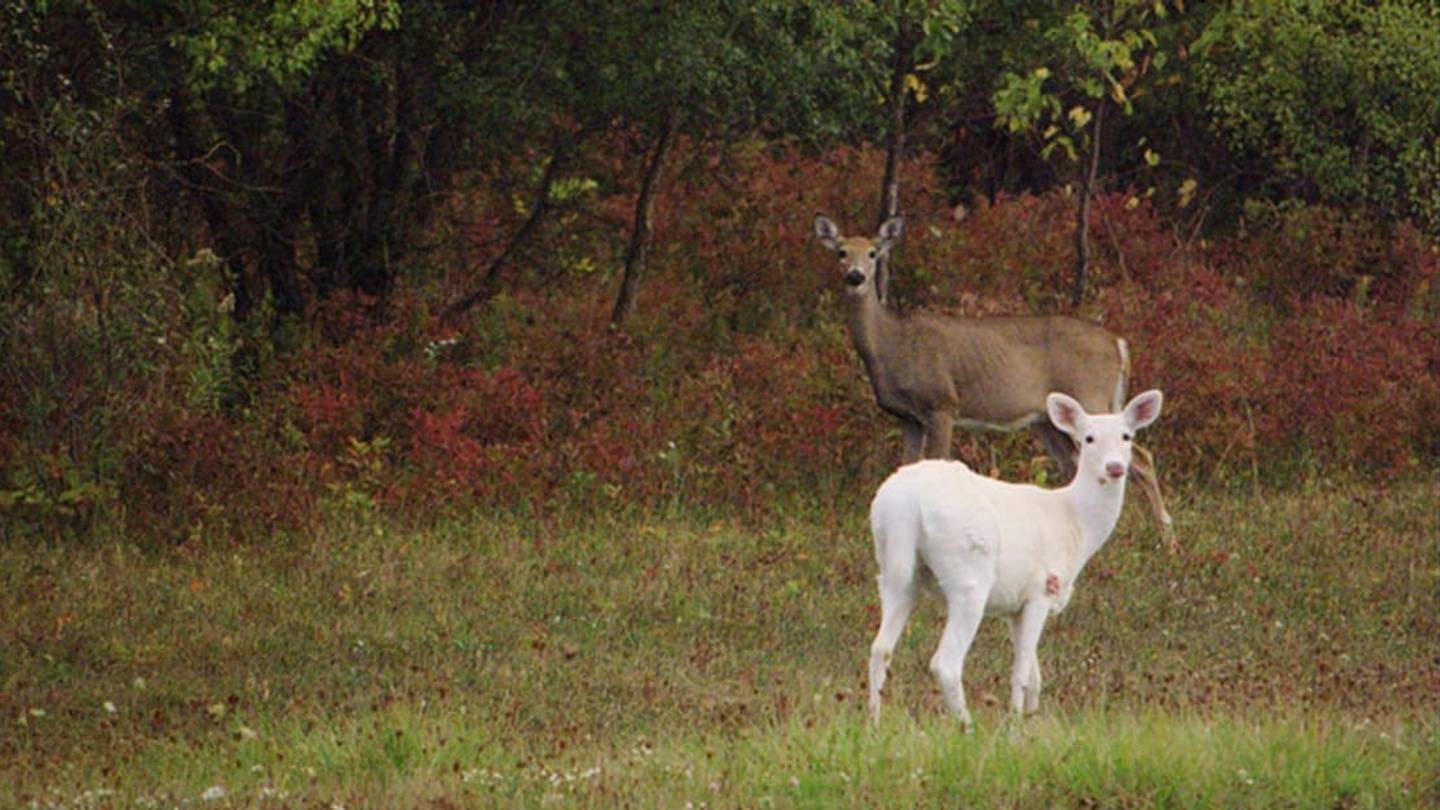
There are around 200 ghostly deer living near Seneca Lake in central New York. Pretty soon, the herdâs days might be numbered .
Technically, theyâre not albinos. Albino animals either lack melanin altogether or at least have an extreme deficiency . Since this substance produces color, albinism is characterized by a pale complexion andâoftenâstrangely tinted eyes. Instead, these deer exhibit whatâs known as leucism . This means that while they look mostly white, they still retain a noticeable amount of pigmentation. As such, the creatureâs eyes are brownish âwhich is normal by species standards.
Howâd all these oddball deer get up there to begin with? Thatâs a story of war, peace, and rampant inbreeding. In 1941 , the U.S. government broke ground on the Seneca Ordnance Depot (now called the Seneca Army Depot). A useful munitions storage facility, this base later held Americaâs largest nuclear weapons stockpile during the Cold War.
With any military arsenal, security is always a top priority. 24 miles of fence were planted around the 10,000-acre plot. Just like that, dozens of white-tailed deer found themselves trapped insideâincluding some specimens with recessive leucistic genes.
Soon enough, reports of all-white deer surfaced. The first sighting came in 1949 when a leucistic buck and fawn were spotted on-site. Coyotes would ordinarily make short work of such conspicuous game animals, but the depotâs fence isolated the deer from this threat. With no predators in sight, the mutation spread.
As a population control measure, depot personnel launched an annual hunt during the late 1950s. When this tightly regulated season starts, no more than 40 hunters are permitted on the premises at any given time. Also, those fixing to bag a colorless buck or doe must win the right via lottery.Â
Such efforts have helped keep the herbivores from stripping their land barren, and, by extension, maintain whatâs now the worldâs largest white deer herd. Â
Next year, this unique claim to fame could evaporate. The depot officially closed in 1995, but a small U.S. Army Corps of Engineers crew has remained behind for cleanup purposes. Part of their job involves maintaining that fence, which is the only thing keeping Senecaâs snowy deer alive.
âThese deer wonât last more than a season in the wild,â says activist Dennis Money. Apart from being vulnerable to predation, they are, as he notes, âprized as trophies.â A former utility executive , Money heads Seneca White Deer, Inc . Founded in 1993, the group is dedicated to both protecting the unusual beasts and promoting them as an eco-tourist attraction.
At present, the Seneca County Industrial Development Agency (SENIDA) owns most of the property. Once the militaryâs team finally pulls out sometime in 2016, SENIDA plans to start making big changes. For some, the developers canât come soon enough. âWe have one of the biggest [percentages] of tax-exempt land of any township in New York state,â argues David Kaiser, the town supervisor of Romulus, NY. âWe already have a lot of wildlife...Montezuma, the national forest south of us, Sampson State Park, Seneca Lake Park. There's no shortage of land set aside for wildlife in the county.â
Businesses, residential areas, and farms will likely crop up over the terrain. Meanwhile, the huge fence isnât long for this worldâat least, not according to SENIDA Executive Director Bob Aronson. âWe just donât have the staff or resources to manage this as a park," he says. "Itâs imminent that something has to happen soon, one way or the other. Itâs time.â
What destiny awaits the regionâs white white-tailed deer? The world will just have to wait and see.
Loading recommendations... Please wait while we load personalized content recommendations