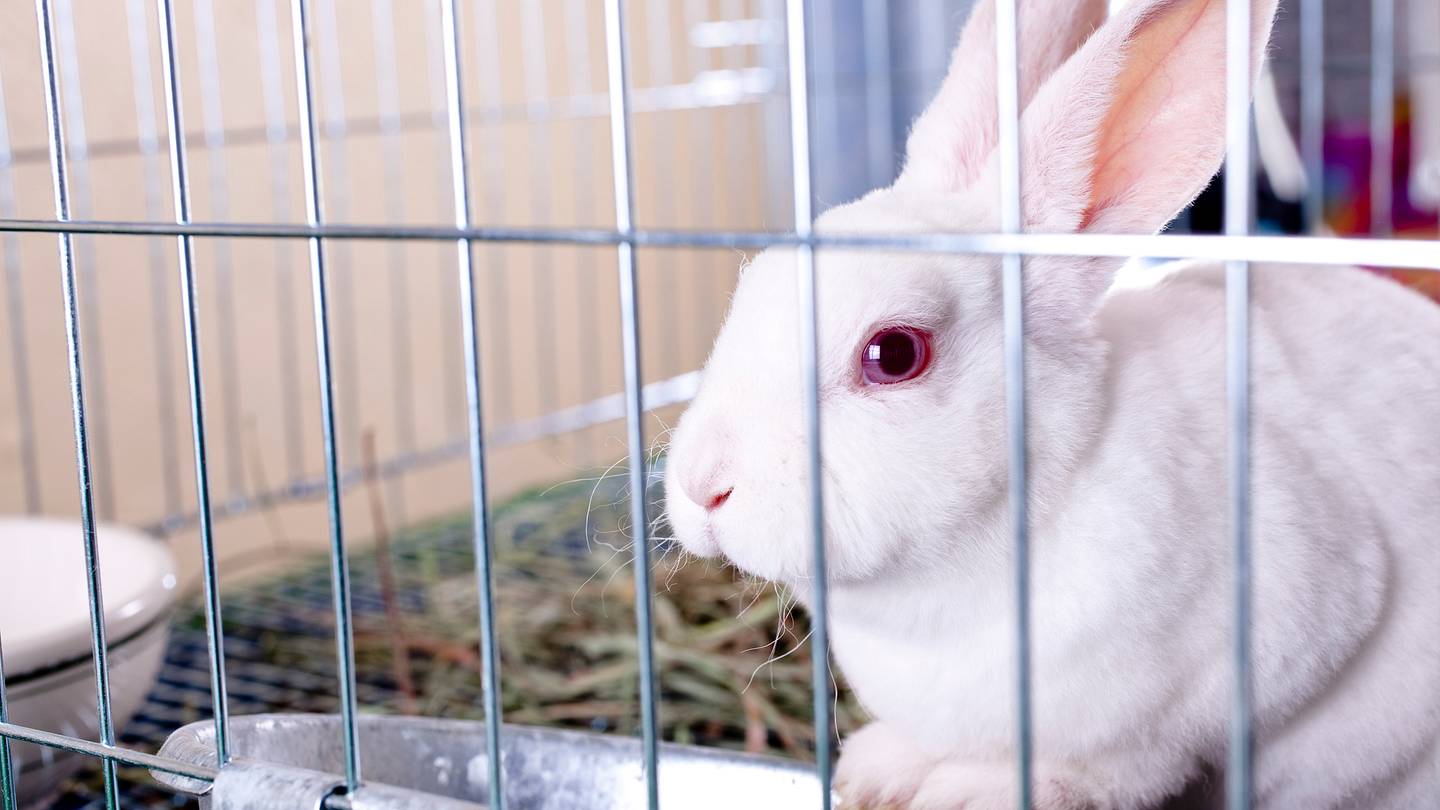
The first feature most people notice about an albino creature is their pale skin, feathers, or fur. Though white coloration is most famously associated with the condition, itâs not the only hallmark. In many albino animals, the âwhitesâ and irises of their eyes are actually a striking red. So whatâs the science behind the unusual trait?
Itâs a common misconception that albino animalsâ eyes have red pigment. The redness in their eyes doesnât come from the presence of color; itâs due to a lack thereof. As The New York Times explains, the irises and tissues around the retinas are either completely transparent or have such little coloration that the blood vessels behind them show through, making the eyes appear red.
This is a natural consequence of albinism. The rare genetic mutation prevents the body from producing melanin, the pigment that colors an organismâs hair, feathers, fur, scales, skin, or eyes. More specifically, melanocyte cells cannot synthesize or distribute melanin through dermal and ocular tissues. The condition makes an affected specimen appear very pale compared to others of the same species.
Unlike animals, albino humans tend to have variations in eye color . They are typically blue, but some people with albinism may also have eyes that are light gray, violet, or brown. Their eyes may appear red or pink when light reflects off the back of their eyes, as the lack of pigmentation makes their blood vessels more visible. Â
Albinism doesnât only affect eye color; it impacts eye function as well. Since albinism inhibits the eyeâs production of melanin âwhich absorbs near-infrared, visible light, and UV radiationâthe majority of albino animals and humans suffer from vision impairments or blindness.
Albino animals also face unique problems in the wild. One obvious issue is their stark difference in coloration compared to other members of their species. As a result, predators are far more likely to spot albino animals since they can not blend into most environments. Likewise, predatory albino animals are more likely to be spotted by prey and miss a meal. Albino animals are also susceptible to developing skin cancer since the absence of melanin leaves them vulnerable to the sun's rays. They may be breathtaking, but the lives of albino animals are difficult.Â
Read More Stories About Animals: