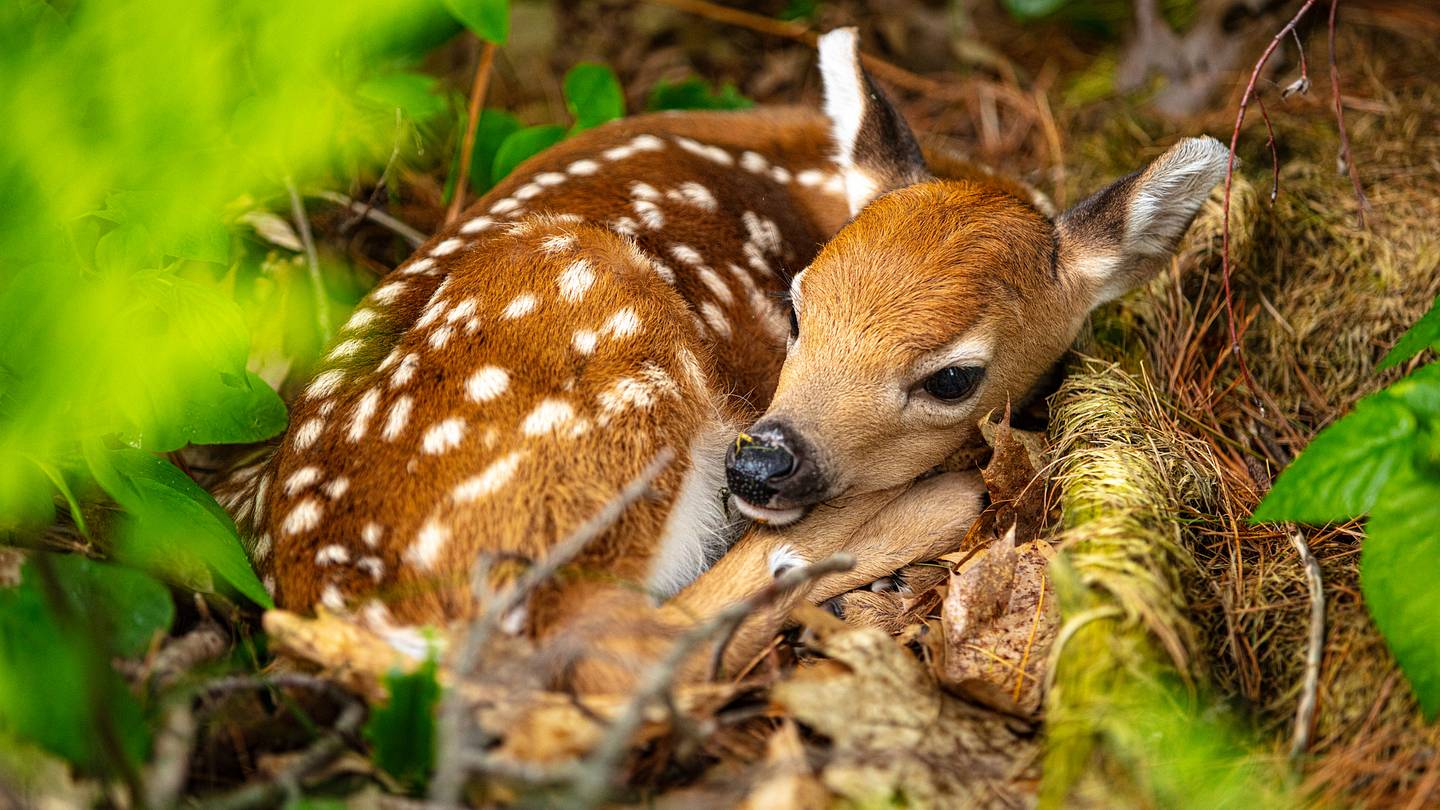
Thereâs something especially charming about the dappled pattern on the backs of baby deer. But the white spots are more than just adorable: They also help the defenseless fawns stay safe during their early days on Earth.
As Henderson State University biology professor Renn Tumlison explains , the flecks effectively camouflage a fawn by mimicking patches of sunlight that shine through trees and other plants, landing unevenly across the already-varied neutral hues on the forest floor. Without the strength or size needed to outrun a predator, a newborn fawnâs best bet for survival is to simply blend in with the scenery.
When you see a fawn curled up among the foliage without a chaperone in sight, itâs hard to imagine a more vulnerable creature. But that solitude is actually another protection strategy. For the first few weeks of a fawnâs life, its mother generally only reappears to feed it or lead it to a new shelter. Because mature deer are easier to see and smell than their offspring, a doeâs absence helps mitigate the risk of drawing a predator straight to her baby. Once a fawn is capable of fleeing danger as fast as its mother, they start spending more time together.
Thereâs not exactly a hard-and-fast deadline for shedding the spotted fur, but most sources agree that the process typically happens when a fawn is somewhere around three or four months old. That said, some deer species donât ever lose their spotsâlike the fallow deer , the chital (or axis) deer, and the sika deer .
While there are exceptions to every rule, most baby deer are born with spots. If you live in North America, the white-tailed deer is probably the species youâre most familiar withâitâs widespread across the continent. Even elk, which are also a member of the deer family, are born with white spots.
Loading recommendations... Please wait while we load personalized content recommendations