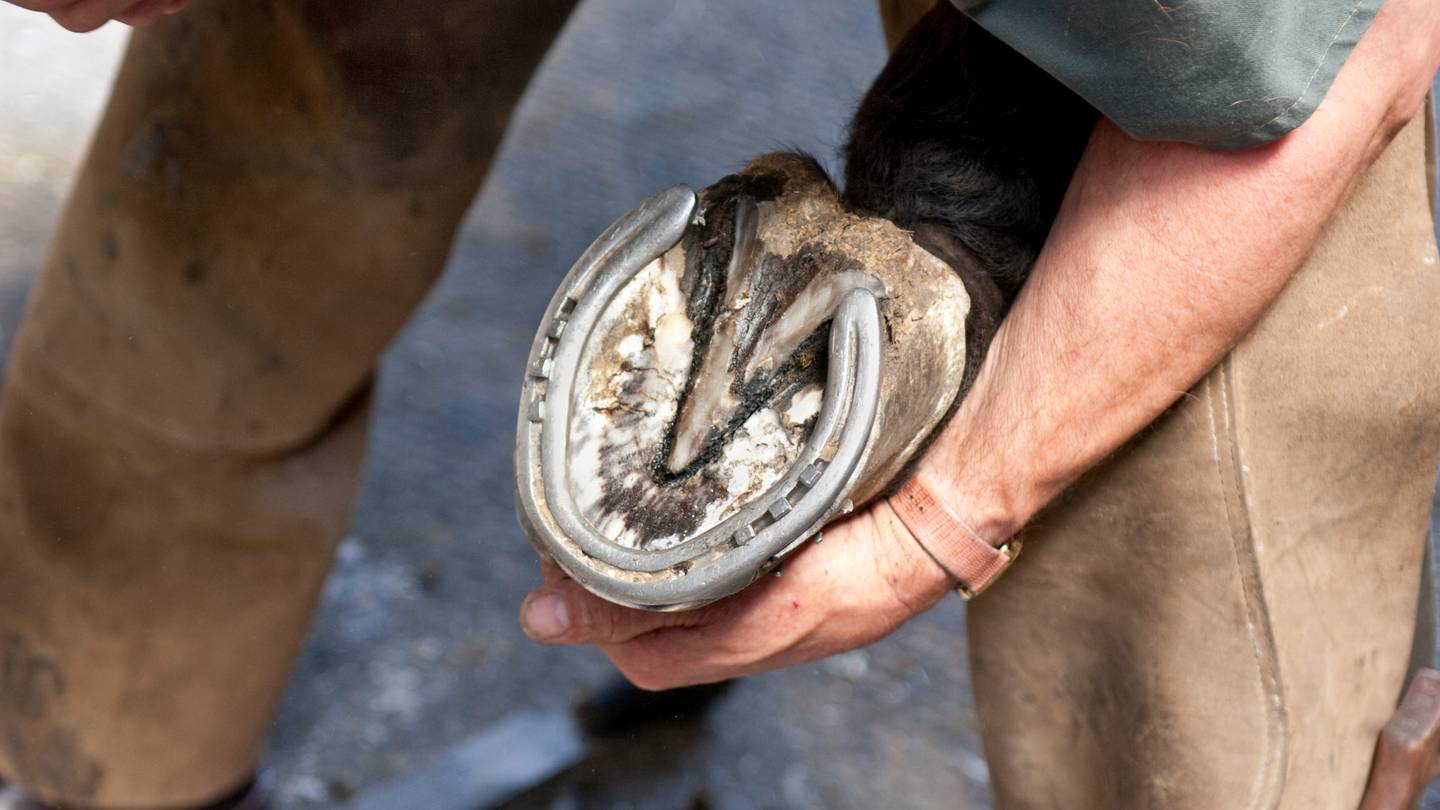
Owing to the fact that horseshoes are both a game and a good luck charm , most people know what horsesâ âshoesâ look like. Exactly why they sport these semicircles of metal (or other materials), however, isnât quite as widely known.
The simplest answer is that horses wear shoes for the same reason we doâto protect their feet from getting injured due to rough terrain and/or overuse. Horse hooves are admittedly a lot more durable than human trotters: The hoof wall , which covers the top of the hoof and forms a rim around the bottom, doesnât have any nerves or blood vessels. Horses can safely walk on their own four hooves, wearing down their hoof walls as they go. For wild horses, this process typically happens at a good, gradual rate as they traverse natural terrain.
But, as Horse & Country explains , domesticated horses perform a variety of functions across a variety of surfacesâand thereâs a variety of reasons why many need shoes. For some, especially those that pull carriages or bear other loads, their hoof walls might wear down more quickly than they can grow back, which horseshoes can help prevent. Others might need horseshoes for traction if theyâre frequently exposed to icy, wet, or muddy surfaces.
Then there are those with medical conditions like arthritis, laminitis (a problem with the connective tissue between the hoof wall and the nearby bones), or ringbone (a degenerative joint disease that causes extra bone growth). Some horses just have naturally weaker hooves , thinner soles, or uneven gaits. In all these cases, horseshoes can help stabilize and strengthen a horseâs hooves, and also keep them healthy.
That said, there are horses that fare well with no shoes at all, or only need to wear them occasionally. Farriersâwho shoe, trim, and generally maintain horsesâ hoovesâcan help horse owners determine the best course of action and the best type of horseshoes to use. Though some people are staunchly anti-shoe, preferring the natural route, it really depends on the individual horseâs needs.
âA lot of times people talk about barefoot versus shod as if itâs a competition,â Esco Buff, owner of Esco Buffâs Professional Farrier Service, told Practical Horseman . âItâs not one or the other. Itâs whatâs best for the horse.â
Basically, cows just arenât expected to do as much stuff as horses are (and across such a wide variety of terrain). We donât race them; we donât use them for ranch work à la Yellowstone ; we donât make them carry tourists around Central Park in carriages; and so on. Back when oxen were a common draft animal for farm work, even into the 20th century, they were often shod. Since oxen, like cows, have cloven hoovesâsplit into twoâthey actually wore two separate âshoesâ on each foot.
But even though cows can usually function fine au naturel , their hooves still need maintenance: They should be trimmed roughly twice a year, though it depends on the cow.
Read More About Horses:
A version of this story originally ran in 2022; it has been updated for 2024.