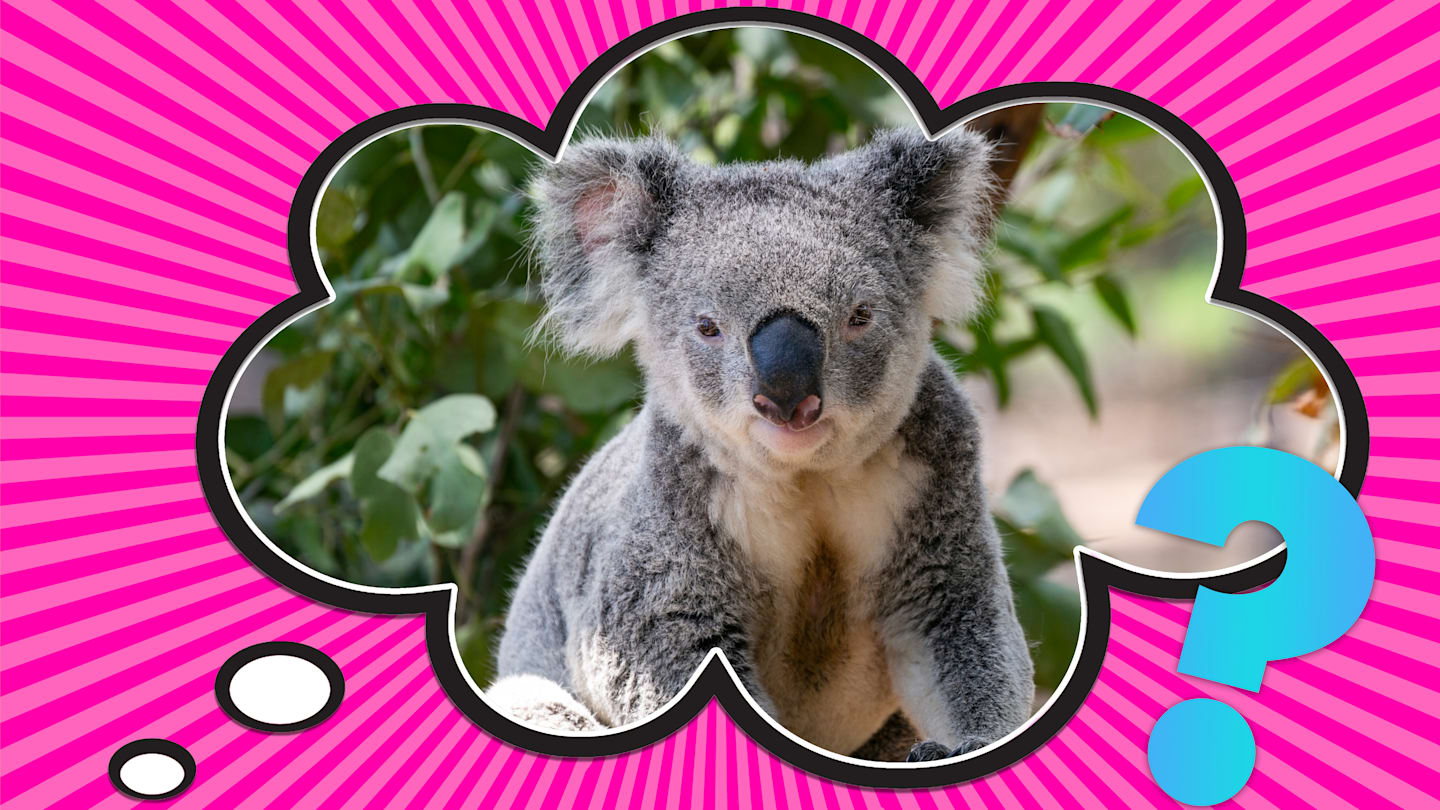
If youâwith no prior knowledge of koalas or pouched animals in generalâspotted a tree-climbing, leaf-munching, fur-covered creature in the wild, you might assume it was a small bear. Thatâs essentially what happened in the 18th century, and itâs the reason we still call koalas âbearsâ today, even when we know better.
In the late 1700s, English-speaking settlers happened upon a small animal in Australia that looked like a small, gray bear with a pouch. It was soon given the scientific name Phascolarctos cinereus , which is derived from Greek words meaning âash-gray pouched bear.â Essentially, naturalists had named the unknown animal based on its appearance and behavior, and people didnât realize until later that the presence of a pouch is a dead giveaway that an animal is definitely not a bear.
According to Live Science, koalas and bears both belong to the same class, Mammalia (i.e. theyâre mammals). Then their taxonomic branches diverge: Koalas belong to an infraclass called Marsupialia. Marsupials, unlike bears, give birth to their offspring when theyâre still underdeveloped, and then carry them around in pouches. Even if koalas look just as cuddly as bear cubs, theyâre much more closely related to other marsupials like kangaroos and wombats .
Over time, people adopted a name that the Aboriginal Darug people in Australia used for the animal, koala . (The Oxford English Dictionaryâs first citation for the word dates back to the writings of Sir Everard Home in 1808: âThe koala is another species of the wombat,â Home wrote. The OED notes that â koala was perhaps originally a misreading of koola .â)
But bear still stuck as a modifier, and scientists never went back and replaced arctos (from arktos , Greek for bear ) in its genus Phascolarctos with something more accurate. So, technically speaking, koalas are still called bears, even by scientists.
Now that you know why we call koalas âbears,â check out what they sound like âwe promise youâll be surprised.
A version of this story ran in 2020; it has been updated for 2023.
Loading recommendations... Please wait while we load personalized content recommendations